If You're Curious About These Questions...
You should listen to this audiobook
- Did you know that a simple suggestion can be powerful enough to physically alter your brain's chemistry and change how you perceive reality?
- Have you ever wondered why historical events like the Salem Witch trials were driven by the same evolutionary forces that still shape our modern beliefs?
- What if you could unlock the secrets of your own suggestibility to improve your mental health and gain a powerful advantage in your daily life?
Listen to The Suggestible Brain — Cinematic Audio Edition
Loading player...
Key Takeaways from The Suggestible Brain
- Understand the crucial distinction between suggestion and suggestibility so you can protect yourself from manipulation and harness this invisible force for personal growth.
- Discover why high suggestibility is actually a valuable asset rather than a sign of gullibility, peaking naturally during life transitions to help you adapt and learn.
- Learn how human suggestibility evolved as a vital survival trait that enabled early societies to share complex knowledge, avoid danger, and build strong communities.
- Find out how your expectations can literally alter your body's chemistry, as shown by research where merely believing a drink was high-calorie physically lowered hunger hormone levels.
- Master the ability to positively hack your own reality by utilizing the power of suggestion to improve your physical well-being, treat mental health conditions, and influence others for good.
Learning Tools
Reinforce what you learned from The Suggestible Brain
Mind Map
The Suggestible Brain
Core Concepts+
Evolutionary Roots+
Health & Physiology+
Memory Manipulation+
Social Contagion+
Quiz — Test Your Understanding
Question 1 of 6
According to the text, what is the primary distinction between suggestion and suggestibility?
Question 2 of 6
When are individuals generally most open to suggestion and suggestibility?
Question 3 of 6
How did suggestibility contribute to the effectiveness of Australian Aboriginal songlines?
Question 4 of 6
What surprising physiological result was observed in the Stanford University milkshake study?
Question 5 of 6
How do 'push polls' utilize the malleability of memory in the context of political campaigns?
Question 6 of 6
What did Solomon Asch's 1950s experiments reveal about human behavior in group settings?
The Suggestible Brain — Full Chapter Overview
- 1Recommendation
- 2Suggestion and suggestibility
- 3Suggestibility is an evolved trait
- 4Use suggestion to improve your health
- 5Suggestion can alter your memory
- 6Suggestion is infectious
The Suggestible Brain Summary & Overview
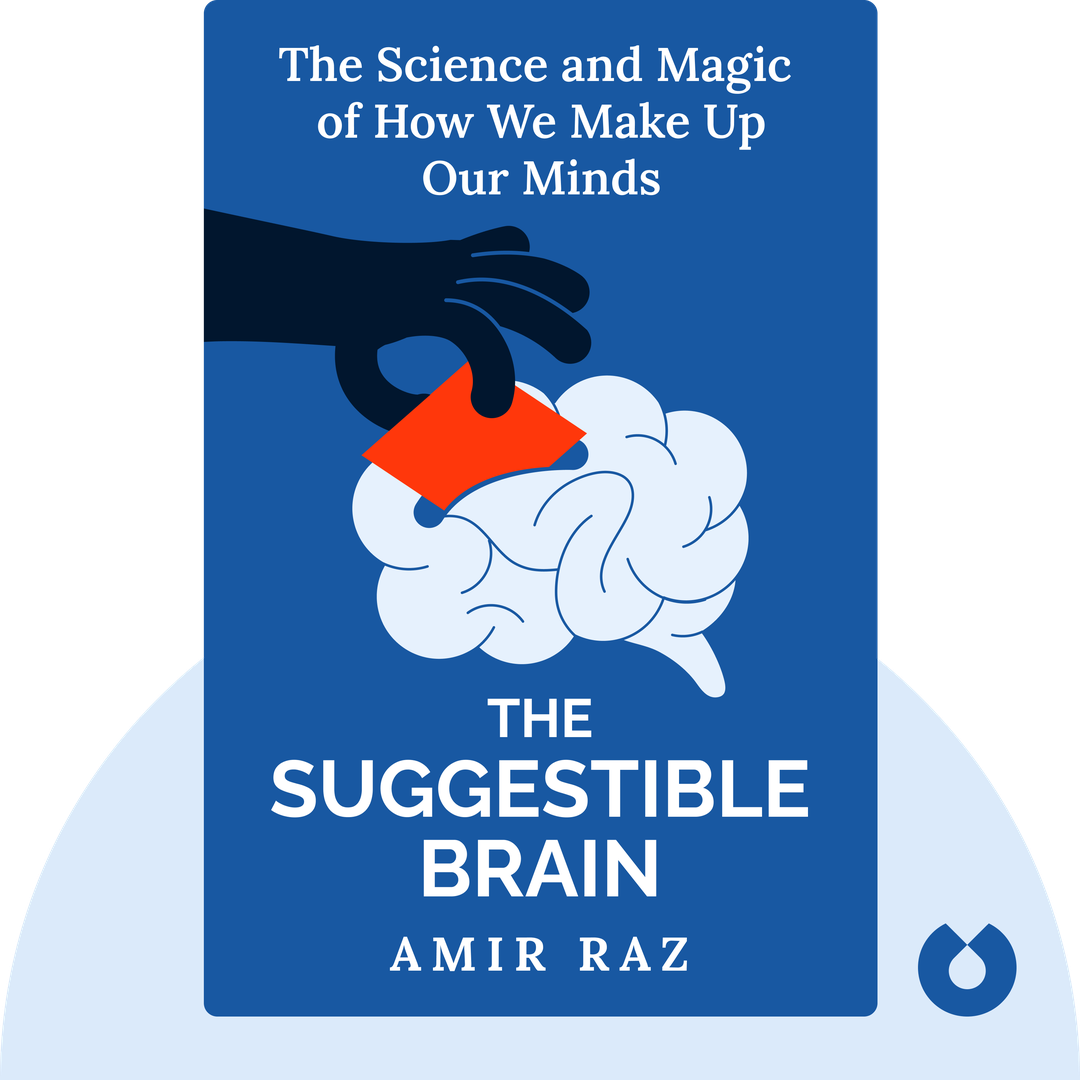
The Suggestible Brain (2024) explores how the power of suggestion can shape our perceptions, beliefs, and physiology. In a wide ranging analysis that touches on human evolution, the placebo effect, the Salem Witch trials and more, it persuasively makes the case that suggestion is among humankind’s most powerful tools of influence.
Who Should Listen to The Suggestible Brain?
- Psychologists who want to understand how suggestion impacts mental health
- Healthcare professionals fascinated by the mind-body connection
- Anyone who wants to use the power of suggestion to their advantage
Books Similar to The Suggestible Brain
Readers who enjoyed this also liked these titles.