If You're Curious About These Questions...
You should listen to this audiobook
- What if the rules and limits you set for your child are actually the biggest obstacles to their personal growth and learning?
- Did you know that treating children with the same autonomy as adults could be the secret to raising more rational and independent thinkers?
- Have you ever wondered how a completely non-coercive household functions, and why it might be more effective than traditional discipline?
Listen to The Sovereign Child — Free Audiobook
Loading player...
Key Takeaways from The Sovereign Child
- Discover why treating children as autonomous individuals with adult-like reasoning eliminates power struggles and fosters genuine independence.
- Learn how removing strict limits on daily habits like sleep and diet actually empowers children to naturally develop crucial self-regulation skills.
- Understand how traditional rule enforcement backfires by turning parents into gatekeepers, which ultimately encourages deceptive behaviors like sneaking and lying.
- Find out why shutting down a child's questions with strict authority builds long-term resentment and fosters a passive mindset that avoids personal responsibility.
- Master the art of replacing rigid boundaries with creative, win-win solutions that satisfy both a child's natural curiosity and a parent's practical concerns.
Learning Tools
Reinforce what you learned from The Sovereign Child
Mind Map
The Sovereign Child
The Core Philosophy+
The Failure of Rules+
The Win-Win Approach+
The Process of Discovery+
Quiz — Test Your Understanding
Question 1 of 6
What is the foundational belief of the 'Taking Children Seriously' approach?
Question 2 of 6
According to the book, what is a primary danger of enforcing strict rules on children?
Question 3 of 6
How does the book suggest handling a child who wants to draw on the walls?
Question 4 of 6
What fundamental shift in perspective is required to successfully implement win-win solutions?
Question 5 of 6
What should a parent do if their first attempt at a win-win solution, such as turning shoe-tying into a game, fails?
Question 6 of 6
How does a child's long-term resentment toward strict rules potentially affect them in adulthood?
The Sovereign Child — Full Chapter Overview
- 1Recommendation
- 2Children flourish with freedom and respect, not strict rules
- 3Strict rules can backfire and weaken healthy emotional development
- 4Rules create conflict, while creative solutions encourage cooperation
- 5Parenting becomes more rewarding when you focus on problem-solving
- 6To find real solutions, learn to welcome failure
- 7Final summary
The Sovereign Child Summary & Overview
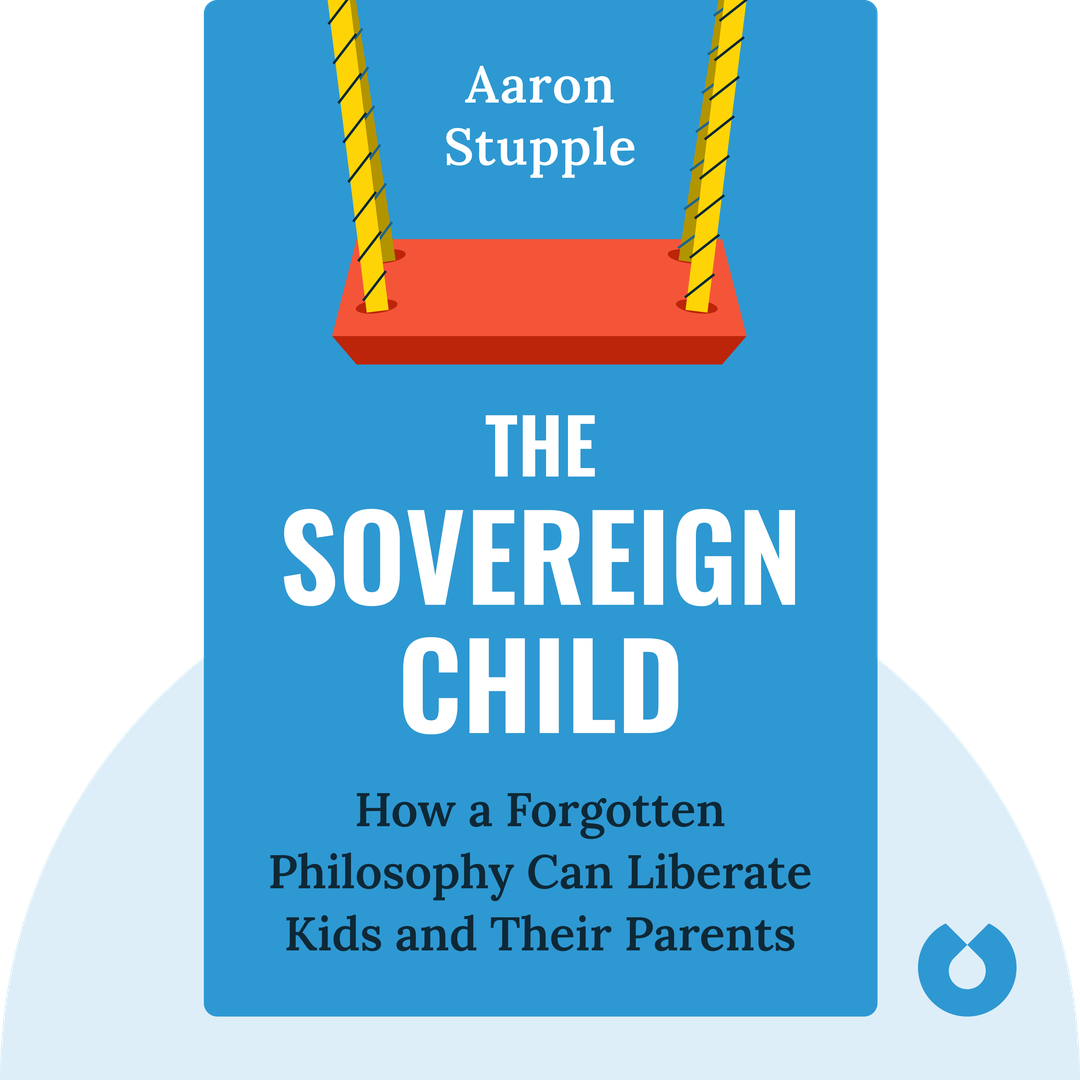
The Sovereign Child (2025) explores Taking Children Seriously, a parenting philosophy based on the idea that children think, feel, and reason just like adults. It challenges traditional parenting methods by arguing that enforcing rules and limits undermines a child’s ability to learn and grow. Instead, it advocates for a non-coercive approach where children are treated as autonomous individuals, capable of making their own decisions and understanding the world through experience rather than control.
Who Should Listen to The Sovereign Child?
- Parents seeking a non-coercive, rule-free approach to raising children
- Educators interested in child autonomy and alternative learning methods
- Anyone questioning traditional parenting and discipline strategies
Books Similar to The Sovereign Child
Readers who enjoyed this also liked these titles.