If You're Curious About These Questions...
You should listen to this audiobook
- What’s the secret to raising a child who is genuinely self-motivated instead of just following your orders?
- Have you ever wondered why your attempts to control your child’s success might actually be the primary source of their stress and lack of drive?
- What if you could transform your relationship with your child by stepping back as their 'manager' and becoming their 'consultant' instead?
Listen to The Self-Driven Child — Free Audiobook
Loading player...
Key Takeaways from The Self-Driven Child
- Understand why granting your child a perceived sense of control is essential for building their autonomy, motivation, and lifelong resilience.
- Discover practical methods to teach your kids stress management, from allowing them to vent without unsolicited advice to encouraging journaling and laughter.
- Learn how to shift from a dictatorial parent to a supportive consultant to successfully nurture your child's internal motivation and independent decision-making skills.
- Find out how your personal anxiety can biologically and behaviorally transfer to your kids through second-hand stress and epigenetics.
- Master the art of cultivating a non-anxious presence to provide a calming environment where your child can safely learn to navigate discomfort.
Learning Tools
Reinforce what you learned from The Self-Driven Child
Mind Map
The Self-Driven Child
Agency & Stress+
Motivation & Autonomy+
Decision Making+
Emotional Environment+
Technology Habits+
Paths to Adulthood+
Quiz — Test Your Understanding
Question 1 of 8
What do the authors identify as the most important factor for a child's happiness and well-being?
Question 2 of 8
How do the authors recommend parents view their role when helping their children make decisions?
Question 3 of 8
What did the referenced 30-year-old study reveal about the decision-making abilities of 14-year-olds?
Question 4 of 8
Why is it particularly harmful when a parent tries to hide their anxiety from their child?
Question 5 of 8
What is the recommended first step for parents who are worried about their child's overuse of technology?
Question 6 of 8
If a child wants to go straight to college but the parent doubts their readiness, what practical approach do the authors suggest?
Question 7 of 8
How can parents best support a child who is struggling to achieve traditional academic success?
Question 8 of 8
According to the actionable advice in the text, why should parents encourage their children to let their minds wander during downtime, such as a car ride?
The Self-Driven Child — Full Chapter Overview
- 1Recommendation
- 2Children experience stress when they feel everything is beyond their control.
- 3Giving children control over their lives helps them feel happier and more motivated.
- 4Parents should guide children toward making informed decisions for themselves.
- 5Anxiety can rub off on children, so parents should aim to stay calm.
- 6Children need time away from technology.
- 7Many children aren’t ready for college.
- 8Academic success isn’t the only path to fulfillment.
- 9Final summary
The Self-Driven Child Summary & Overview
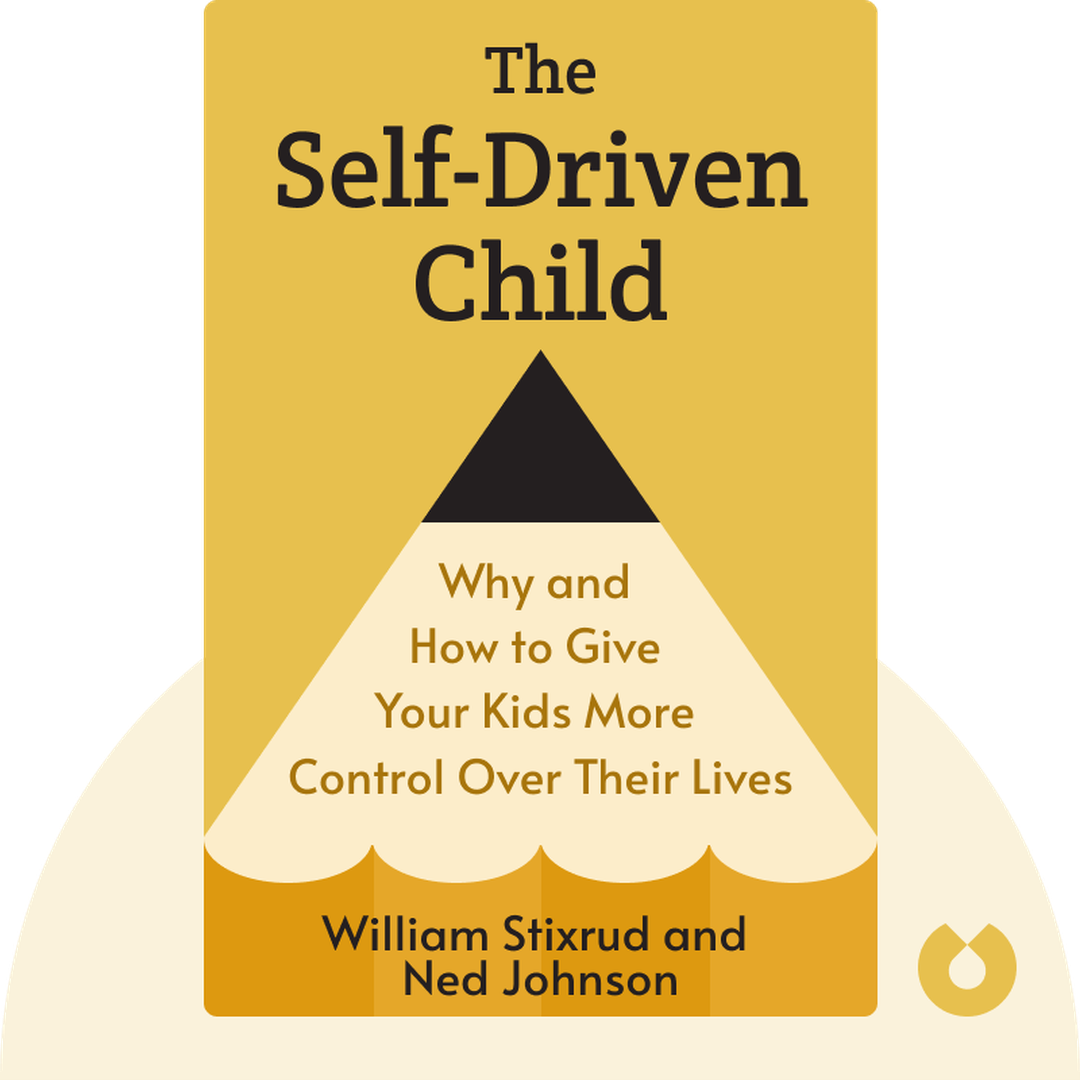
The Self-Driven Child (2018) shows us how our instinct to control our children’s lives can result in stressed-out, uncooperative, and poorly motivated kids. Instead, the book argues, we should try to help our children come to informed decisions themselves – and trust them to make the big calls.
Who Should Listen to The Self-Driven Child?
- Parents of stressed, overworked kids
- Child psychologists and pediatricians
- Anyone interested in the complex dynamics between parent and child
Books Similar to The Self-Driven Child
Readers who enjoyed this also liked these titles.