If You're Curious About These Questions...
You should listen to this audiobook
- Have you ever wondered why we often sabotage our own happiness, even when we're working harder than ever to achieve it?
- What if you could tap into a science-backed 'inner sovereignty' that protects you from burnout and restores your sense of self-worth?
- Are you curious about the hidden patterns that dictate your daily choices and how you can finally break free to live a more authentic life?
Listen to Sovereign — Free Audiobook
Loading player...
Key Takeaways from Sovereign
- Discover how to achieve personal sovereignty by breaking free from societal expectations, past traumas, and self-imposed limitations to reach your full potential.
- Learn how to replace draining self-criticism with self-compassion by asking yourself what you need in moments of failure, activating your body's restorative parasympathetic nervous system.
- Master your emotional well-being by fully embracing your feelings rather than suppressing them, utilizing powerful tools like cognitive reappraisal and creative expression.
- Understand how to identify and release harmful 'imprints'—deep-seated beliefs formed by past experiences and cultural conditioning—that secretly restrict your success.
- Find out how daily practices like meditative breathing and spending time offline can clear mental clutter, regulate your nervous system, and help you build a truly authentic life.
Learning Tools
Reinforce what you learned from Sovereign
Mind Map
Sovereign
Core Concept+
Overcome Self-Criticism+
Master Emotions+
Challenge Limiting Beliefs+
Build Positive Relational Energy+
Trust Inner Intuition+
Regain Physical Health+
Quiz — Test Your Understanding
Question 1 of 7
What does it mean to be 'sovereign' according to the text?
Question 2 of 7
How does the author distinguish between self-criticism and self-awareness?
Question 3 of 7
What is 'cognitive reappraisal' as described in the context of mastering emotions?
Question 4 of 7
According to the book, what are 'imprints'?
Question 5 of 7
In the context of relational energy, how does a 'Star' differ from a 'Crusher' or a 'Sacrificer'?
Question 6 of 7
What does the author suggest doing to better harness and develop your intuition?
Question 7 of 7
How did JT, the 45-year-old barbecue chef mentioned in the text, resolve many of his severe health issues?
Sovereign — Full Chapter Overview
- 1Recommendation
- 2Overcome self-criticism and achieve personal sovereignty
- 3Master your emotions for personal growth
- 4Challenge limiting beliefs and gain mental freedom
- 5Create positive relational energy for thriving connections
- 6Develop and trust your inner intuition
- 7Restore your health by reconnecting with your body
- 8Final summary
Sovereign Summary & Overview
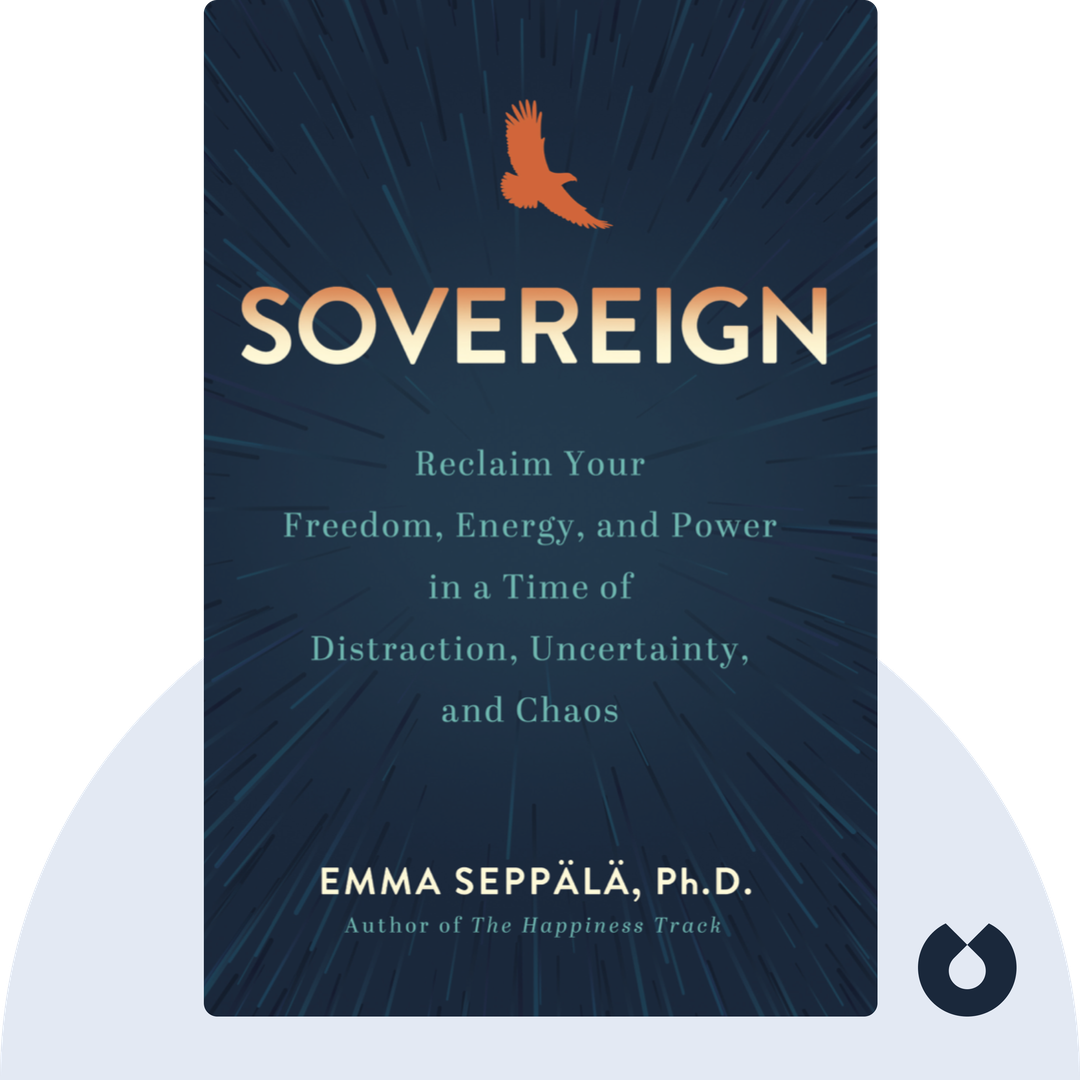
Sovereign (2024) explores how people can take back their freedom and learn to truly value themselves. It offers science-backed strategies to break free from self-destructive patterns and beliefs, aiming to help readers live more authentic, fulfilling lives. Using real-life examples of people who hold an inner sovereignty, it addresses how readers, too, can reclaim sovereignty over their work, family, body, and mind.
Who Should Listen to Sovereign?
- Self-improvement aficionados looking for growth strategies
- Burned-out professionals needing guidance
- People battling with self-doubt and low self-esteem
Books Similar to Sovereign
Readers who enjoyed this also liked these titles.