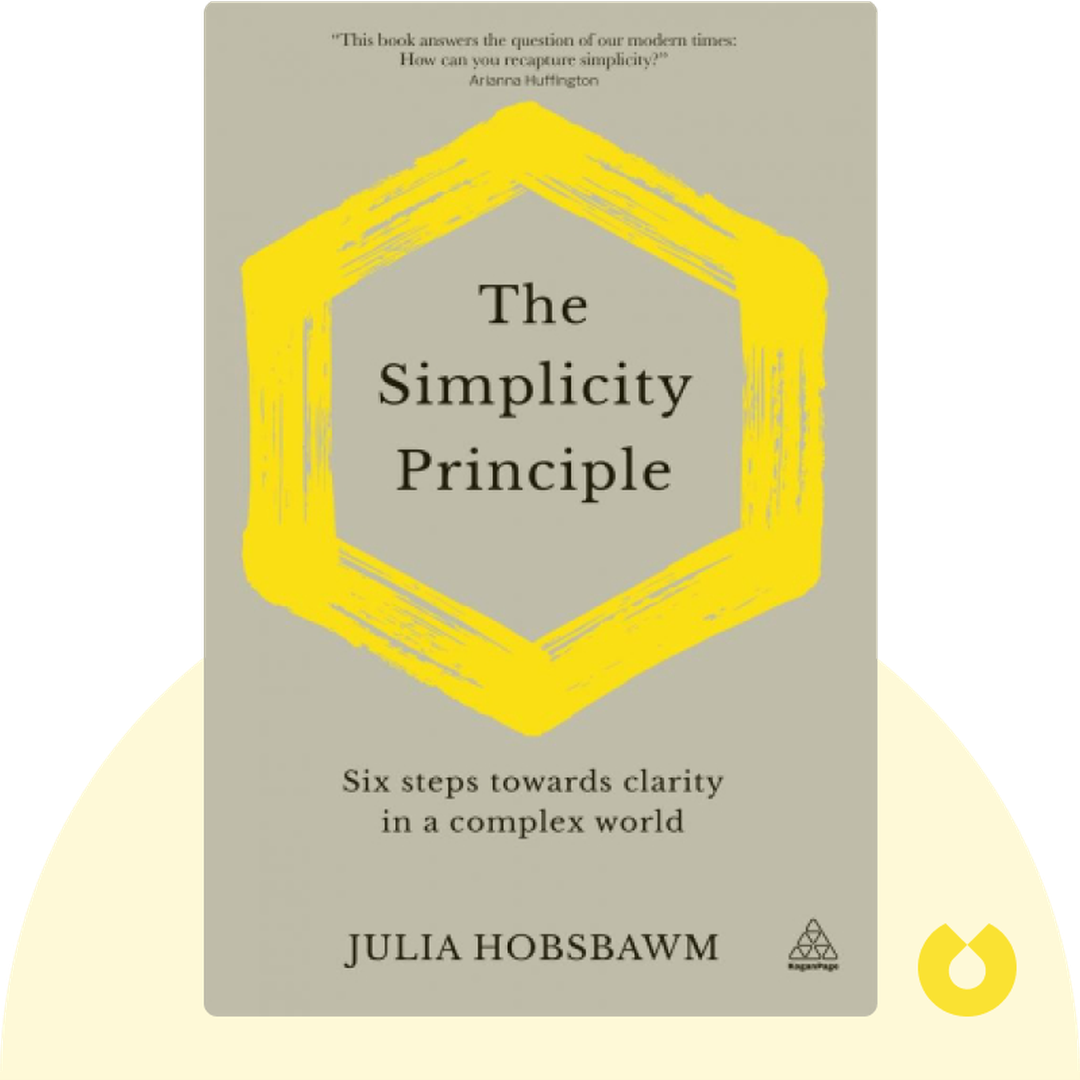
The Simplicity Principle
Start ListeningDownload Try free on iPhoneScan to start in 5 seconds
Categories:
If You're Curious About These Questions...
You should listen to this audiobook
- Did you know that a specific geometric shape found in nature holds the secret to organizing your chaotic modern life?
- Have you ever wondered why we feel so overwhelmed by 'infobesity,' and how nature's own design can help us reset?
- What if you could use a simple 'six-sided' principle to cut through the digital noise and reclaim your focus?
Listen to The Simplicity Principle — Free Audiobook
Loading player...
Key Takeaways from The Simplicity Principle
- Understand why humans fundamentally crave simplicity in a complex world, a desire that drives the success of major tech companies and shapes modern political outcomes.
- Discover how the 'Hexagon Action' system, inspired by the natural efficiency of beehives, can help you visually streamline your life around six core priorities.
- Learn how to optimize your daily focus by limiting your active tasks to six, which aligns perfectly with the natural capacity of your working memory.
- Find out how to combat digital distraction by implementing an 'internet Shabbat,' helping you reclaim the 23 minutes of focus lost every time you check a notification.
- Master the art of saying no to almost everything, adopting the boundary-setting strategies of highly successful people like Warren Buffet to protect your time and purpose.
Learning Tools
Reinforce what you learned from The Simplicity Principle
Mind Map
The Simplicity Principle
The Complexity Crisis+
The Hexagon Model+
Facet 1: Clarity+
Facet 2: Individuality+
Facet 3: Reset+
Facet 4: Knowledge+
Facet 5: Networks+
Facet 6: Time+
Actionable Advice+
Quiz — Test Your Understanding
Question 1 of 8
Why does the author use examples like Apple's product design, the Brexit campaign, and Trump's 2016 election victory?
Question 2 of 8
According to the book, why is the hexagon an ideal visual tool for streamlining our priorities?
Question 3 of 8
What does investor Warren Buffet attribute the difference between 'successful' and 'really successful' people to?
Question 4 of 8
How does the author differentiate 'mindful-less-ness' from traditional mindfulness?
Question 5 of 8
What is 'infobesity' as described in the text?
Question 6 of 8
What did research in the Journal of Experimental Psychology reveal about making requests to others?
Question 7 of 8
What is the author's view on setting deadlines in the workplace?
Question 8 of 8
Why does the author suggest we shouldn't be afraid to act like a 'snowflake'?
The Simplicity Principle — Full Chapter Overview
- 1Recommendation
- 2Faced with a complex world, we crave simplicity above all.
- 3To simplify life, we can learn from bees and their hexagonal hives.
- 4Clarity is key to avoiding distraction and finding purpose.
- 5Individuality is essential for discovering simplicity.
- 6In an always-on culture, we need to reset.
- 7We need to be selective about the knowledge we take in.
- 8Instead of remote networks, we should seek real connection—in work and beyond.
- 9Our personal experience of time matters when we’re pursuing simplicity.
- 10Final summary
The Simplicity Principle Summary & Overview
The Simplicity Principle (2020) proposes a simpler way of living in the twenty-first century. Drawing from nature and geometry, Julia Hobsbawm demonstrates how to simplify the complicated and learn to prioritize the things that matter most of all.
Who Should Listen to The Simplicity Principle?
- Anyone who struggles with a complex workload
- Stress-heads who need to reset
- Those looking to kick their addiction to rolling news
Books Similar to The Simplicity Principle
Readers who enjoyed this also liked these titles.