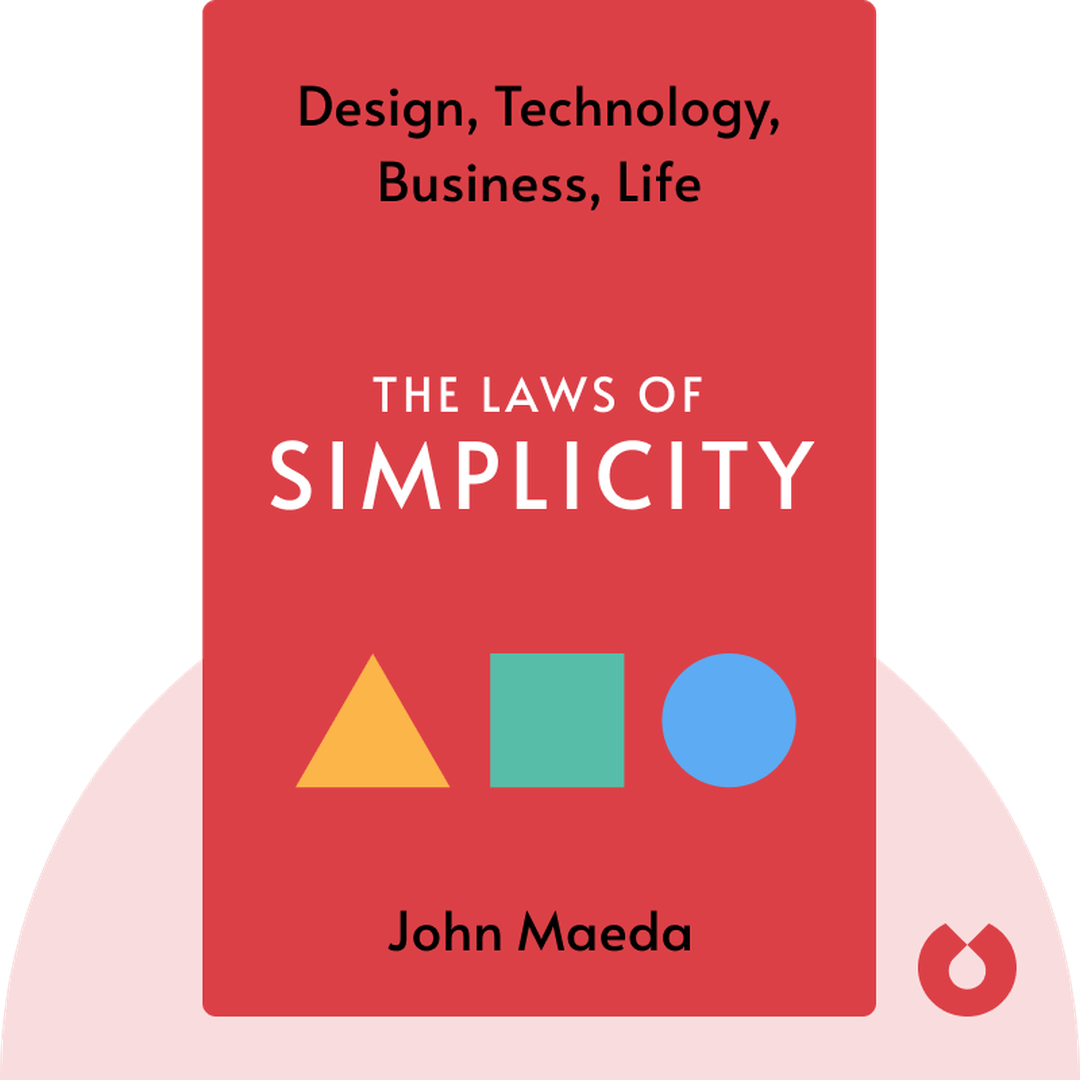
The Laws of Simplicity
Start ListeningDownload Try free on iPhoneScan to start in 5 seconds
Categories:
If You're Curious About These Questions...
You should listen to this audiobook
- Have you ever wondered why the most successful products feel so effortless to use, and what hidden laws make that possible?
- What if you could master the art of "subtracting the obvious and adding the meaningful" to transform your business and your daily life?
- Are you curious about the surprising reason why true simplicity actually requires a certain amount of complexity to be effective?
Listen to The Laws of Simplicity — Free Audiobook
Loading player...
Key Takeaways from The Laws of Simplicity
- Discover the core formula for achieving simplicity by learning how to subtract the obvious and add the meaningful in both product design and personal relationships.
- Learn how to successfully simplify product design by intentionally reducing functionality, hiding complex features, or shrinking the product's physical size to increase consumer tolerance.
- Understand why simplifying a product requires you to create actual or perceived value through high-quality design and strategic marketing to compensate for reduced functionality.
- Master the art of task organization by grouping and labeling your to-dos, and applying the Pareto Principle to focus on the crucial 20 percent of work that drives 80 percent of your results.
- Find out how to create a feeling of simplicity in your daily life by managing your time more efficiently and eliminating unnecessary periods of waiting.
Learning Tools
Reinforce what you learned from The Laws of Simplicity
Mind Map
The Laws of Simplicity
Core Philosophy+
Design Strategies+
Organization & Time+
Knowledge & Learning+
Trust & Delegation+
Emotion & Complexity+
Technology's Role+
Quiz — Test Your Understanding
Question 1 of 8
What is the core formula for achieving simplicity, according to the text?
Question 2 of 8
How can designers make consumers more tolerant of a product having limited functionality?
Question 3 of 8
How does the Pareto Principle apply to organizing and simplifying your tasks?
Question 4 of 8
Which psychological trick does the text suggest to make idle waiting time feel faster and less painful?
Question 5 of 8
According to the text, what are the two main rules for fostering motivation when teaching someone something new?
Question 6 of 8
What two specific sources of trust help simplify our lives by reducing the decisions we have to make?
Question 7 of 8
Why is pure simplicity NOT always the best approach, particularly in communication and consumer products?
Question 8 of 8
How does open-source technology, like the Linux operating system, simplify the troubleshooting process for users?
The Laws of Simplicity — Full Chapter Overview
- 1Recommendation
- 2In our ever more complex world, simplicity’s a luxury.
- 3Simplicity can be achieved via simple hacks like reducing functions or shrinking products down.
- 4In time management, solid organization can help deliver simplicity truly.
- 5Using the time you have in the right way is vital to simplifying your life.
- 6Since knowledge simplifies everything, learn to teach things the right way.
- 7We can make life simpler by placing our trust in others.
- 8Simplicity is not always the answer, especially when it involves handling human emotions directly.
- 9Technological advances alter what facets of our lives can be simplified.
The Laws of Simplicity Summary & Overview
The Laws of Simplicity consists of a set of “laws” formulated by the author to try to grasp the meaning and essence of simplicity. Along the way, it provides useful advice on how to introduce simplicity to our daily lives, business and product design.
Who Should Listen to The Laws of Simplicity?
- Anyone who wants to design successful products
- Anyone who wants to bring more simplicity into their lives
- Anyone in sales or marketing
Books Similar to The Laws of Simplicity
Readers who enjoyed this also liked these titles.