If You're Curious About These Questions...
You should listen to this audiobook
- What if the secret to lasting weight loss isn't hidden in a new diet, but in a fundamental shift in how you think about yourself?
- Did you know that practicing self-compassion could actually be more effective for reaching your health goals than strict self-criticism?
- Have you ever wondered why your mindset is the most important factor in transforming not just your body, but your entire sense of self-worth?
Listen to The Shift — Free Audiobook
Loading player...
Key Takeaways from The Shift
- Discover why altering your mindset and disentangling your self-esteem is far more crucial for sustainable weight loss than simply choosing the perfect diet.
- Learn to overcome inevitable setbacks through self-compassion by speaking to yourself with the exact same kindness and understanding you would offer a close friend.
- Understand how to easily empty your 'mind trash' by recognizing and dismantling destructive thought cycles that sabotage your feelings and actions.
- Identify the four main types of negative thinking that hijack your goals, ranging from catastrophizing a single mistake to being overly optimistic without having a concrete plan.
- Master the art of transforming big, positive thoughts into highly doable actions by harnessing the power of 'how' to create clear, specific routines.
Learning Tools
Reinforce what you learned from The Shift
Mind Map
The Shift
Core Philosophy+
Shift 1: Self-Compassion+
Shift 2: Clear Negative Thoughts+
Shift 3: Goal Setting+
Shift 4: Leverage Strengths+
Shift 5: Appreciate Your Body+
Shift 6: Ask for Help+
Shift 7: Choose Happiness Now+
Quiz — Test Your Understanding
Question 1 of 9
According to the author, what is the most critical factor for achieving significant and sustainable weight loss?
Question 2 of 9
How does the author suggest you should respond when you experience a setback, such as eating an ice cream sundae?
Question 3 of 9
Which of the following is an example of the 'once-makes-always' type of negative thinking?
Question 4 of 9
What is the primary problem with the 'don't-worry-be-happy' mindset during a weight-loss journey?
Question 5 of 9
When setting goals, why does the author emphasize asking the question 'how'?
Question 6 of 9
How does the author recommend utilizing your personal 'superpowers' or character strengths?
Question 7 of 9
According to the text, what percentage of the variation in body weight is determined by genetics rather than what is on your plate?
Question 8 of 9
What is the author's advice for dealing with friends or family members who act as 'saboteurs' to your weight-loss goals?
Question 9 of 9
What is the author's perspective on the relationship between happiness and weight loss?
The Shift — Full Chapter Overview
- 1Recommendation
- 2For losing weight, your thoughts matter more than the food you do eat.
- 3Self-compassion is the finest cure for setbacks.
- 4Clear your mind from negative thoughts.
- 5Clear goals will lead you to Destination Weight Loss.
- 6Use your strengths to lose weight and become a better person.
- 7Your remarkable body is deserving of respect and appreciation.
- 8Never be afraid to ask for help.
- 9Choose happiness today.
The Shift Summary & Overview
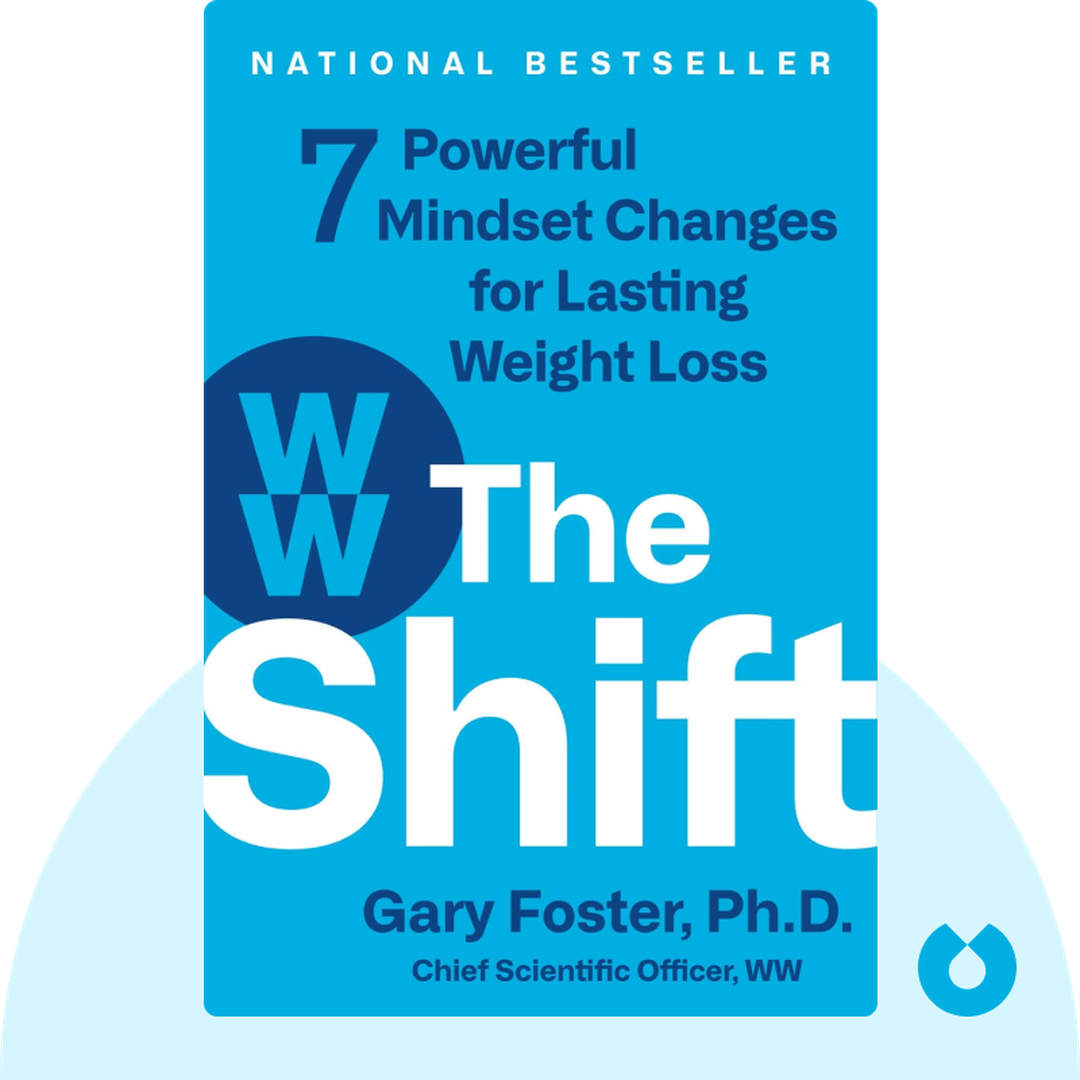
The Shift (2021) breaks down how to achieve weight loss by shifting your mindset. By changing the way you think about yourself and your body, you can set into motion incredible changes that can alter not just your body, but also your sense of self, happiness, and self-worth.
Who Should Listen to The Shift?
- Weight-loss seekers
- People who want to improve their self-esteem
- Supporters of a loved one who wants to lose weight
Books Similar to The Shift
Readers who enjoyed this also liked these titles.