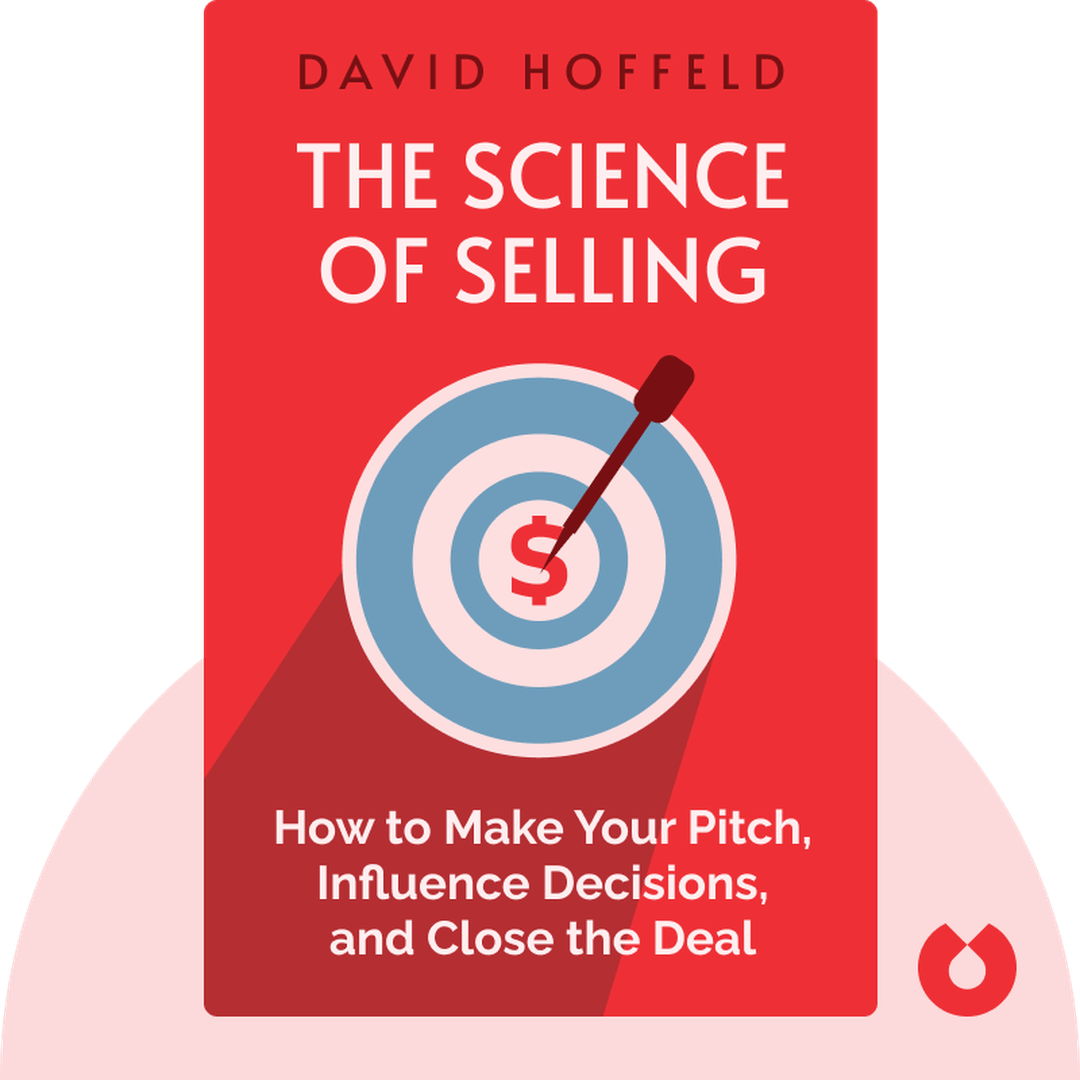
The Science of Selling
Start ListeningDownload Try free on iPhoneScan to start in 5 seconds
Categories:
If You're Curious About These Questions...
You should listen to this audiobook
- What's the secret to crafting a pitch that triggers a 'yes' response in your customer's brain?
- Are you curious about the hidden psychological triggers that can make or break a sale?
- What if you could decode the neural patterns that drive customer decisions and use them to your advantage?
Listen to The Science of Selling — Cinematic Audio Edition
Loading player...
Key Takeaways from The Science of Selling
- Understand why effective selling relies on science rather than innate talent, and learn how you can use neuroplasticity to rewire your brain and improve your sales skills.
- Discover how to leverage peripheral routes of influence, such as the asymmetric dominance effect, to close deals by presenting customers with a good option alongside a great one.
- Master the "Six Whys" framework to eliminate buyer hesitation by systematically answering their internal questions about why they should change, act now, and choose your specific product.
- Learn how a buyer's emotional state dictates their purchasing choices, and discover simple techniques—like offering snacks or engaging in positive chit-chat—to make them more open to persuasion.
- Harness the power of emotional cognition to naturally lift a potential buyer's mood by projecting an upbeat attitude, contagious body language, and cheerful vocal tones.
Learning Tools
Reinforce what you learned from The Science of Selling
Mind Map
The Science of Selling
Evidence-Based Approach+
The Six Whys Framework+
Emotional Influence+
Strategic Questioning+
Addressing Actual Needs+
Demonstrating Value+
Psychological Strategies+
Actionable Hiring Advice+
Quiz — Test Your Understanding
Question 1 of 8
According to research from the Wharton School, how do highly extroverted people perform in sales compared to average?
Question 2 of 8
In the framework of the 'Six Whys,' what must a salesperson do when answering the question 'why your industry?'
Question 3 of 8
How can a salesperson utilize the phenomenon of 'emotional cognition' during a pitch?
Question 4 of 8
According to 'social penetration theory,' how should a salesperson structure the questions they ask a buyer?
Question 5 of 8
What trap do salespeople fall into when they suffer from 'inattentional blindness'?
Question 6 of 8
What is the primary purpose of the sales technique known as 'inoculation'?
Question 7 of 8
A salesperson shows a client a highly expensive software package before revealing the much lower price of the software they actually intend to sell. Which psychological phenomenon is being used here?
Question 8 of 8
What did the famous grocery store experiment involving tasting booths for jam demonstrate about buyer behavior?
The Science of Selling — Full Chapter Overview
- 1Recommendation
- 2Learning the science of sales will boost your performance.
- 3Streamline the sales process by addressing the Six key Whys.
- 4Increase your sales by elevating your buyer’s mood.
- 5Sharpen your sales pitch with powerful questions.
- 6Make sales grounded in your buyer’s actual needs.
- 7Make sales seem worthwhile by proving the real value of your product or service.
- 8Refine your sales presentation with science-backed strategies.
The Science of Selling Summary & Overview
The Science of Selling (2016) is a detailed handbook on the science of making a sale. Combining insights from neuroscience and social psychology, this guide presents an evidence-based approach to making a convincing pitch.
Who Should Listen to The Science of Selling?
- Salespeople looking for an extra edge
- Marketers interested in evidence-based approaches
- Folks who want to learn the neuroscience behind sales
Books Similar to The Science of Selling
Readers who enjoyed this also liked these titles.