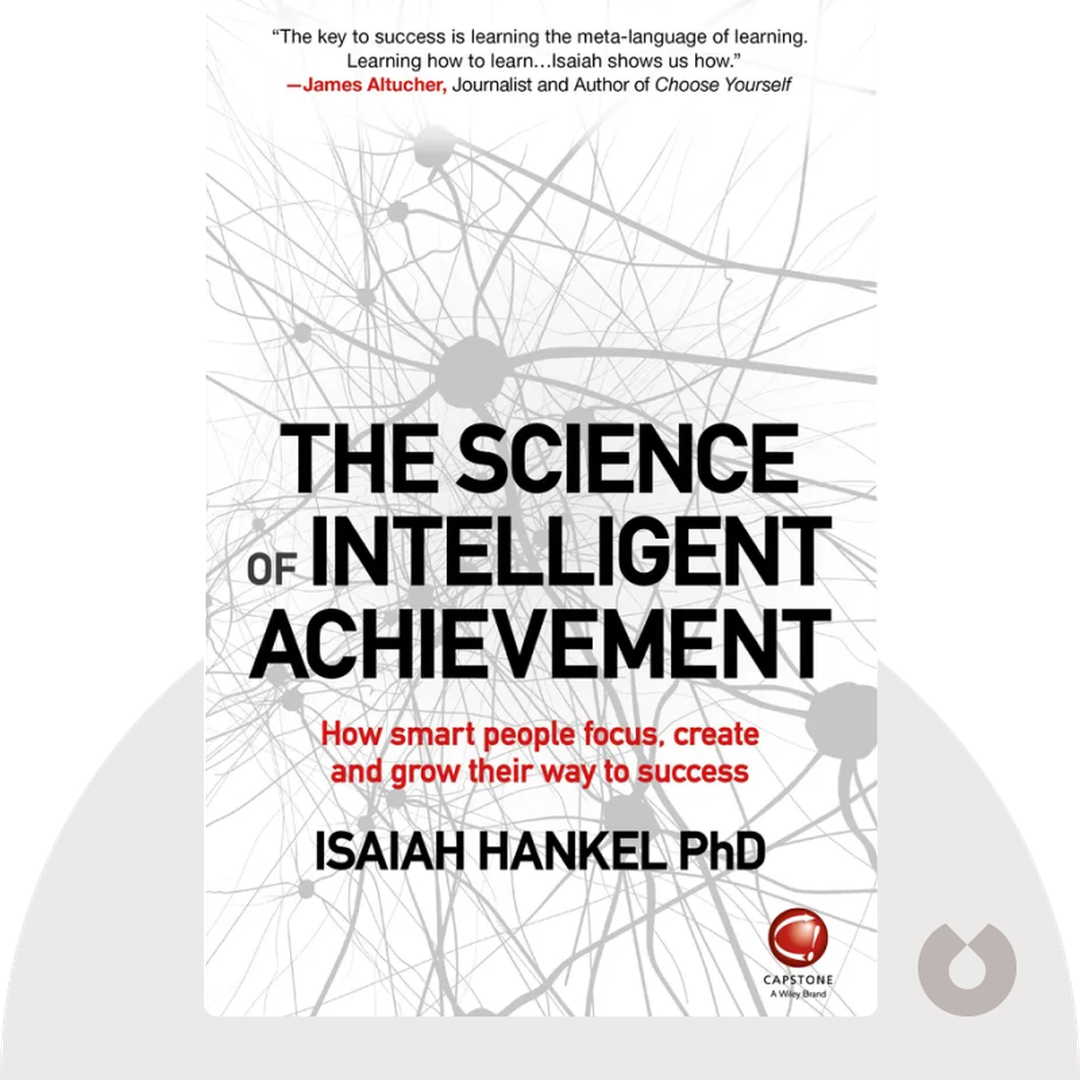
The Science of Intelligent Achievement
Start ListeningDownload Try free on iPhoneScan to start in 5 seconds
Categories:
If You're Curious About These Questions...
You should listen to this audiobook
- Did you know that your mental energy is a strictly finite resource, and you’re likely wasting your most productive hours on tasks that don't actually move the needle?
- Have you ever wondered why your social circle might be the invisible barrier to your success, and how you can strategically curate your environment for maximum motivation?
- What if you could stop relying on fleeting bursts of inspiration and instead master a scientific system for consistent, high-level creative achievement?
Listen to The Science of Intelligent Achievement — Free Audiobook
Loading player...
Key Takeaways from The Science of Intelligent Achievement
- Discover why you only experience two hours of peak mental focus each day, and learn how to protect this precious resource by mastering the art of saying no.
- Understand why simply staying busy leads to mediocrity, and how engaging in short, focused bursts of deliberate practice is the true key to exceptional achievement.
- Find out how false productivity triggers unhelpful dopamine releases, and learn to evaluate every daily task to ensure it actually aligns with your long-term goals.
- Learn how listening to negative speech physically kills problem-solving neurons in your brain, and why you must fiercely protect yourself from pessimistic influences.
- Master the concept of Creative Ownership to start working toward your own dreams, using tools like the Disney method to write and produce content more freely.
Learning Tools
Reinforce what you learned from The Science of Intelligent Achievement
Mind Map
The Science of Intelligent Achievement
Selective Focus+
Creative Ownership+
Pragmatic Growth+
8 Pitfalls to Productivity+
Quiz — Test Your Understanding
Question 1 of 9
According to the text, how much peak mental focus does the average person have each day?
Question 2 of 9
What is the main difference between average achievers and exceptional achievers regarding practice?
Question 3 of 9
Why does the author recommend keeping negative influences and pessimistic people at a distance?
Question 4 of 9
How does the 'Disney method' suggest handling the first draft of a creative project?
Question 5 of 9
In the context of building a customer base, what is a 'lead magnet'?
Question 6 of 9
What is the 'negativity bias' described by psychologist Rick Hanson?
Question 7 of 9
Why does the author argue that traditional to-do lists are often a waste of time?
Question 8 of 9
According to the author's eight pitfalls to pragmatic productivity, why is 'accepting gifts' (like a free lunch) considered a pitfall?
Question 9 of 9
What is the recommended way to decline a request, according to a 2012 study by Vanessa Patrick?
The Science of Intelligent Achievement — Full Chapter Overview
- 1Recommendation
- 2Mental energy is scarce; learn to say no to safeguard this vital resource each day.
- 3Deliberate practice and focus drive success, while mere busyness results in mediocrity over time.
- 4Other people’s opinions spread easily, and negative influences can seriously harm your brain.
- 5Write from what you know, and use the Disney method to draft more freely.
- 6Use lead magnets to grow your customer base, and learn what your customers truly want to buy most.
- 7A pragmatic mindset supports health and success, including keeping your negativity bias under control each day and beyond.
- 8To-do lists waste time, and learning to say no is the pragmatic way to avoid bloated lists that often slow you down.
- 9Eight common pitfalls can prevent you from being truly productive today.
The Science of Intelligent Achievement Summary & Overview
The Science of Intelligent Achievement (2018) is about how to become more productive and creative, so that you achieve the goals you have set for yourself. The book shows you how to think the right thoughts, and surround yourself with the right people to sustain your motivation.
Who Should Listen to The Science of Intelligent Achievement?
- Entrepreneurs who want to harness their energy
- Self-employed people who want to boost their productivity
- Psychologists and coaches
Books Similar to The Science of Intelligent Achievement
Readers who enjoyed this also liked these titles.