If You're Curious About These Questions...
You should listen to this audiobook
- Did you know that a simple shift in how far ahead you look could be the single most important factor in your long-term success?
- Have you ever wondered why your most successful decisions often come from 'slowing down' your brain instead of rushing to a conclusion?
- What if you could re-program your mind to automatically see every challenge as a hidden opportunity for growth and profit?
Listen to Get Smart! — Free Audiobook
Loading player...
Key Takeaways from Get Smart!
- Discover why true intelligence is measured by your ability to foresee the long-term consequences of your actions, and learn how a future-oriented mindset turns workers into leaders.
- Master the GOSPA model—Goals, Objectives, Strategies, Priorities, and Actions—to sharpen the deliberate, slow-thinking skills required for making crucial life choices.
- Learn to avoid business disasters by actively hypothesizing why a product might fail rather than just hoping it succeeds, forcing you to validate real market demand.
- Harness the life-changing power of physically writing down your goals on paper, a simple practice that provides absolute clarity and rapidly accelerates your success.
- Understand the critical difference between having good intentions and delivering actual outcomes, realizing that your ultimate success is weighed entirely by your deliberate actions.
Learning Tools
Reinforce what you learned from Get Smart!
Mind Map
Get Smart!
Perspective & Brain Potential+
Long-Term Thinking+
Slow Thinking+
Business & Research+
Goal Setting+
Productivity at Work+
Flexible Thinking+
Creative Problem Solving+
The Wealthy Mindset+
Quiz — Test Your Understanding
Question 1 of 10
According to the book, what is the primary lesson from the Buddhist anecdote of the six blind men and the elephant?
Question 2 of 10
What did Harvard professor Edward Banfield discover about the smartest and highest-earning people?
Question 3 of 10
How does the author suggest we handle important decisions to ensure the best outcome?
Question 4 of 10
In the context of long-term strategy, what does the 'S' in the GOSPA model stand for?
Question 5 of 10
To avoid confirmation bias when testing a new product idea, how should an entrepreneur behave?
Question 6 of 10
What is the recommended way to write down a personal goal?
Question 7 of 10
What is the core principle behind the 'Law of Three' in the workplace?
Question 8 of 10
What question is at the heart of 'zero-based thinking'?
Question 9 of 10
How do 'mechanical thinkers' typically view success and failure?
Question 10 of 10
According to the Law of Correspondence, how does one begin the process of becoming wealthy?
Get Smart! — Full Chapter Overview
- 1Recommendation
- 2The first step to unlocking your brain’s potential is shifting your perspective.
- 3Combining long-term thinking with immediate action makes future goals achievable.
- 4To make better decisions, slow your thinking down.
- 5Success relies on thorough research and asking the right questions.
- 6In a chaotic, ever-changing world, written goals help you stay on track.
- 7Use your work time for important tasks, not procrastination or distractions.
- 8Success in today’s world requires a flexible mind that keeps learning.
- 9Avoid mechanical thinking by taking creative risks.
- 10Building wealth begins with thinking like a wealthy person.
- 11Final summary
Get Smart! Summary & Overview
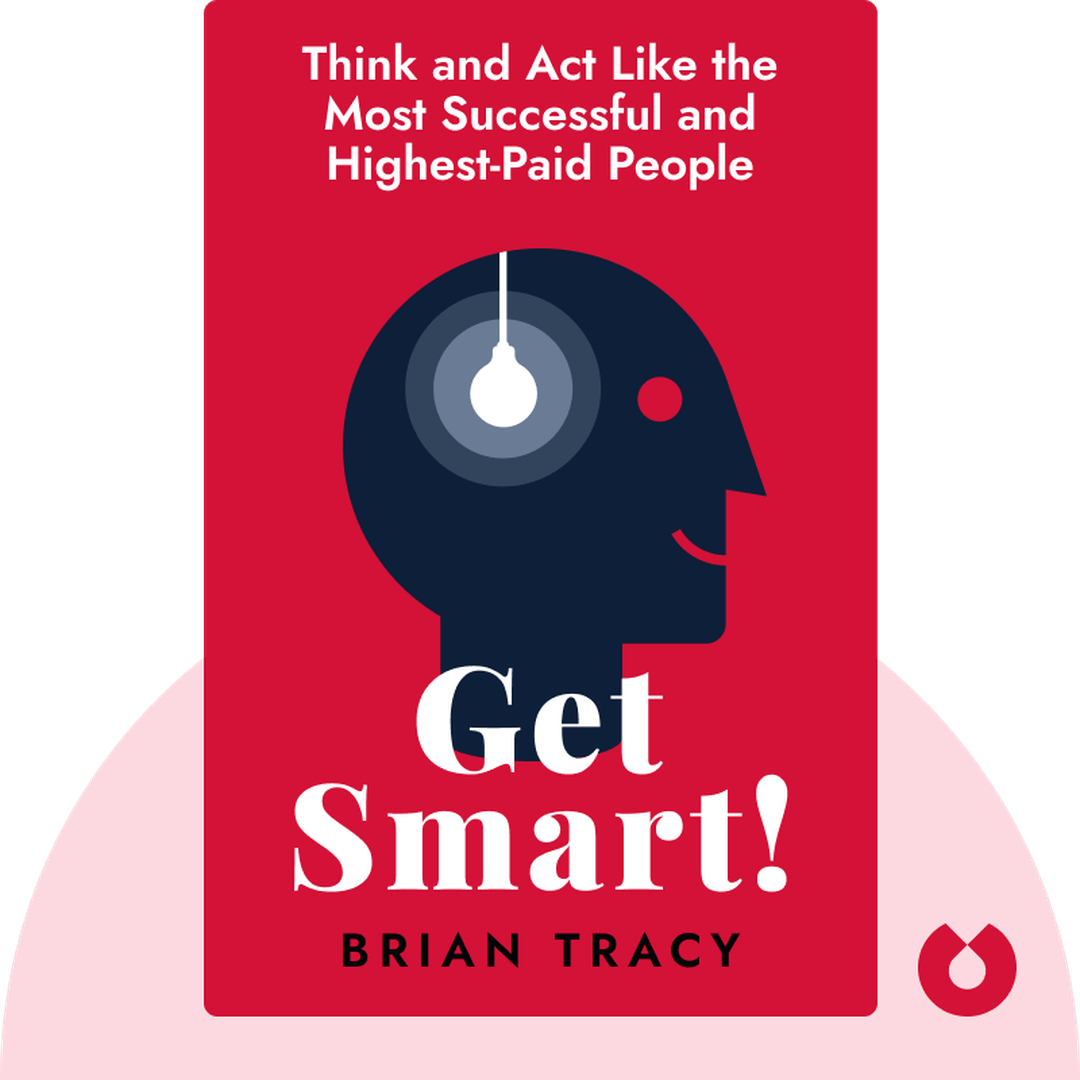
Get Smart! (2016) offers a variety of tips on how to tap into your unused brainpower and live a happier, more successful life. With a change in your perspective, and an outlook based on long-term positivity, you can discover how to get great results out of life and turn any challenge into an opportunity.
Who Should Listen to Get Smart!?
- Autodidacts looking for a learning opportunity
- Unhappy people hoping to improve their lives
- Creative and ambitious people hoping to be more productive
Books Similar to Get Smart!
Readers who enjoyed this also liked these titles.