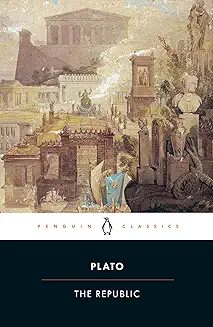
If You're Curious About These Questions...
You should listen to this audiobook
- Have you ever wondered why the most brilliant thinkers—rather than the most popular politicians—might be the only ones capable of leading a truly just society?
- What if the secret to your inner peace isn't just 'being good,' but understanding the three conflicting forces fighting for control inside your soul?
- Are you curious about the specific warning signs that indicate a free democracy is on the verge of collapsing into a total tyranny?
Listen to The Republic — Free Audiobook
Key Takeaways from The Republic
- Discover why ancient philosophy remains highly relevant today by providing a timeless language for justice, moral health, and the courage to question leadership.
- Recognize that the structural health of any society depends directly on the moral health of its citizens, making personal character the foundation of a just world.
- Learn how to view leadership as a moral craft dedicated to serving the community, rather than a vehicle for personal ambition, status, or financial reward.
- Understand the profound connection between justice and personal well-being, and discover how ethical actions lead to 'eudaimonia'—a deeply rooted, internally coherent happiness.
- Explore the true origins of human communities through Socrates' two foundational principles: our undeniable mutual need for one another and the strength found in our diverse natural talents.
Learning Tools
Reinforce what you learned from The Republic
Mind Map
Quiz — Test Your Understanding
The Republic — Full Chapter Overview
- 1Recommendation
- 2Socrates questions and breaks down the definitions of justice offered by his dialogue partners.
- 3Justice cannot be studied apart from the individual and the city.
- 4People and cities must be just; merely seeming just is the worst form of injustice.
- 5Education and a noble lie are needed for justice.
- 6Socrates compares the city and the individual through an analogy between the just city and the just person’s soul.
- 7The city and soul each have three parts, with each part of the city corresponding to a part of the individual’s soul.
- 8In the perfectly just city, philosophers must be kings—or kings must become philosophers.
- 9Philosophers will face great difficulty in ruling and educating others.
- 10There are five forms of government, with aristocracy as the best.
- 11Final summary
The Republic Summary & Overview
The Republic is Plato’s foundational dialogue on justice, political order, and the human soul. Set in the Piraeus at the house of Cephalus, the conversation begins with a deceptively practical question—what does it mean to be just?—and quickly escalates into a far-reaching examination of power, morality, education, and the best possible form of government.
To answer whether justice is good in itself, Socrates and his companions build an ideal city “in speech,” then use its structure as a mirror for the individual psyche. Plato develops the famous tripartite soul, proposes a radical guardian class trained through rigorous censorship and mathematics, argues for the rule of philosopher-kings, and depicts political decline through timocracy, oligarchy, democracy, and tyranny. The dialogue culminates in the Allegory of the Cave and the Myth of Er, framing justice as the soul’s true health and ultimate salvation.
Who Should Listen to The Republic?
- Listeners who want a clear, structured roadmap of Plato’s argument from Book 1 through Book 10
- Students of political theory, ethics, and philosophy looking for a conceptual summary without heavy quotation
- Anyone interested in how Plato links civic design, education, and psychology into one unified theory of justice
Books Similar to The Republic
Readers who enjoyed this also liked these titles.