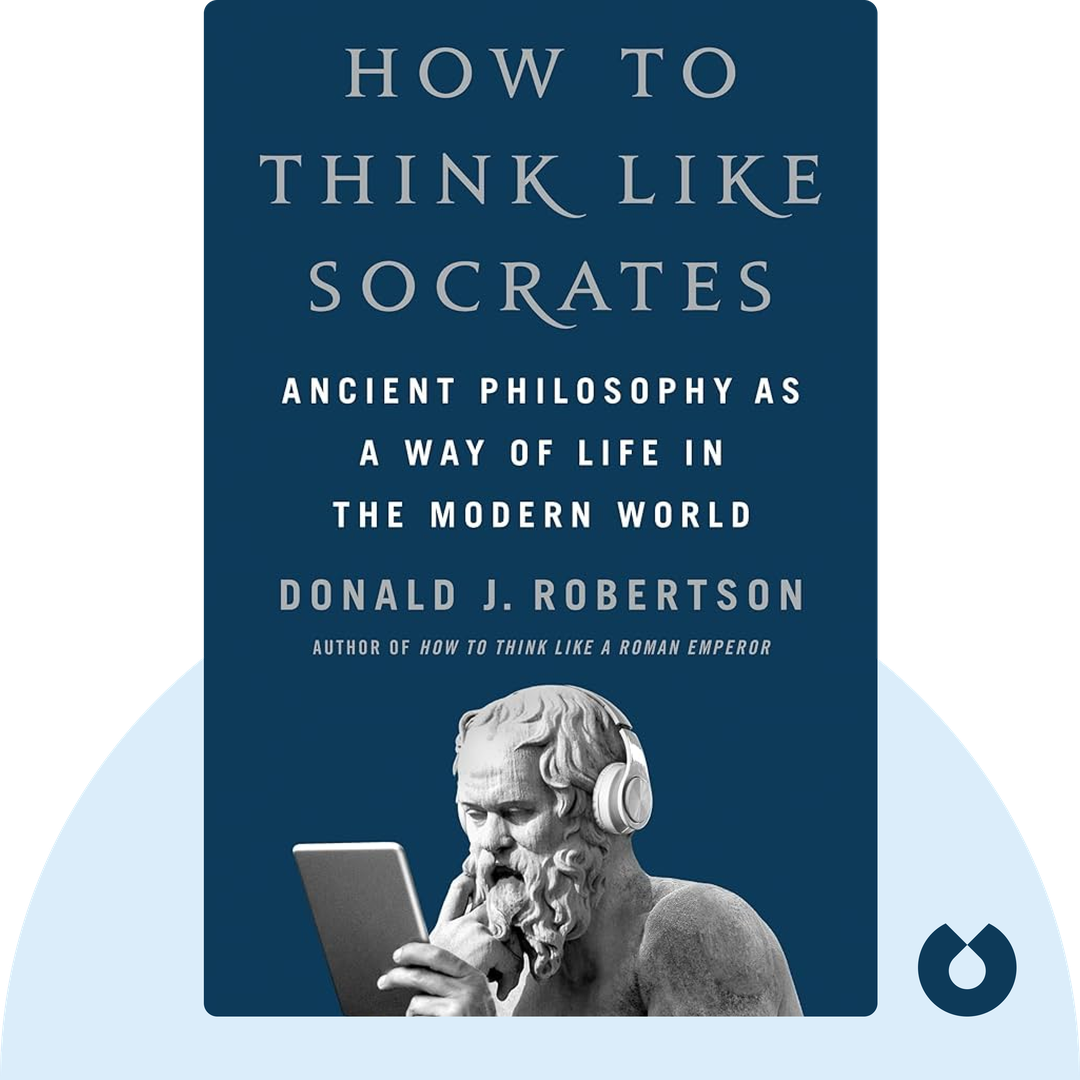
How to Think Like Socrates
Start ListeningDownload Try free on iPhoneScan to start in 5 seconds
Categories:
If You're Curious About These Questions...
You should listen to this audiobook
- Have you ever wondered why we often feel so certain about our beliefs, only to discover they’re built on assumptions we’ve never actually questioned?
- What if you could maintain absolute integrity and clarity of mind even when facing immense pressure or a world in chaos?
- Are you curious about the ancient questioning technique that allows you to strip away confusion and uncover the hidden truth in any complex situation?
Listen to How to Think Like Socrates — Free Audiobook
Loading player...
Key Takeaways from How to Think Like Socrates
- Discover why true wisdom begins with acknowledging your own ignorance, a foundational mindset that prepares you to learn and make better decisions.
- Learn how to apply Socratic humility in everyday life by listing what you don't understand before forming an opinion and politely questioning the assumptions of experts.
- Master the art of Socratic questioning by starting discussions with familiar examples and gradually moving toward universal principles to uncover gaps in understanding.
- Understand the power of genuine curiosity in conversations, helping others discover inconsistencies in their own thinking instead of simply telling them they are wrong.
- Find out how to cut through chaos and heated emotional arguments by pursuing clear definitions for subjective terms like "fair" or "right."
Learning Tools
Reinforce what you learned from How to Think Like Socrates
Mind Map
How to Think Like Socrates
Begin with Nothing+
Cultivate Curiosity+
Find Truth in Chaos+
Never Back Down+
Brave the Consequences+
Quiz — Test Your Understanding
Question 1 of 6
How did Socrates react to the Oracle at Delphi's claim that no one was wiser than him?
Question 2 of 6
What was Socrates's primary method for helping people discover the flaws in their own thinking?
Question 3 of 6
During times of intense public debate and chaos in Athens, what powerful tool did Socrates use to clarify arguments?
Question 4 of 6
According to Socrates's observation of human nature, why do people commit wrong or unjust actions?
Question 5 of 6
Why did Socrates compare himself to a 'gadfly' during his trial?
Question 6 of 6
According to the text, what is a practical daily habit you can adopt to practice foundational Socratic wisdom?
How to Think Like Socrates — Full Chapter Overview
- 1Recommendation
- 2Start with nothing
- 3Nurture curiosity
- 4Find truth amid chaos
- 5Refuse to back down
- 6Face the consequences
- 7Final summary
How to Think Like Socrates Summary & Overview
How to Think Like Socrates (2024) reveals how the ancient philosopher’s methods for finding truth and wisdom remain powerful tools for navigating modern challenges. Through carefully documented historical examples from Socrates’s life in war-torn Athens, the book shows how his approach to questioning assumptions, defining terms clearly, and maintaining integrity under pressure can help readers make better decisions and live more examined lives.
Who Should Listen to How to Think Like Socrates?
- Students and educators interested in critical thinking skills and meaningful dialogue
- People navigating difficult decisions in their personal or professional lives
- Anyone feeling seeking methods to find deeper truths
Books Similar to How to Think Like Socrates
Readers who enjoyed this also liked these titles.