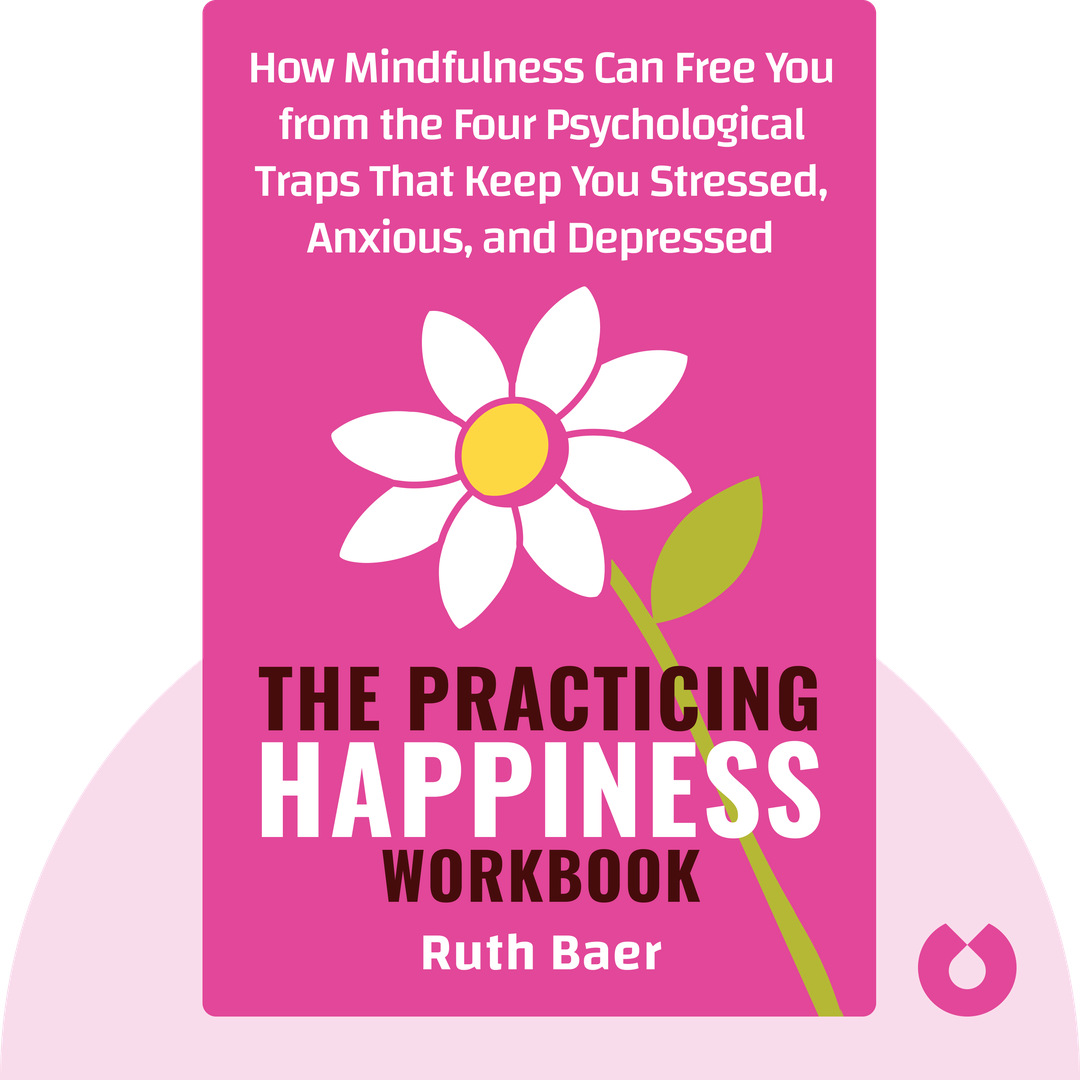
The Practicing Happiness Workbook
Start ListeningDownload Try free on iPhoneScan to start in 5 seconds
Categories:
If You're Curious About These Questions...
You should listen to this audiobook
- Have you ever wondered why the more you analyze your problems, the more stuck you feel?
- What if you could silence your inner critic and replace it with a type of resilience that actually thrives under pressure?
- Did you know that there is a specific way to approach difficult emotions that prevents them from spiraling into a bad day?
Listen to The Practicing Happiness Workbook — Free Audiobook
Loading player...
Key Takeaways from The Practicing Happiness Workbook
- Discover how mindfulness empowers you to break free from cycles of stress by observing your thoughts without reacting impulsively.
- Learn to treat your negative thoughts as unhelpful 'passengers on a bus,' allowing you to acknowledge their presence without letting them steer your life.
- Understand why rumination is a deceptive psychological trap that amplifies your negative emotions rather than actually solving your problems.
- Find out how to stop overthinking in its tracks by explicitly labeling ruminative thoughts and redirecting your focus to the sensory details of the present moment.
- Master the art of managing intense emotional impulses by first practicing mindfulness on harmless, everyday urges, such as delaying the need to scratch an itch.
Learning Tools
Reinforce what you learned from The Practicing Happiness Workbook
Mind Map
The Practicing Happiness Workbook
Core Concept of Mindfulness+
Escaping the Rumination Trap+
Mastering Emotional Urges+
Living in the Present Moment+
Mindful Acceptance and Pausing+
Quiz — Test Your Understanding
Question 1 of 6
In the 'Passengers on the Bus' metaphor, how does mindfulness suggest you handle the negative 'passengers' (your thoughts and feelings)?
Question 2 of 6
According to the text, why do people often fall into the trap of rumination despite its negative effects?
Question 3 of 6
How does the book suggest you begin practicing mindfulness to better manage strong emotional urges?
Question 4 of 6
What is the primary goal of the mindful raisin-eating exercise?
Question 5 of 6
What did the study on smokers reveal about managing powerful urges?
Question 6 of 6
Which of the following best describes the practice of 'mindful pausing' as outlined in the text?
The Practicing Happiness Workbook — Full Chapter Overview
- 1Recommendation
- 2Negative thoughts can’t always be silenced, but they can be ignored
- 3Rumination is a mental trap
- 4Practicing with low-stakes urges can help you manage strong emotions
- 5Living in the moment is a path to happiness
- 6Accepting unwanted urges can help you overcome them
- 7Final summary
The Practicing Happiness Workbook Summary & Overview
The Practicing Happiness Workbook (2014) is a practical guide for managing difficult emotions and breaking free from cycles of rumination. It explores mindfulness techniques to cultivate inner calm, reduce self-criticism, and develop a more resilient mind. Through practical exercises, it provides tools that help us approach life’s challenges with clarity, intention, and greater emotional well-being.
Who Should Listen to The Practicing Happiness Workbook?
- Individuals interested in practical mindfulness tools
- Those struggling with rumination or self-critical thoughts
- Anyone who wants to cultivate inner calmness
Books Similar to The Practicing Happiness Workbook
Readers who enjoyed this also liked these titles.