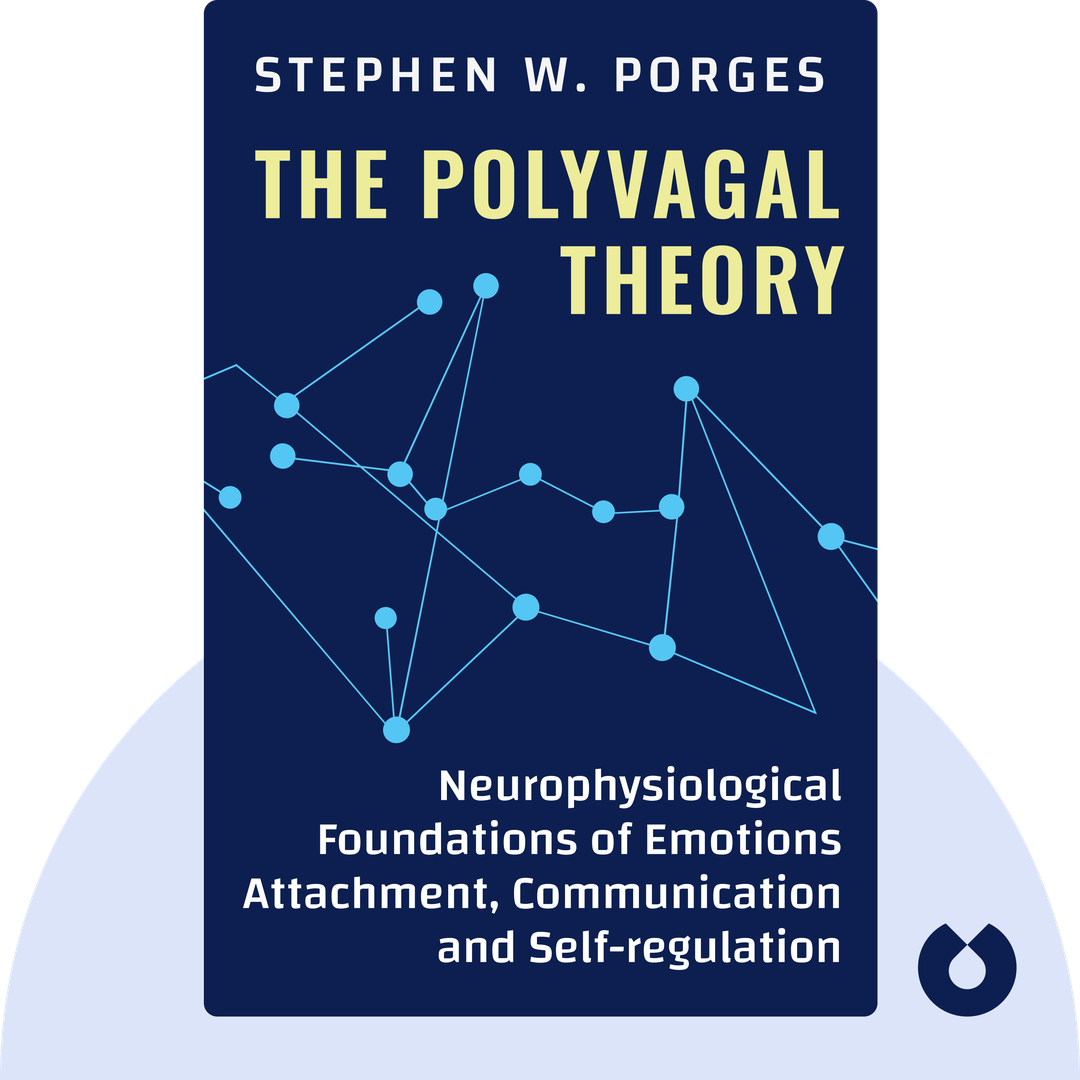
If You're Curious About These Questions...
You should listen to this audiobook
- Have you ever wondered why a person’s tone of voice or facial expression can instantly change your heart rate and sense of safety?
- Did you know that your body has a hidden 'third' response system that goes beyond just 'fight or flight' to determine how you bond with others?
- What if the secret to overcoming stress and trauma lies not in your thoughts, but in understanding the biological signals your nervous system is sending to your brain?
Listen to The Polyvagal Theory — Free Audiobook
Loading player...
Key Takeaways from The Polyvagal Theory
- Discover how your brain's subconscious neuroception scans your environment for safety or danger, automatically triggering either physical defense mechanisms or social engagement.
- Understand the three distinct neural circuits—the ventral vagal, sympathetic, and dorsal vagal—that dictate whether you respond to situations with calm communication, defensive action, or complete shutdown.
- Learn how safe environments and the hormone oxytocin work together to suppress innate defense mechanisms, allowing deep social connections and trust to flourish.
- Explore the crucial difference between the unconscious vegetative vagus nerve and the conscious smart vagus nerve to better manage your relationships and overall well-being.
- Find out how measuring your Respiratory Sinus Arrhythmia (RSA) reveals the strength of your parasympathetic nervous system, providing valuable insights into your individual stress vulnerability and cognitive focus.
Learning Tools
Reinforce what you learned from The Polyvagal Theory
Mind Map
The Polyvagal Theory
Core Concept+
Neuroception+
Three Neural Circuits+
Social Engagement+
The Vagus Nerve+
Stress & Vagal Tone+
Quiz — Test Your Understanding
Question 1 of 5
What is 'neuroception' as described in the Polyvagal theory?
Question 2 of 5
Which neural circuit is responsible for inducing a shutdown response in overwhelming situations?
Question 3 of 5
What role does the hormone oxytocin play in social engagement?
Question 4 of 5
How does the Polyvagal theory differentiate the functions of the vagus nerve?
Question 5 of 5
What does a high amplitude of Respiratory Sinus Arrhythmia (RSA) indicate?
The Polyvagal Theory — Full Chapter Overview
- 1Recommendation
- 2The Science of Feeling Safe
- 3The Autonomic Ladder
- 4Neuroception and the Hidden Search for Safety
- 5Mapping the Nervous System
- 6Learning to Track the Rhythm of a Day
- 7The Therapy Room as a Place of Safety
- 8Regulating Through Relationship, Breath, and Sound
- 9Regulating Through Body, Memory, and Meaning
- 10Play, Stillness, Awe, and a New Autonomic Story
The Polyvagal Theory Summary & Overview
The Polyvagal Theory (2011) introduces a groundbreaking understanding of the autonomic nervous system, emphasizing its role in social behavior, emotional regulation, and mental health. The theory posits the existence of three neural circuits within the autonomic nervous system, each of which plays a crucial role in shaping our psychological and physiological responses. Through this lens, it explores the neurobiological foundations of emotions, social connections, and health – offering new insights and implications for therapy, research, and interpersonal relationships.
Who Should Listen to The Polyvagal Theory?
- Therapists seeking to understand the autonomic nervous system's role in mental health
- Parents looking to comprehend and support their children's emotional development
- Anyone interested in the brain-body connection and enhancing their overall well-being
Books Similar to The Polyvagal Theory
Readers who enjoyed this also liked these titles.