If You're Curious About These Questions...
You should listen to this audiobook
- How is the rise of artificial intelligence poised to create a polarized 'barbell economy,' and why does the destruction of middle-class jobs directly threaten democratic stability?
- In what ways are political campaigns leveraging massive datasets—from shopping habits to smart home appliances—to manipulate individual voters and undermine free elections?
- How does the growing movement of 'crypto-anarchy' and blockchain technology threaten a government's fundamental ability to enforce laws, collect taxes, and maintain authority?
Listen to The People Vs Tech — Free Audiobook
Loading player...
Key Takeaways from The People Vs Tech
- Understand the six fundamental pillars of democracy, such as active participation and compromise, and explore how modern digital technology threatens to collapse them.
- Learn how constant public scrutiny on social media stifles political development and independent thought by forcing users into fear-driven self-censorship.
- Discover how big data and sophisticated algorithms manipulate citizens through hyper-personalized political advertisements that target their specific moods and interests.
- Realize why artificial intelligence poses an existential threat to active citizenship by tempting humans to outsource their complex political judgments and voting decisions to algorithms.
- Find out how algorithmic curation and information overload breed political tribalism by fragmenting society into isolated, grievance-driven groups fed only like-minded content.
Learning Tools
Reinforce what you learned from The People Vs Tech
Mind Map
The People Vs Tech
Foundations of Democracy+
Threats to Citizenship & Society+
Erosion of Elections & Equality+
Unchecked Tech Power & State Weakness+
Potential Futures+
Updating Democracy & Solutions+
Quiz — Test Your Understanding
Question 1 of 10
According to the party analogy used to describe democracy, what constitutes the second pillar that prevents the process from turning into a 'riot'?
Question 2 of 10
How does constant public scrutiny on social media negatively impact active citizenship?
Question 3 of 10
What role do algorithmic curation systems play in deepening political tribalism?
Question 4 of 10
How are political parties primarily using big data to undermine free and fair elections?
Question 5 of 10
What does the author predict will cause the emergence of a 'barbell-like economy'?
Question 6 of 10
Which two factors inherently drive tech companies to become all-powerful monopolies?
Question 7 of 10
Why does the rise of crypto-anarchy and technologies like Bitcoin pose a threat to democratic governments?
Question 8 of 10
In the book's 'techno-authoritarian' scenario, what primarily initiates the downward spiral of government effectiveness?
Question 9 of 10
Which of the following is proposed as an innovative way for the government to replace lost tax revenue in the face of advancing AI?
Question 10 of 10
What actionable advice does the book offer individuals to combat the negative effects of digital technology on democracy?
The People Vs Tech — Full Chapter Overview
- 1Recommendation
- 2Democracy needs active, friendly, equal, and free participation from its citizens.
- 3The growth of social media, big data, and artificial intelligence makes citizens less engaged.
- 4Information overload and social media links promote tribalism, division, and demagoguery.
- 5Technology weakens free and fair elections by letting political parties shape voting behavior.
- 6AI will reduce the need for workers, which will boost inequality.
- 7Tech companies are especially well-placed to become monopolies with unmatched levels of power.
- 8Encryption and anonymity help private actors dodge and thus weaken governmental authority.
- 9If technology’s challenges go unbridled, democracy may slide into dystopia or techno-authoritarian rule.
- 10With proper reforms, democracy can be refreshed to endure and benefit from advancing technology.
The People Vs Tech Summary & Overview
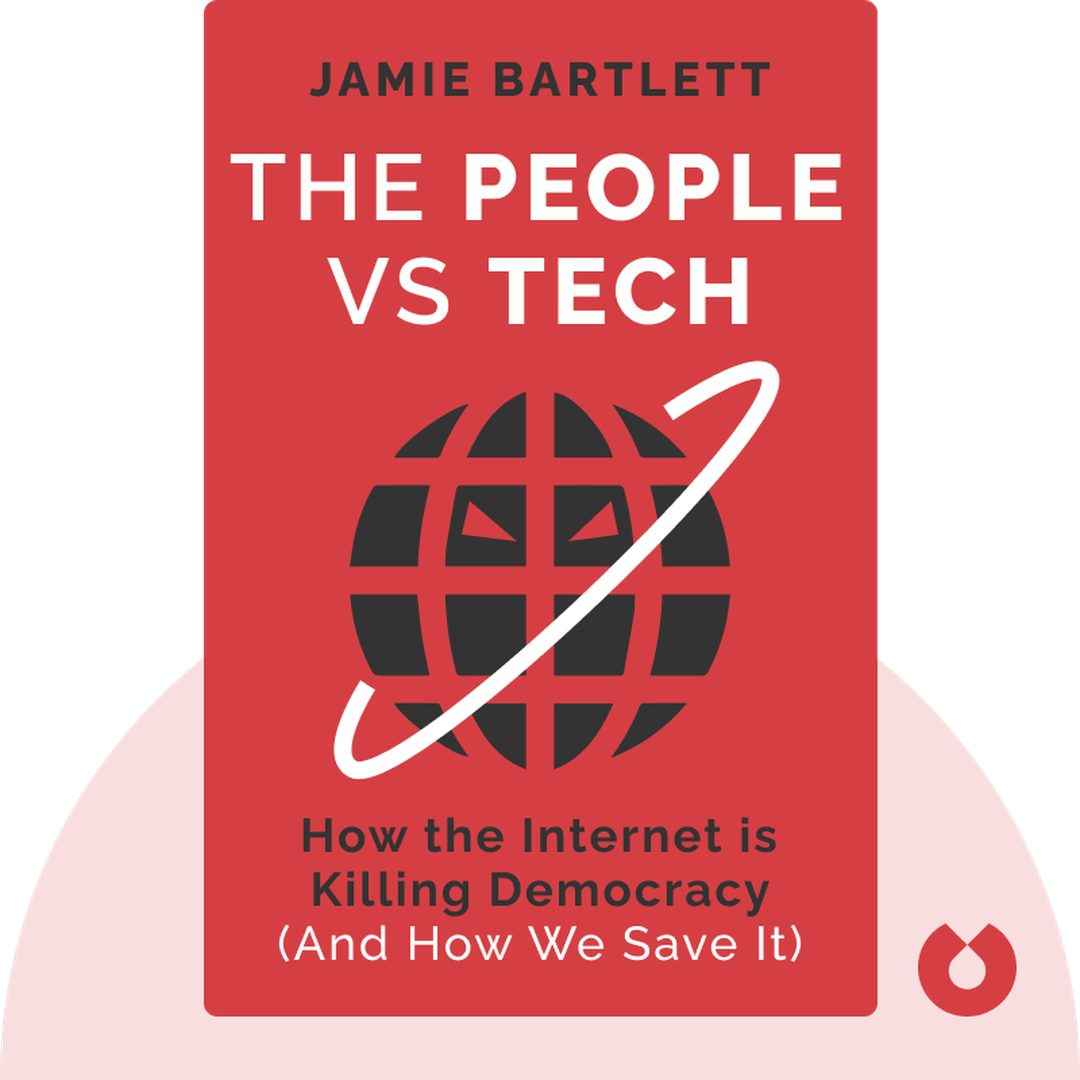
The People Vs Tech (2018) examines the rise of digital technology. It argues this process is undermining six of the key pillars of democracy: active citizenship, a shared democratic culture, free elections, free association, equality, and governmental authority. Looking to the future and observing how it is already unfolding in the present, it paints a chilling picture of the possible dystopian world to come. However, it also shows the paths that are leading us to that world and suggests that these paths can be redirected, pointing the way to a better future.
Who Should Listen to The People Vs Tech?
- Citizens concerned about how the internet is impacting society
- Workers who fear their jobs may be replaced by AI
- Fans of dystopian science fiction literature, movies, and television series
Books Similar to The People Vs Tech
Readers who enjoyed this also liked these titles.