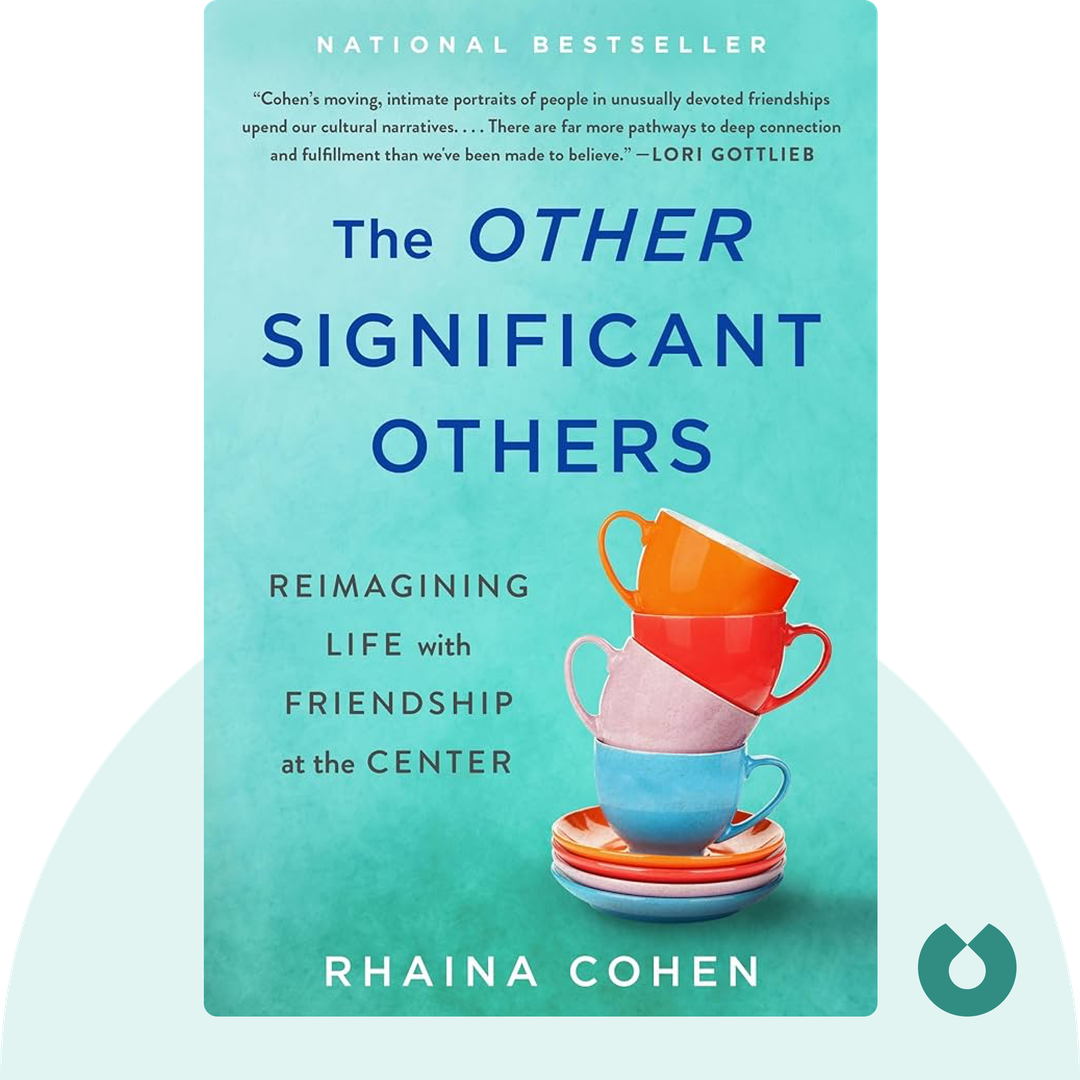
The Other Significant Others
Start ListeningDownload Try free on iPhoneScan to start in 5 seconds
Categories:
If You're Curious About These Questions...
You should listen to this audiobook
- What if the most profound, life-long commitment you ever make wasn't to a spouse, but to a best friend?
- Have you ever wondered why society prioritizes romantic love above all else, and what could happen if you redefined 'family' on your own terms?
- Are you curious about how people are successfully sharing homes, finances, and even raising children with platonic partners instead of romantic ones?
Listen to The Other Significant Others — Cinematic Audio Edition
Loading player...
Key Takeaways from The Other Significant Others
- Understand why relying on a single romantic partner to fulfill every emotional need puts immense pressure on modern marriages, and how history points to a healthier approach.
- Discover the psychological benefits of building a diverse relationship portfolio to reduce stress and increase happiness, rather than expecting one person to be your everything.
- Learn how research separates emotional attachment from sexual desire, proving that deeply committed life partnerships can thrive entirely without sex or romance.
- Explore how pushing past societal judgments and learned discomforts regarding platonic intimacy can lead to greater self-determination and profound personal fulfillment.
- Find out how platonic friends can successfully form intentional family units and even navigate co-parenting, redefining the traditional boundaries of what constitutes a family.
Learning Tools
Reinforce what you learned from The Other Significant Others
Mind Map
The Other Significant Others
The Romantic Ideal vs. Reality+
Historical Precedents+
Decoupling Love and Sex+
Overcoming Social Expectations+
Redefining Family & Co-parenting+
Aging and Caregiving+
Disenfranchised Grief+
Legal and Cultural Reform+
Quiz — Test Your Understanding
Question 1 of 7
According to the text, how has the role of marriage and friendship shifted in recent decades compared to historical norms?
Question 2 of 7
What does the concept of "compulsory sexuality" refer to in the context of Stacey and Grace’s relationship?
Question 3 of 7
In the story of Art and Nick, what was the primary cause of Nick's initial hesitation to show physical affection and emotional vulnerability?
Question 4 of 7
What was the legal basis for the court recognizing Lynda as the second parent to Natasha’s son, Elaan?
Question 5 of 7
How did Inez and Barb navigate the challenges of growing older in a society that often leaves seniors vulnerable?
Question 6 of 7
Why is the grief experienced by people like Joy, who lose a profound platonic partner, often described as "disenfranchised"?
Question 7 of 7
According to legal scholars mentioned in the text, what is one proposed reform to better support committed platonic partnerships?
The Other Significant Others — Full Chapter Overview
- 1Recommendation
- 2Past friendship
- 3Sex isn't all
- 4Defying social expectations
- 5Friends as kin
- 6Getting older together
- 7Mourning lost friends
- 8Sanctioning friendship
The Other Significant Others Summary & Overview
The Other Significant Others (2024) challenges conventional relationship wisdom by inviting us to imagine a life centered around friendship rather than romance. Through compelling stories of platonic partners who have built lives together, this thought-provoking work invites us to re-examine our assumptions about love, commitment, and family.
Who Should Listen to The Other Significant Others?
- Readers seeking alternative perspectives on relationships and family structures
- Friends who want to build a life together
- Single, widowed, or divorced people searching for meaning, love, and connection
Books Similar to The Other Significant Others
Readers who enjoyed this also liked these titles.