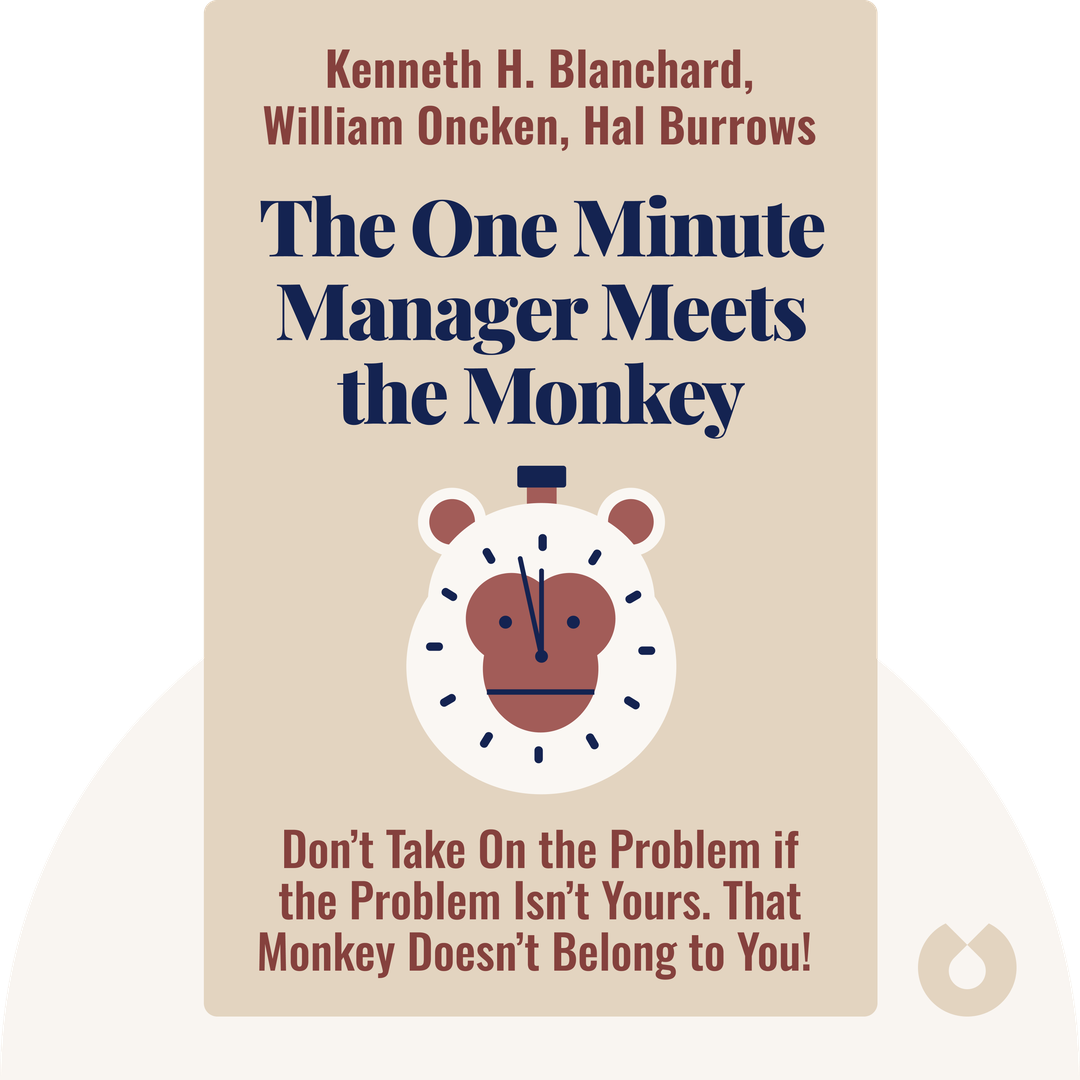
The One Minute Manager Meets the Monkey
Start ListeningDownload Try free on iPhoneScan to start in 5 seconds
Categories:
If You're Curious About These Questions...
You should listen to this audiobook
- Have you ever wondered why you’re often the busiest person in the office, even when you have a full team to support you?
- What if you could identify the hidden 'monkeys' that are stealing your time and learn exactly how to hand them back to their rightful owners?
- What’s the secret to empowering your employees to solve their own problems while you focus on the high-level leadership only you can provide?
Listen to The One Minute Manager Meets the Monkey — Cinematic Audio Edition
Loading player...
Key Takeaways from The One Minute Manager Meets the Monkey
- Discover why taking on too much responsibility and failing to delegate not only causes personal burnout but ultimately destroys your team's performance.
- Find out why making yourself 'indispensable' by doing everything actually turns you into a workplace bottleneck and halts your chances of promotion.
- Learn the concept of the workplace 'monkey'—the critical next move in any task—and how to identify when it stealthily jumps from an employee's back onto yours.
- Understand how accepting team problems without requiring proposed solutions leads to a frustrating role reversal where your employees end up supervising you.
- Master the art of keeping tasks with their rightful owners to prevent overload, reduce your stress, and build a highly productive, self-reliant team.
Learning Tools
Reinforce what you learned from The One Minute Manager Meets the Monkey
Mind Map
The One Minute Manager Meets the Monkey
The Problem of Poor Delegation+
The Monkey Concept+
Oncken's Four Rules of Monkey Management+
Coaching and True Delegation+
Balancing Managerial Time+
Quiz — Test Your Understanding
Question 1 of 7
According to the One Minute Manager, what exactly does a 'monkey' represent in the workplace?
Question 2 of 7
How does the One Minute Manager view a manager who makes themselves indispensable by failing to delegate?
Question 3 of 7
What happens when a manager accepts a 'monkey' from an employee by promising to think about a problem and get back to them?
Question 4 of 7
Under Oncken’s Four Rules of Monkey Management, what is the guiding principle for 'Assigning the Monkey'?
Question 5 of 7
How does the rule 'Insure the Monkey' help managers balance oversight with employee freedom?
Question 6 of 7
According to the text, what is the primary difference between 'assigning' and 'delegating'?
Question 7 of 7
Which category of time is most critical for a manager to protect in order to focus on strategic planning, leadership, and innovation?
The One Minute Manager Meets the Monkey — Full Chapter Overview
- 1Recommendation
- 2The Hallway Where Time Disappears
- 3The Overloaded Manager
- 4Naming the Monkey
- 5Keeping the Monkey on the Right Back
- 6The Five Levels of Initiative
- 7Insurance Before Action
- 8Feeding Time
- 9The Manager Who Stops Rescuing
- 10A New Rhythm of Responsibility
The One Minute Manager Meets the Monkey Summary & Overview
The One Minute Manager Meets the Monkey (1989) is a business parable which explores how managers can improve productivity and reduce stress by mastering the art of delegation. It introduces the concept of “monkeys,” representing tasks or responsibilities that often shift unnecessarily from employees to managers. By keeping these monkeys with their rightful owners, it helps leaders focus on their priorities while empowering team members to take ownership of their work.
Who Should Listen to The One Minute Manager Meets the Monkey?
- Managers seeking to improve delegation and time management
- Team leaders aiming to empower their team members
- Professionals interested in enhancing leadership efficiency skills
Books Similar to The One Minute Manager Meets the Monkey
Readers who enjoyed this also liked these titles.