If You're Curious About These Questions...
You should listen to this audiobook
- Have you ever wondered what the day-to-day reality of strategy work actually looks like beyond high-level meetings and annual reports?
- What if you could master the specific core competencies and tools that separate average managers from truly visionary strategic leaders?
- Are you curious about the secret principles that allow modern strategists to remain agile and successful in an increasingly unpredictable business world?
Listen to The New Strategist — Free Audiobook
Loading player...
Key Takeaways from The New Strategist
- Discover why maximizing profit is no longer the sole purpose of a modern business, and learn how to cultivate a humanitarian philosophy that prioritizes stakeholder value.
- Understand how to motivate your workforce by moving beyond material rewards to offer dignity, equality, and a compelling vision that makes them feel part of something bigger.
- Master the crucial distinction between business strategy, which dictates how you compete, and corporate strategy, which determines where your company will create added value.
- Learn to navigate market volatility by anticipating the lifecycles of economic trends and uniting your organization under a holistic, externally-focused business concept.
- Explore the dynamic role of the Chief Strategy Officer as a powerful catalyst for organizational change, from guiding business portfolios to spearheading mergers and acquisitions.
Learning Tools
Reinforce what you learned from The New Strategist
Mind Map
The New Strategist
Purpose & Values+
Unified Corporate Strategy+
The Chief Strategy Officer (CSO)+
The Strategy Department+
Strategic Leadership+
Strategic Tools+
Modernizing Strategy+
Quiz — Test Your Understanding
Question 1 of 7
According to the text, what is a primary shift in the underlying philosophy expected of modern companies compared to companies in the 1990s?
Question 2 of 7
How does the text distinguish 'corporate strategy' from 'business strategy'?
Question 3 of 7
Researchers have identified four main types of Chief Strategy Officers (CSOs). Which type is described as a generalist who excels at managing strategic initiatives aimed at transforming the company?
Question 4 of 7
In the context of an effective strategy department, what does 'content integration' refer to?
Question 5 of 7
Why is strategic leadership described as a 'social and political activity' in the text?
Question 6 of 7
When are 'strategic initiatives' most effectively used compared to standard formal planning processes?
Question 7 of 7
What metaphor is used to describe the modern strategist at the end of the text?
The New Strategist — Full Chapter Overview
- 1Recommendation
- 2In today’s world, strategists must weigh values and purpose, not just profits alone.
- 3A cohesive corporate strategy underpins a resilient, truly sustainable business.
- 4The chief strategy officer should be an active catalyst for strategic business growth.
- 5The strategy department should be the hub for strategic work throughout the company.
- 6Strategic leaders guide organizations toward a profitable and successful, lasting future.
- 7For effectiveness, strategic work must employ the right set of tools.
- 8Strategists must be truly modern.
The New Strategist Summary & Overview
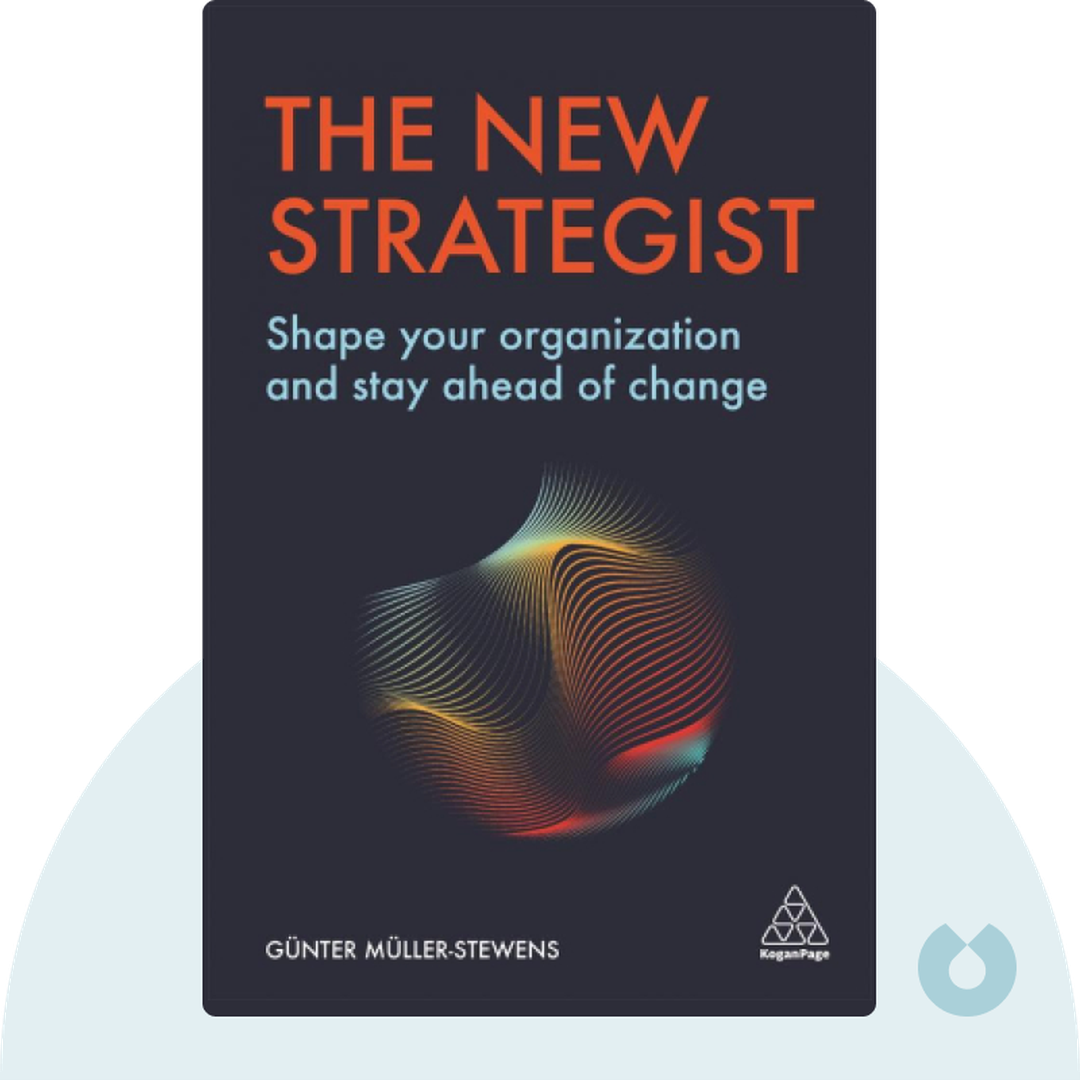
The New Strategist (2020) is a practical guide on how to do strategy for business leaders. It explains what strategy work looks like in the day-to-day life of a company, shows the competencies that strategic leaders need, and lays out the tools that help strategists in their craft. It also explores the ways that strategists need to adapt to a changing world and provides the principles they can use to be successful leaders.
Who Should Listen to The New Strategist?
- Managers who want to sharpen their strategic skills
- Anyone who would like to be a strategic leader
- Everyone curious about how successful businesses are led
Books Similar to The New Strategist
Readers who enjoyed this also liked these titles.