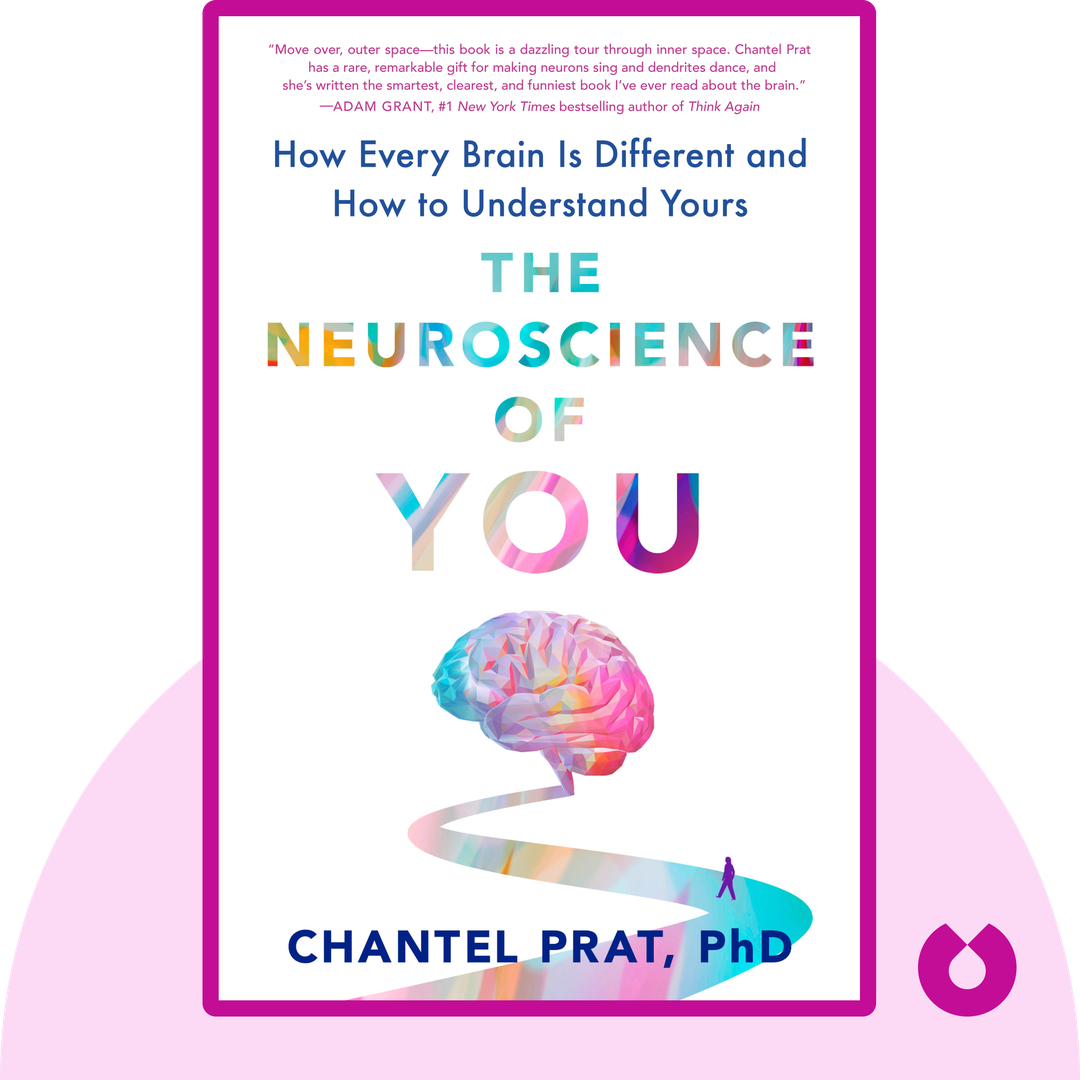
The Neuroscience of You
Start ListeningDownload Try free on iPhoneScan to start in 5 seconds
Categories:
Listen to The Neuroscience of You — Cinematic Audio Edition
Loading player...
Key Takeaways from The Neuroscience of You
- Discover how unique structural differences in your brain shape everything from your worldview to your specific personality traits.
- Learn why acquiring complex skills physically alters your brain's structure, and understand the hidden cognitive costs of neurological specialization.
- Understand how your finite brain processes an infinite world by constantly filtering data and filling in the blanks to construct your personalized reality.
- Find out how the physical lopsidedness of your brain dictates whether you tackle problems using a detail-oriented or a big-picture approach.
- Explore how subtle biological variations, from your neurochemical cocktail to cerebral asymmetry, explain everyday characteristics like extraversion and handedness.
Learning Tools
Reinforce what you learned from The Neuroscience of You
Mind Map
The Neuroscience of You
Individual Brain Wiring+
Cost of Brain Specialization+
Brain Lopsidedness+
Neurochemical Cocktails+
Experiences Shape Perception+
Summary of Impacts+
Quiz — Test Your Understanding
Question 1 of 10
What limitation has historically characterized the field of neuroscience?
Question 2 of 10
What did researchers discover about the brains of London taxi drivers who passed 'The Knowledge'?
Question 3 of 10
How does the human brain handle the challenge of operating in an essentially infinite environment?
Question 4 of 10
What is a unique structural feature of the human brain compared to other vertebrate animals?
Question 5 of 10
How do people with highly lopsided brains generally approach problem-solving?
Question 6 of 10
According to the book, what role does dopamine play in shaping extraverted personalities?
Question 7 of 10
What is a potential downside to the heightened dopamine susceptibility found in extraverts?
Question 8 of 10
Why did people perceive the viral image of 'The Dress' as entirely different colors?
Question 9 of 10
How does Hebbian learning contribute to the formation of biases?
Question 10 of 10
According to the text, how can a person successfully correct their brain's problematic shortcuts or systemic biases?
The Neuroscience of You — Full Chapter Overview
- 1Recommendation
- 2Brains that specialize in different tasks see the world in distinct ways.
- 3Your brain’s asymmetry shapes how you handle information.
- 4Your brain’s unique chemical blend molds your personality.
- 5Experience builds lenses that shape how we see reality.
The Neuroscience of You Summary & Overview
The Neuroscience of You (2022) is an accessible primer to the human brain that explores how our individual quirks arise. Packed with practical tests and cutting-edge insights into why you think differently from others, it invites you to take a closer look at your brain and discover what makes it unique– and how to understand others and their quirks better.
Who Should Listen to The Neuroscience of You?
- Fans of neuroscience
- Those eager to learn about the specifics of brain functions
- Anyone curious about where individuality comes from
Books Similar to The Neuroscience of You
Readers who enjoyed this also liked these titles.