If You're Curious About These Questions...
You should listen to this audiobook
- Have you ever wondered if your mind is truly limited to your brain, or if your physical body and environment are actually doing the thinking with you?
- Did you know that the popular image of the brain as a “computer” might be a myth that keeps us from understanding how we really function?
- What if the secret to your emotions and personality isn't just in your neurons, but hidden in the biological signals flowing through your entire body?
Listen to The Biological Mind — Free Audiobook
Loading player...
Key Takeaways from The Biological Mind
- Discover how your physical environment and bodily functions, from stomach chemicals to room lighting, directly influence your thoughts and personality.
- Understand the 'cerebral mystique' and learn why treating the brain as a mystical, transcendental object prevents us from grasping its true biological nature.
- Learn why comparing the brain to a computer is fundamentally flawed, and explore the wet, messy, and chemical reality of how our minds actually process information.
- Find out how non-electrical brain components, such as cerebrospinal fluids and glial cells, actively enhance your cognitive abilities rather than just providing structural support.
- Explore why the astronomical number of neural connections is misleading, and see how extreme medical cases prove that we don't need to map every neuron to understand how the brain works.
Learning Tools
Reinforce what you learned from The Biological Mind
Mind Map
The Biological Mind
Deconstructing the Cerebral Mystique+
Biological Realities of the Brain+
Flaws in Modern Neuroscience+
The Brain-Body-Environment Web+
Mental Illness and Society+
The Future of Neurotechnology+
Quiz — Test Your Understanding
Question 1 of 10
What does the author mean by the term 'cerebral mystique'?
Question 2 of 10
Why does the author argue that comparing the brain to a computer is a flawed analogy?
Question 3 of 10
What recent scientific discovery challenges the traditional view of glial ('glue') cells in the brain?
Question 4 of 10
How does the author suggest scientists should deal with the overwhelming complexity of the brain's trillions of connections?
Question 5 of 10
Which of the following is a major limitation of functional magnetic resonance imaging (fMRI) highlighted in the text?
Question 6 of 10
What did the McMaster University study involving mice and gut microbiomes demonstrate?
Question 7 of 10
According to the text, how does the environment directly influence the brain in the case of Seasonal Affective Disorder (SAD)?
Question 8 of 10
What is 'neuroessentialism'?
Question 9 of 10
While viewing mental illness as a 'brain disease' is more humane than viewing it as a moral failing, what is one negative consequence of this neuroessentialist view?
Question 10 of 10
In the 'brain in a vat' thought experiment, why would a simulated reality be fundamentally lacking for the preserved brain?
The Biological Mind — Full Chapter Overview
- 1Recommendation
- 2Most of us regard the brain as a transcendent object, not a mere biological organ.
- 3Like any organ, the brain is wet and messy, depending on a complex blend of chemical processes to function.
- 4Though the brain’s structure is complex, it still remains possible to comprehend how it works.
- 5Today’s brain imaging methods aren’t as flawless as they’re often portrayed.
- 6Our minds arise from intricate interactions between our biological brains and our own tangible, physical bodies.
- 7Everything from your thoughts and feelings to deliberate actions is shaped by the surrounding external world.
- 8Asserting that the brain is the only cause of human behavior ignores other significant factors.
- 9We must be cautious about overstating the brain’s role in mental illness.
- 10Claims of boosting the brain using neurotechnology are largely unrealistic.
- 11Without your body, your brain simply wouldn’t remain the same you.
The Biological Mind Summary & Overview
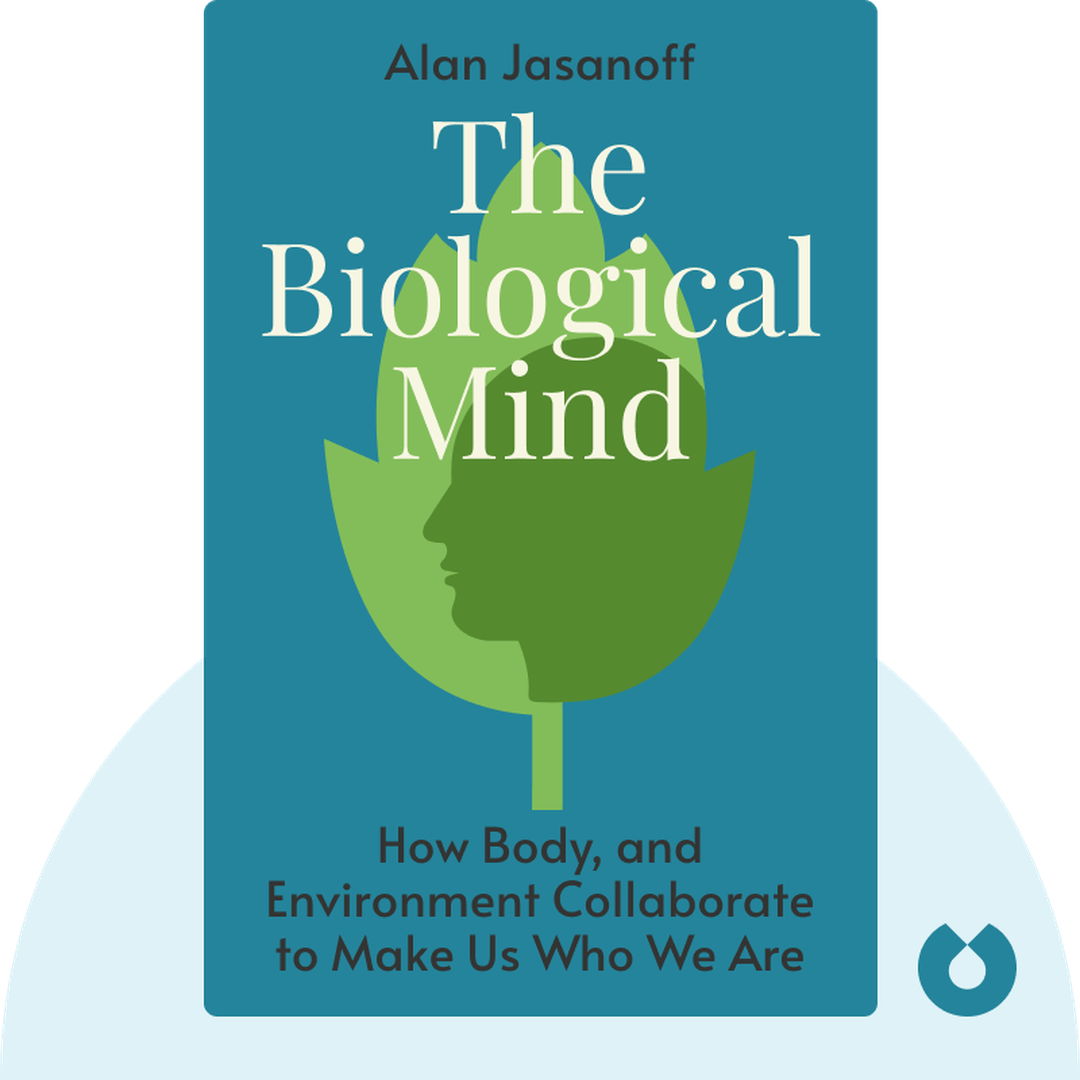
The Biological Mind (2018) debunks the “cerebral mystique,” the commonly held belief that our brains are somehow completely independent from our bodies and our surroundings. Using the latest insights from neuroscience, psychology, and philosophy, this approachable primer demonstrates that what you see as yourself is much more complex than you thought.
Who Should Listen to The Biological Mind?
- Science buffs looking to keep up with the latest research
- Armchair philosophers curious about questions of consciousness
- Psychonauts seeking to understand their own minds
Books Similar to The Biological Mind
Readers who enjoyed this also liked these titles.