If You're Curious About These Questions...
You should listen to this audiobook
- Did you know that some of the greatest college football stars of the 1940s played their final, most legendary game on a dusty parade ground in the middle of a World War II combat zone?
- Are you curious about how a group of elite athletes, once divided by the deep-seated prejudices of their era, found a common bond while preparing for one of the deadliest battles in history?
- Have you ever wondered what would happen if the most talented rivals in college sports were forced to trade their playbooks for rifles and fight for survival on the front lines of the Pacific?
Listen to The Mosquito Bowl — Free Audiobook
Loading player...
Key Takeaways from The Mosquito Bowl
- Discover how a bizarre twist of fate brought over 50 former college football stars together in the Pacific to play the 'Mosquito Bowl' before facing the grim reality of combat.
- Understand why the US Navy uniquely integrated college football into their military training programs, believing the sport served as the ideal physical preparation for war.
- Learn about the incredible humility and patriotism of star athletes like Dave Schreiner, who prioritized military duty over exploiting academic loopholes to avoid the WWII draft.
- Uncover the harsh realities of institutional racism in the 1940s military through the experiences of an officer who witnessed the systemic suppression of Black marines at Montford Point.
- Find out how the tragic and deeply flawed amphibious assault on Tarawa exposed severe strategic weaknesses in the US Military's Pacific island-hopping campaign.
Learning Tools
Reinforce what you learned from The Mosquito Bowl
Mind Map
The Mosquito Bowl
Core Premise+
The Players+
Pacific Theater Realities+
The Mosquito Bowl Game+
The Battle for Okinawa+
Aftermath+
Quiz — Test Your Understanding
Question 1 of 6
What is the central premise of 'The Mosquito Bowl' as described in the text?
Question 2 of 6
Why did the Navy's V-12 College Training Program continue to support college football while other military branches wanted to put it on hold?
Question 3 of 6
What significant realization did John McLaughry have during his assignment at Montford Point?
Question 4 of 6
What did the Marines learn from the battle at the Tarawa atoll?
Question 5 of 6
What was the nature and outcome of the actual 'Mosquito Bowl' game played on Guadalcanal?
Question 6 of 6
What tragic irony marked the death of Dave Schreiner during the Battle of Okinawa?
The Mosquito Bowl — Full Chapter Overview
- 1Recommendation
- 2Folktales and Football
- 3Virtue in Wisconsin, Racism within the Military
- 4Hard Lessons Learned from Island to Island
- 5Mosquito Bowl Showdown
- 6The Fight for Okinawa
The Mosquito Bowl Summary & Overview
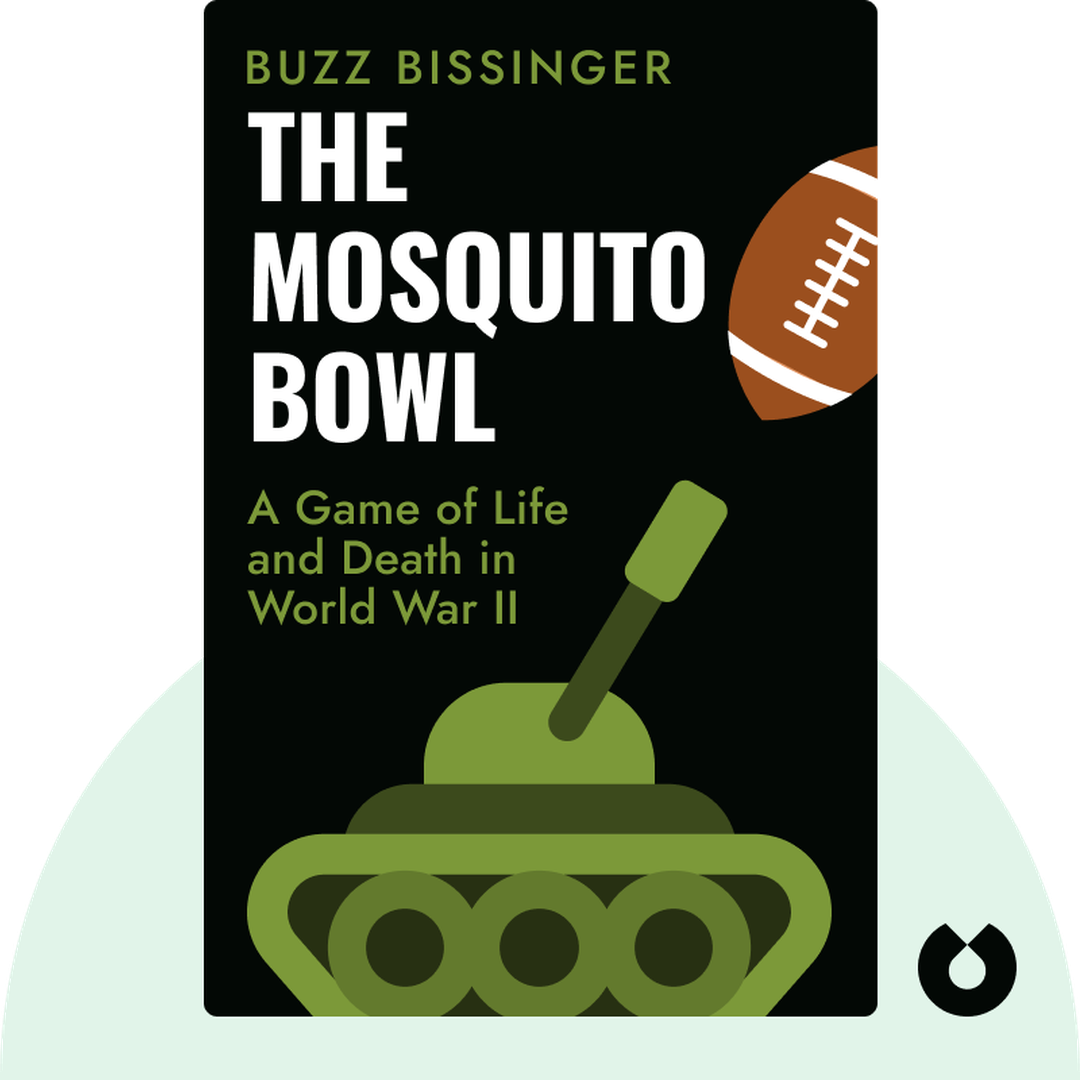
The Mosquito Bowl (2022) tells the story of American football stars going to war and playing one more game when they get there. It details a nation divided by bigotry but united by sport and a common enemy.
Who Should Listen to The Mosquito Bowl?
- History buffs
- World War II aficionados
- College football fans
Books Similar to The Mosquito Bowl
Readers who enjoyed this also liked these titles.