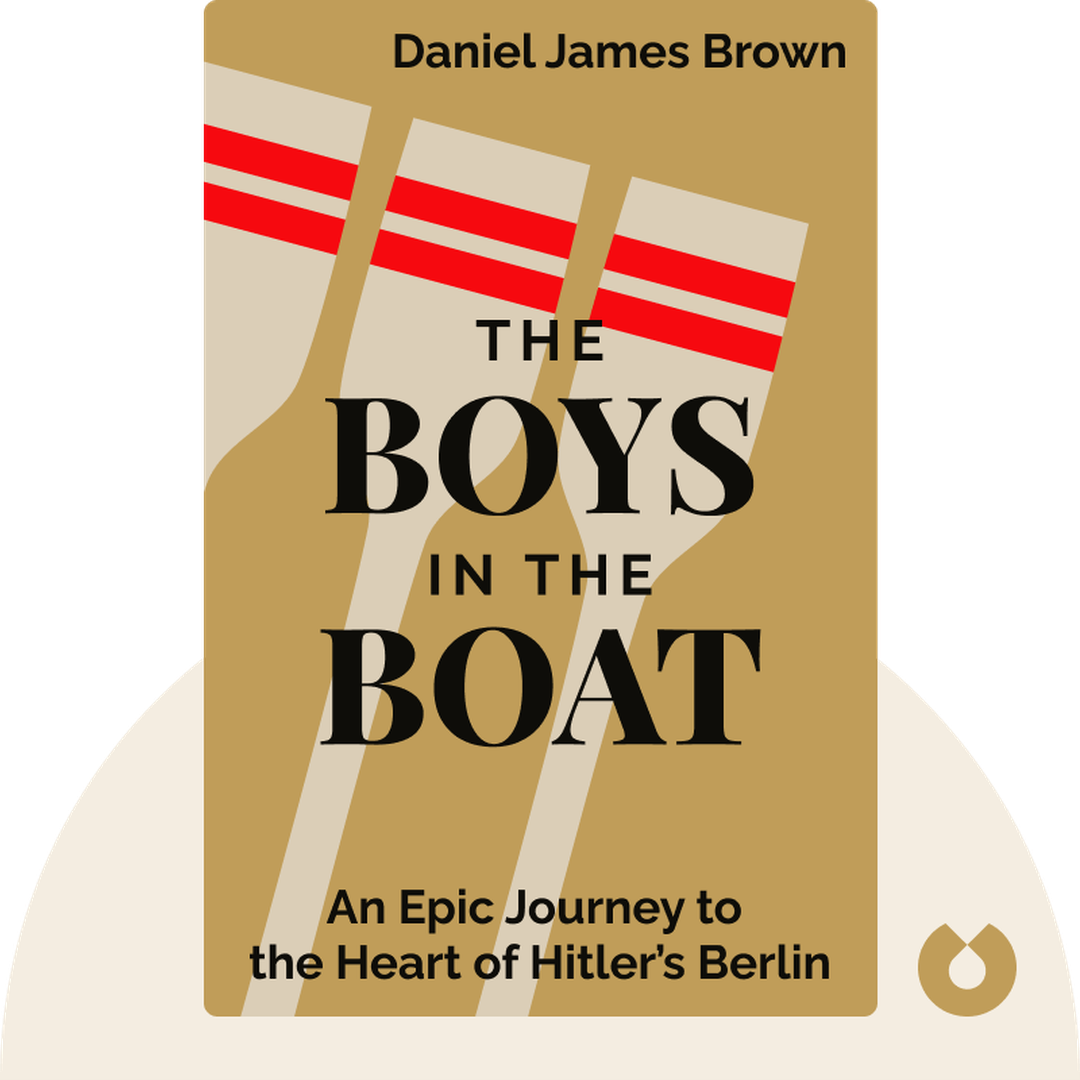
If You're Curious About These Questions...
You should listen to this audiobook
- What’s the secret to achieving 'swing'—that rare, mystical state where eight individual rowers move in such perfect harmony that they become one single, unstoppable force?
- Did you know that a group of working-class boys, many of whom were struggling just to survive the Great Depression, managed to out-row the world’s elite under the watchful eye of Adolf Hitler?
- Have you ever wondered how the sheer grit of an underdog can transform extreme physical pain and social hardship into a history-defining victory?
Listen to The Boys in the Boat — Cinematic Audio Edition
Loading player...
Key Takeaways from The Boys in the Boat
- Discover how a team of working-class American boys leveraged the extreme hardships of the Great Depression into the grit needed to challenge and defeat Nazi Germany at the 1936 Olympics.
- Learn the power of profound resilience through the story of Joe Rantz, who survived childhood abandonment and poverty to fight his way to a college education and the Olympic podium.
- Understand the critical concept of 'the swing,' a blissful state of perfect physical and mental synchronization that transforms eight individual rowers into a single, unstoppable force.
- Find out what it takes to build an elite, unified team as relentless coaches pushed 175 hopefuls to their physical limits over months of grueling trials to find the perfect eight-man crew.
- Explore how technical innovation can revolutionize a sport by learning how master boatbuilder George Pocock transformed competitive rowing using the efficient Conibear stroke and lightweight western red cedar racing shells.
Learning Tools
Reinforce what you learned from The Boys in the Boat
Mind Map
The Boys in the Boat
Historical Context+
Rowing Mechanics & Gear+
The Crew+
The Journey to Berlin+
The 1936 Olympic Final+
Quiz — Test Your Understanding
Question 1 of 8
Why were so many young men highly motivated to try out for the University of Washington rowing crew in 1933?
Question 2 of 8
How did Joe Rantz's difficult upbringing shape his journey to the University of Washington?
Question 3 of 8
In the context of the book, what does 'the swing' refer to?
Question 4 of 8
What revolutionary material did boat builder George Pocock use to improve the performance of his racing shells?
Question 5 of 8
What social dynamic heightened the tension at the Poughkeepsie Regatta?
Question 6 of 8
How did Adolf Hitler use the 1936 Berlin Olympics for his political agenda?
Question 7 of 8
What common trait among the final eight oarsmen helped them bond and find the perfect 'swing'?
Question 8 of 8
What major disadvantages did the American team face during the final Olympic race in Berlin?
The Boys in the Boat — Full Chapter Overview
- 1Recommendation
- 2In 1933, many young men sought places on the University of Washington rowing crew, yet very few succeeded.
- 3Joe Rantz faced a difficult childhood, yet he kept his spirits high and ultimately did well.
- 4The eight rowers must move in complete unison, so assembling the perfect team is a real, demanding challenge.
- 5George Pocock and his boats exerted a profound influence on rowing.
- 6The freshman competitions established the bar for the University of Washington crew.
- 7Their sophomore year opened with Olympic ambitions, but the team’s dynamics were uneasy.
- 8Despite their early winning streak, it remained uncertain whether they could send a boat to the Olympics.
- 9As the team trained, Hitler was preparing for a grandiose Berlin Olympics.
- 10Ulbrickson mixed and matched the oarsmen, eventually finding the perfect team.
- 11The final U.S. races tested the team’s resolve, but their win at Princeton secured the Olympic path.
- 12The Berlin Olympic final posed the toughest challenge the team had ever yet encountered.
The Boys in the Boat Summary & Overview
The Boys in the Boat (2013) tells the story of how a group of unassuming college boys from the University of Washington went from struggling through the Great Depression to securing a victory in the 1936 Berlin Olympics.
Who Should Listen to The Boys in the Boat?
- Rowers and other athletes
- Anyone interested in history, World War Two or the Olympics
- Readers who like an underdog story
Books Similar to The Boys in the Boat
Readers who enjoyed this also liked these titles.