Theme Song
If You're Curious About These Questions...
You should listen to this audiobook
- Did you know that a tiny, buzzing insect is actually the deadliest predator in human history, responsible for killing nearly half of all people who have ever lived?
- Have you ever wondered how the course of major wars and the fate of entire empires were decided not by generals or kings, but by the bite of a mosquito?
- Are you curious to discover how the world’s most hated pest secretly dictated the borders of nations and the very trajectory of human civilization?
Listen to The Mosquito — Free Audiobook
Loading player...
Key Takeaways from The Mosquito
- Discover how the mosquito has served as humanity's deadliest adversary, claiming an estimated 52 billion lives and dramatically altering the course of world history.
- Understand the biological mechanics of the female mosquito and why warm, wet environments make her the perfect vector for shape-shifting parasites like malaria.
- Learn how human DNA evolved to fight the disease through mutations like the sickle cell trait, which provided 90 percent immunity to malaria at the cost of drastically shortened lifespans.
- Explore how regional malaria immunity shaped the African continent by enabling the expansion of Bantu-speaking societies and thwarting early European colonization efforts.
- Find out how mosquito-borne diseases essentially saved early Western civilization by decimating the invading Persian army and turning the tide of ancient wars.
Learning Tools
Reinforce what you learned from The Mosquito
Mind Map
The Mosquito
Biological & Ecological Profile+
Evolutionary Impact+
Ancient Empires & Warfare+
Religion & The Middle Ages+
The Americas & Colonization+
US History & Global Ascent+
Scientific Warfare & Eradication+
Modern Crisis & Future Solutions+
Quiz — Test Your Understanding
Question 1 of 10
According to the book, what is the staggering historical death toll attributed to mosquito-borne diseases?
Question 2 of 10
Why is it historically difficult for scientists to develop an effective vaccine against malaria?
Question 3 of 10
How did the sickle cell trait influence the history of the Bantu-speaking people?
Question 4 of 10
What pivotal role did the mosquito play during the Greco-Persian Wars and the Peloponnesian Wars?
Question 5 of 10
How did the prevalence of malaria in the Roman Empire inadvertently contribute to the rise of Christianity?
Question 6 of 10
Why did European colonists in the Americas increasingly turn to enslaved Africans for labor on cash crop plantations?
Question 7 of 10
How did the mosquito influence President Abraham Lincoln's strategy during the American Civil War?
Question 8 of 10
What was the 'miasma theory' that Dr. Walter Reed's team helped disprove in 1900?
Question 9 of 10
What led to the international resurgence of mosquito-borne diseases starting in the 1960s and 1970s?
Question 10 of 10
According to the book, what modern technology offers a potential, though controversial, new way to defeat mosquito-borne diseases?
The Mosquito — Full Chapter Overview
- 1Recommendation
- 2Mosquitoes thrive in warm, wet conditions and spread many diseases, with malaria the deadliest.
- 3The sickle cell trait evolved as a genetic defense against malaria, with far-reaching historical effects.
- 4Mosquito-borne malaria played a key role in the Greco-Persian and Peloponnesian Wars.
- 5Malaria brought about the downfall of Alexander the Great.
- 6Malaria was a major factor in the Roman Empire’s rise and fall.
- 7Malaria helped shape the rise of Christianity and the failure of the Crusades.
- 8Europeans carried malaria and other diseases to the Western Hemisphere, devastating Indigenous societies.
- 9In the European colonization of the Americas, mosquitoes helped shape both slavery and revolution.
- 10By prolonging the Civil War, mosquitoes helped bring an end to American slavery.
- 11In the Spanish-American War, mosquitoes helped the US begin its rise to global dominance.
- 12After the Spanish-American War, major advances were made against mosquito-borne diseases.
- 13During and between the two World Wars, mosquito-borne diseases were pushed back even further.
- 14Under pressure from DDT and antimalarial drugs, the mosquito’s power waned, then resurged in the twentieth century.
- 15The story of the mosquito’s impact on humanity is still being written.
- 16Final summary
The Mosquito Summary & Overview
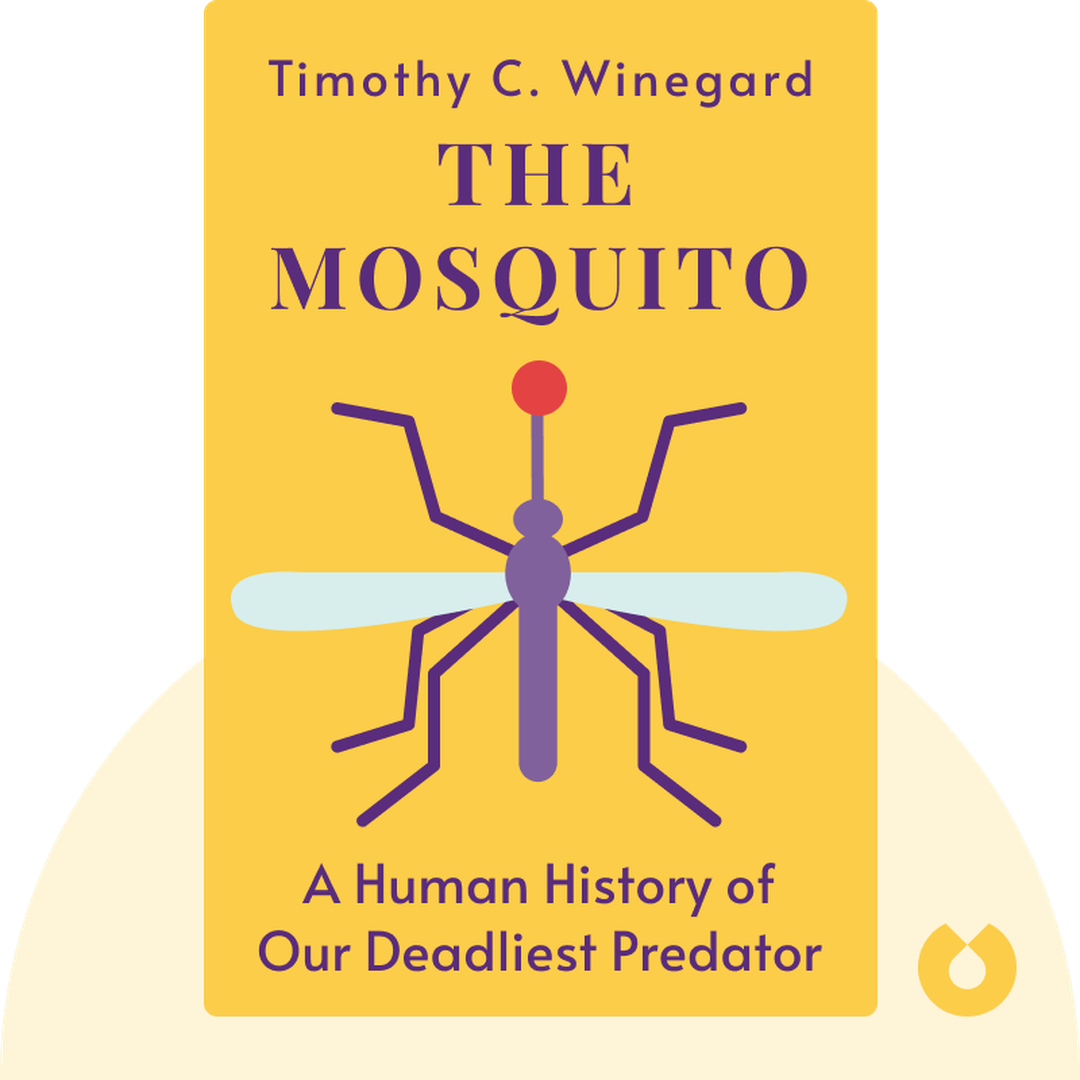
The Mosquito (2019) provides a sweeping tour of human history with a novel twist. As it follows the course of the pivotal events that shaped the world in which we live today, it draws attention to some of the most important but under-appreciated factors that have influenced those events: the mosquito and the deadly diseases it carries.
Who Should Listen to The Mosquito?
- World history buffs seeking a new perspective on pivotal events in the past
- People interested in how diseases have shaped our species
- Anyone looking for even more reasons to hate the mosquito
Books Similar to The Mosquito
Readers who enjoyed this also liked these titles.