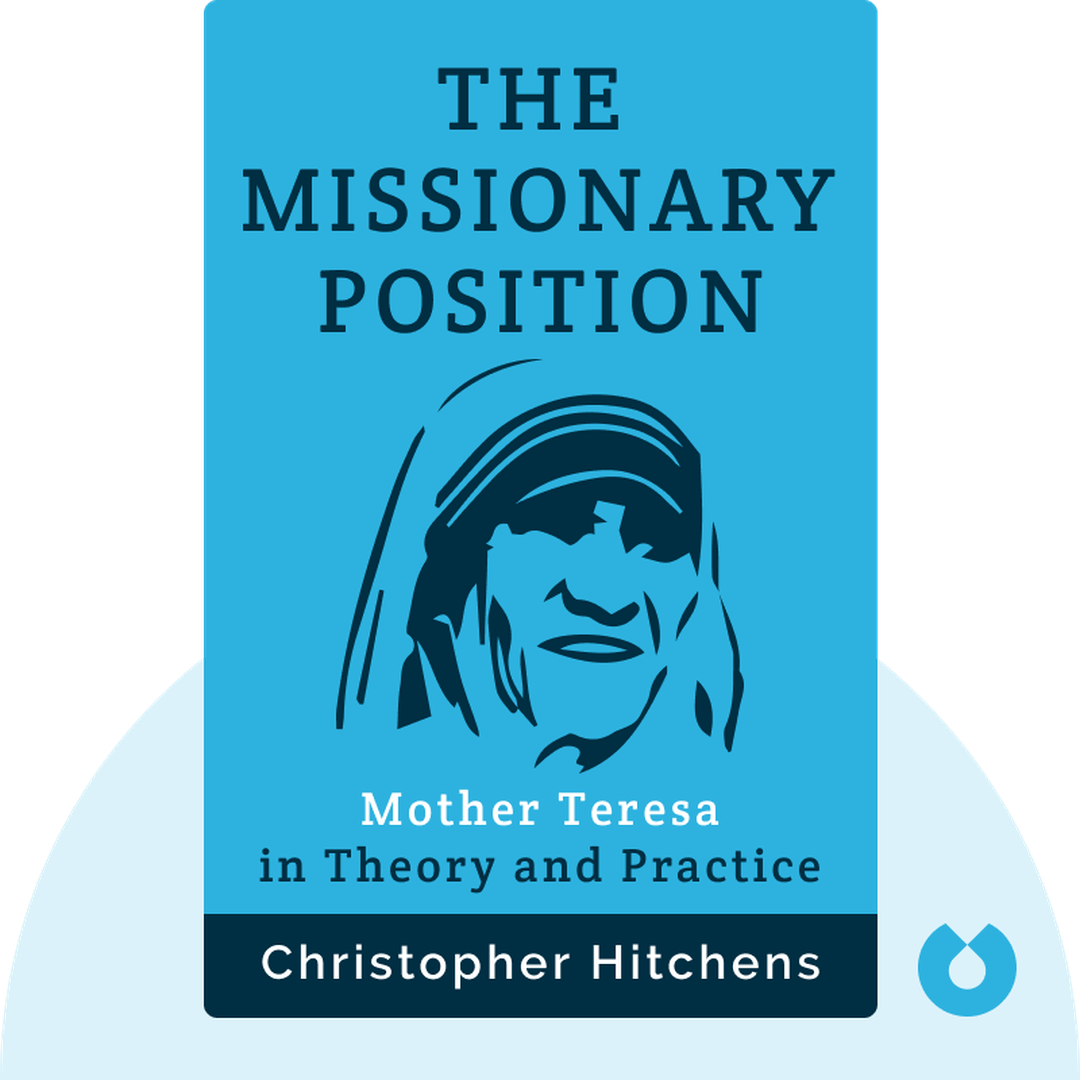
The Missionary Position
Start ListeningDownload Try free on iPhoneScan to start in 5 seconds
Categories:
If You're Curious About These Questions...
You should listen to this audiobook
- Did you know that the global icon of Mother Teresa might be more of a carefully constructed myth than a reflection of her actual work in the slums?
- Have you ever wondered why one of history’s most celebrated humanitarians was often more focused on the glorification of suffering than on providing modern medical care?
- Are you curious about the controversial political alliances and financial secrets that the mainstream narrative about the 'Saint of the Gutters' often ignores?
Listen to The Missionary Position — Cinematic Audio Edition
Loading player...
Key Takeaways from The Missionary Position
- Discover how Mother Teresa’s international fame was largely built on a 1969 BBC documentary that misrepresented Calcutta and mistook lighting from new Kodak film for a divine miracle.
- Understand why the medical care at Teresa's clinics was shockingly inadequate, featuring unsterilized needles and untrained staff, despite her organization hoarding tens of millions of dollars in donations.
- Learn the disturbing reality behind Mother Teresa’s actual motives, which prioritized fetishizing poverty and emulating suffering over providing genuine medical assistance to the sick.
- Find out how Teresa's extreme commitment to harsh austerity actively harmed patients, even leading her to abandon a Bronx clinic rather than accept a mandatory elevator for the disabled.
- Uncover Mother Teresa's troubling history of associating with and legitimizing brutal dictators, such as Haiti's Jean-Claude Duvalier, instead of using her immense influence to protect the oppressed.
Learning Tools
Reinforce what you learned from The Missionary Position
Mind Map
The Missionary Position
Media Stardom Based on Myth+
Appalling Medical Practices+
Harmful Austerity in the West+
Endorsing Brutal Dictators+
Covert Political Agendas+
The Real Legacy+
Quiz — Test Your Understanding
Question 1 of 6
How did the 1969 BBC documentary primarily contribute to Mother Teresa's international fame?
Question 2 of 6
According to the observations of Dr. Robin Fox and Mary Loudon, what was the primary issue with Mother Teresa's medical centers in Calcutta?
Question 3 of 6
Based on the text, what was the underlying motivation for the harsh conditions maintained in Mother Teresa's facilities?
Question 4 of 6
Why did Mother Teresa's planned center for the poor in the Bronx ultimately fail to open?
Question 5 of 6
How did Mother Teresa interact with authoritarian regimes, such as the Duvalier family in Haiti and the legacy of Enver Hoxha in Albania?
Question 6 of 6
Although Mother Teresa claimed to be apolitical, the text argues she actively engaged in politics by doing which of the following?
The Missionary Position — Full Chapter Overview
- 1Recommendation
- 2The Photograph That Does Not Fit
- 3The Making of a Modern Saint
- 4The Miracle of the Camera
- 5Suffering as a Doctrine
- 6The Order Behind the Image
- 7The War Over Birth
- 8Money Without an Audit
- 9Dictators, Presidents, and Holy Silence
- 10The Uses of Reverence
- 11The Candle of Reason
The Missionary Position Summary & Overview
The Missionary Position (1995) tells the true story of the famous nun known as Mother Teresa. These blinks explain how a convincing yet false myth formed around this historic icon whose work and motivations weren’t as noble as we’ve been led to believe.
Who Should Listen to The Missionary Position?
- People interested in Catholicism
- Students of religion or modern history
- All readers interested in the story the mainstream isn’t telling
Books Similar to The Missionary Position
Readers who enjoyed this also liked these titles.