If You're Curious About These Questions...
You should listen to this audiobook
- Did you know there’s a simple, two-part formula used by the world’s most successful people to turn "impossible" dreams into inevitable realities?
- What if you could master a specific technique to move past emotional pain and setbacks in just minutes, clearing the path for your biggest breakthroughs?
- Are you curious about the secret to maintaining unwavering faith in your goals, even when you're feeling overwhelmed or ready to give up?
Listen to The Miracle Equation — Free Audiobook
Loading player...
Key Takeaways from The Miracle Equation
- Discover how the Miracle Equation transforms the phrase 'anything is possible' into reality through two lived decisions: unwavering faith and extraordinary effort.
- Understand why achieving a single goal won't permanently fix your longing, and how embracing life as an ongoing rhythm of growth leads to true fulfillment.
- Learn to redefine roadblocks as essential learning opportunities rather than stop signs, ensuring that setbacks help you adjust and grow instead of quitting.
- Explore the difference between unexplainable phenomena and achievable miracles, and discover how resisting cynicism allows you to actively build remarkable outcomes.
- Find out how to become a Miracle Maven by maintaining a clear aim, proving that extraordinary success is fueled by relentless commitment rather than privilege or a perfect background.
Learning Tools
Reinforce what you learned from The Miracle Equation
Mind Map
The Miracle Equation
Core Concept+
Unwavering Faith+
Extraordinary Effort+
Quiz — Test Your Understanding
Question 1 of 9
What are the two core components of 'The Miracle Equation'?
Question 2 of 9
How does the author differentiate between 'rational skepticism' and 'cynicism'?
Question 3 of 9
According to business guru Jim Rohn, what is the true purpose of setting a goal?
Question 4 of 9
Why does establishing 'unwavering faith' require a conscious choice or a 'leap of faith'?
Question 5 of 9
According to the text, why does the adult human brain often hold us back from pursuing new opportunities?
Question 6 of 9
What is the core philosophy behind the 'five-minute rule' for dealing with setbacks?
Question 7 of 9
How does the author suggest you choose your primary mission from a list of competing goals?
Question 8 of 9
Why does the author recommend setting monthly targets instead of annual New Year's resolutions?
Question 9 of 9
How does the author define the 'extraordinary effort' required by the miracle equation?
The Miracle Equation — Full Chapter Overview
- 1Recommendation
- 2There are two kinds of miracle, but only one you can influence.
- 3The author first encountered the miracle equation in his early twenties.
- 4Building unwavering faith is a deliberate choice that mentors and spirituality can nurture.
- 5Learning to define yourself lets you move beyond biological and social limits.
- 6The five-minute rule can bring you emotional calm when everything falls apart.
- 7Clarifying your mission keeps you from getting stuck in clashing goals.
- 8Monthly goals and a supportive environment make your mission achievable.
- 9Extraordinary effort means staying consistent and fully committed.
The Miracle Equation Summary & Overview
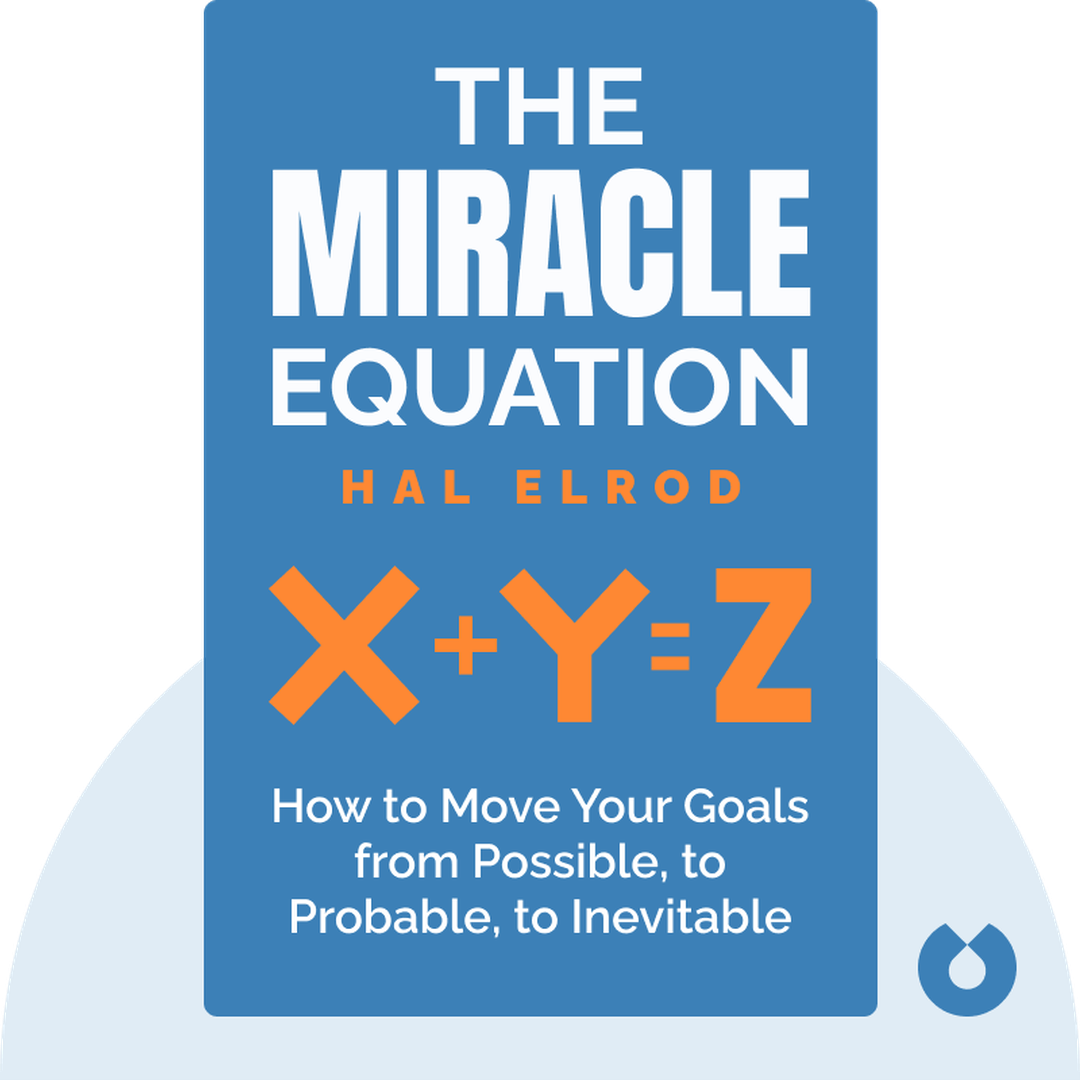
The Miracle Equation (2019) is a hands-on guide to living your best life and making your dreams come true. Drawing on the wisdom of miracle-makers old and new, best-selling author and motivational speaker Hal Elrod shows how highfliers achieve their success by adhering to two basic principles: unwavering commitment and extraordinary effort. Packed with actionable advice on everything from dealing with emotional pain to prioritizing goals, these blinks will help you put the past behind you and move toward a glittering future.
Who Should Listen to The Miracle Equation ?
- Self-starters looking for a boost
- Work-weary souls ready for a new challenge
- Goal-setters overwhelmed by their personal targets
Books Similar to The Miracle Equation
Readers who enjoyed this also liked these titles.