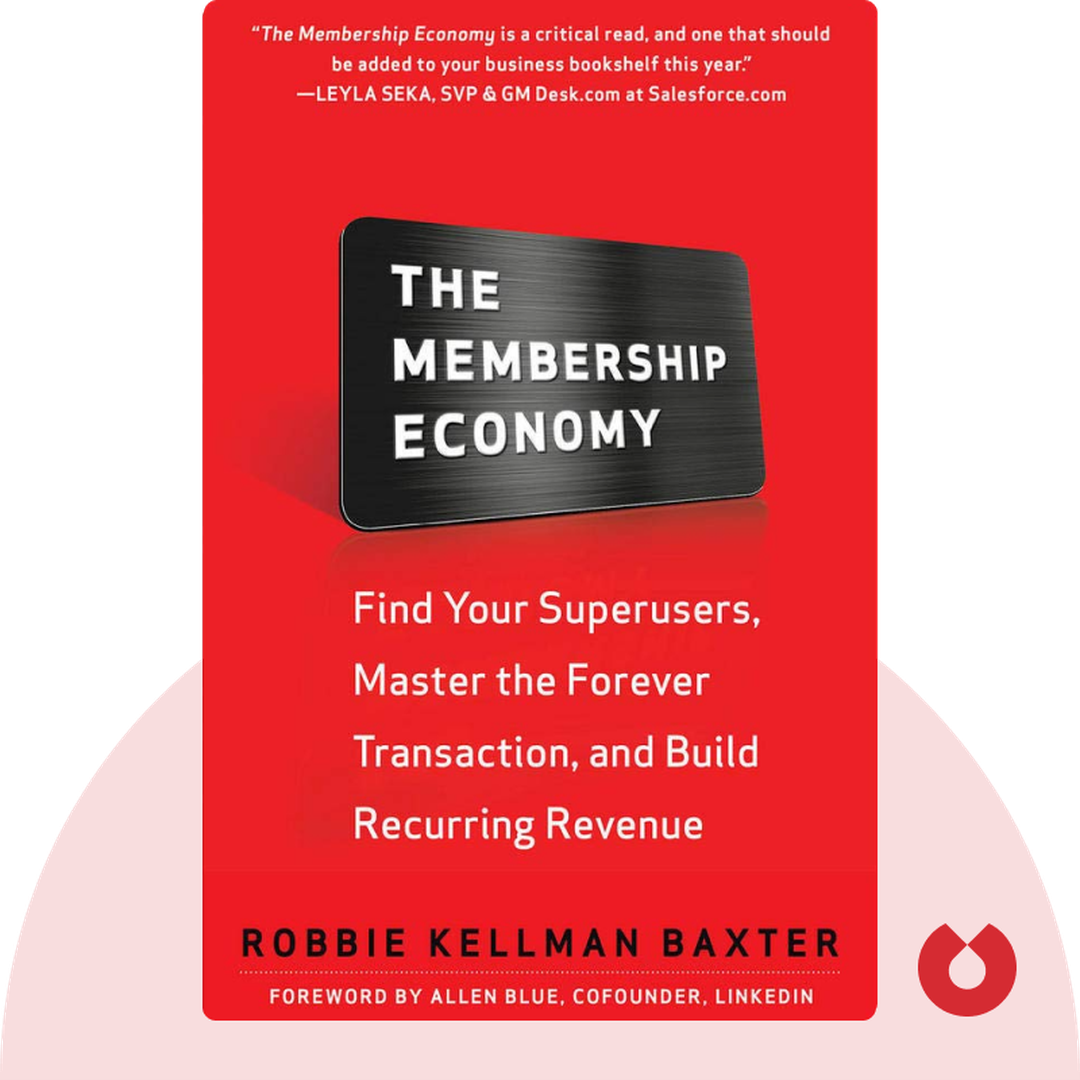
The Membership Economy
Start ListeningDownload Try free on iPhoneScan to start in 5 seconds
Categories:
If You're Curious About These Questions...
You should listen to this audiobook
- Have you ever wondered why modern consumers are trading permanent ownership for temporary access—and what this shift means for the future of your business?
- What’s the secret to building a 'forever transaction' that keeps customers coming back month after month without a second thought?
- What if you could stop chasing one-off sales and instead transform your brand into a membership powerhouse with predictable, recurring revenue?
Listen to The Membership Economy — Free Audiobook
Loading player...
Key Takeaways from The Membership Economy
- Discover why the modern market is shifting from traditional ownership models to access-oriented services that relieve consumers of long-term costs and responsibilities.
- Understand how the membership economy transforms one-off transactions into mutually beneficial, ongoing relationships across digital, community, loyalty, and traditional platforms.
- Master the art of building a four-phase acquisition funnel to attract new members, track behavior, and patch conversion holes that cost you sign-ups.
- Learn why closely tracking new member behavior and retaining them for the crucial first 30 days significantly increases their chances of long-term loyalty.
- Find out how to implement a three-phase onboarding strategy—removing friction, delivering immediate value, and rewarding desired behavior—to turn new sign-ups into highly devoted superusers.
Learning Tools
Reinforce what you learned from The Membership Economy
Mind Map
The Membership Economy
The Shift to Access+
Acquisition & Onboarding+
Pricing & Loyalty+
Launching & Transitioning+
Quiz — Test Your Understanding
Question 1 of 9
What fundamental shift characterizes the rise of the membership economy compared to the traditional economy?
Question 2 of 9
According to the text, which of the following is NOT one of the four basic categories of companies in the membership economy?
Question 3 of 9
What is the primary purpose of tracking how many potential members make it through each phase of the acquisition funnel?
Question 4 of 9
What are the three crucial phases of an effective onboarding strategy designed to create 'superusers'?
Question 5 of 9
Why does the book caution against offering a completely 'free' membership option, using Napster as an example?
Question 6 of 9
How does the text recommend handling a user who signs up for a free trial but does not actively use the service?
Question 7 of 9
To align a start-up's culture with the membership economy, upon what metric should salespeople ideally be compensated?
Question 8 of 9
How did successful start-ups like Facebook and LinkedIn overcome the 'chicken and egg' problem of needing a critical mass of members to provide value?
Question 9 of 9
When transitioning a traditional company to a membership-oriented model, what is identified as the key to retaining stakeholders?
The Membership Economy — Full Chapter Overview
- 1Recommendation
- 2Internet-powered companies offering customers access rather than ownership are increasingly prevalent today.
- 3Membership-focused businesses build strong, enduring relationships between companies and customers.
- 4Draw new members by establishing and improving an effective acquisition strategy overall.
- 5Adopt the right onboarding strategy to retain new members and turn them into superusers.
- 6Use a simple pricing model and be mindful of the downsides of a free membership option.
- 7Increase loyalty by personalizing the user experience and tracking member behavior.
- 8Start-ups need to build a membership-focused culture from the beginning to ensure members receive value right away.
- 9To shift to a membership-focused model, assess your company’s fit and prioritize transparency.
The Membership Economy Summary & Overview
Today, ownership is out. Consumer trends show that more and more consumers want temporary access, not permanent ownership. And within this changing landscape, membership-oriented businesses are king. The Membership Economy (2015) outlines key strategies and tactics based on real-world examples for successfully building a membership organization.
Who Should Listen to The Membership Economy?
- Business-owners of all stripes
- Leaders and managers who want to attract more members to their company
- Entrepreneurs interested in successfully building a membership-oriented business
Books Similar to The Membership Economy
Readers who enjoyed this also liked these titles.