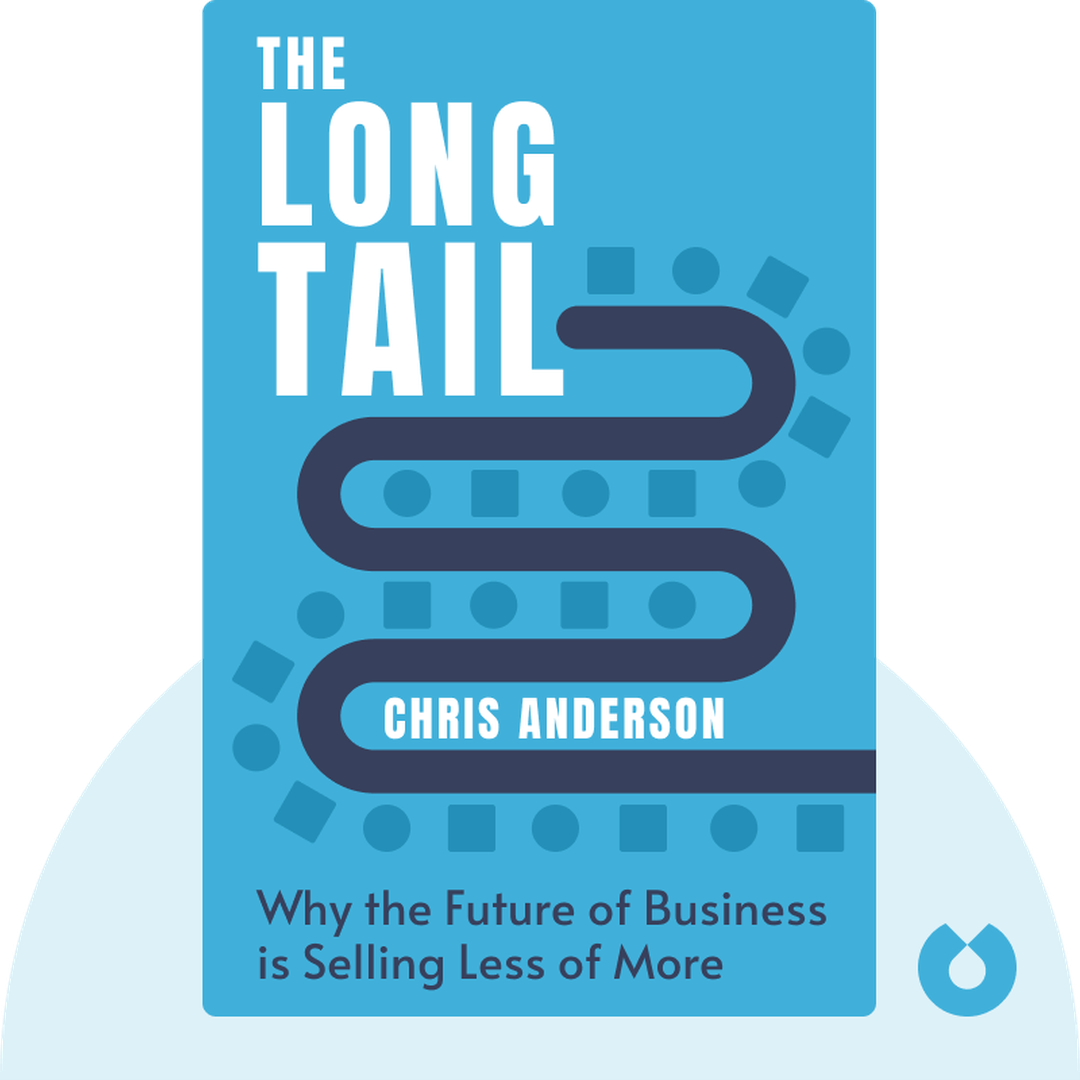
If You're Curious About These Questions...
You should listen to this audiobook
- Did you know that the secret to massive profitability in the digital age might lie in the products nobody has ever heard of, rather than the year's biggest hits?
- Have you ever wondered how the world’s most successful companies are making a fortune by selling 'less of more' instead of chasing the next blockbuster?
- What if the key to dominating your industry wasn't finding one 'big thing,' but tapping into the millions of small niches that traditional businesses completely ignore?
Listen to The Long Tail — Free Audiobook
Loading player...
Key Takeaways from The Long Tail
- Discover why catering to a multitude of small, niche markets can be just as profitable as relying on blockbuster hits.
- Understand how inexpensive digital production tools have empowered everyday amateurs to create vast amounts of content, extending the tail of consumer demand.
- Learn how online aggregators structure previously unorganized markets to make rare and obscure products easily accessible to buyers.
- Find out why popularity is no longer necessary for profitability when utilizing a digital marketplace with virtually no storage constraints.
- Explore how digital filters like search rankings and customer reviews help consumers navigate an endless supply of options to find exactly what they want.
Learning Tools
Reinforce what you learned from The Long Tail
Mind Map
The Long Tail
The New Paradigm+
Drivers of the Long Tail+
The Role of Filters+
Traditional vs. Online Economics+
Beyond Entertainment+
Business Strategies+
Quiz — Test Your Understanding
Question 1 of 10
What is the fundamental premise of the 'long tail' economic concept?
Question 2 of 10
According to the text, how has the democratization of production tools, like inexpensive PCs, affected the content market?
Question 3 of 10
What is the primary difference between a 'hybrid aggregator' and a 'digital aggregator'?
Question 4 of 10
In the context of the long tail, what role do 'post-filters' play in the consumer experience?
Question 5 of 10
Why are traditional retail stores forced to operate according to the Pareto principle (the 80/20 rule)?
Question 6 of 10
Why does a massive array of choice work well for online retail but often confuse customers in traditional retail?
Question 7 of 10
How does Google's self-service advertising model demonstrate the long tail?
Question 8 of 10
What is recommended as the first step to take advantage of the long tail in your own online business strategy?
Question 9 of 10
What was the ultimate outcome of the 'Dell Hell' blog phenomenon mentioned in the text?
Question 10 of 10
How did LEGO utilize the long tail strategy in the manufacturing industry?
The Long Tail — Full Chapter Overview
- 1Recommendation
- 2Across online entertainment today, markets of niche goods with small but steady demand can rival markets driven by hits and blockbusters.
- 3When everyone has access to production tools, more content emerges and the tail grows much longer.
- 4When distribution channels are open to everyone, access to more content expands and the tail grows even fatter overall.
- 5Helping customers filter choices lets them find and purchase exactly what they truly want most.
- 6Shelf space is expensive, pushing businesses to prioritize only bestsellers and neglect many customers’ interests in-store.
- 7Online distribution carries lower inventory costs and can therefore cater to individual needs.
- 8From toys to advertising, niches and long tails appear across many markets today, not just entertainment alone.
- 9To leverage the long tail in your business, expand your offering and help customers locate what they want online.
- 10A niche marketing campaign proves more effective than a traditional one-size-fits-all advertisement.
The Long Tail Summary & Overview
The Long Tail challenges existing notions of the market and the entertainment industry by looking at the massive influence of the internet on the economy. Due to new modes of content creation and distribution, it can be more profitable to offer a large number and wide variety of products that appeal to niche consumer groups rather than one certain “hit,” e.g., a blockbuster or bestselling book.
Who Should Listen to The Long Tail?
- Anyone who deals with online sales
- Anyone interested in alternative economic theories
- Anyone working in the media or entertainment industries
Books Similar to The Long Tail
Readers who enjoyed this also liked these titles.