If You're Curious About These Questions...
You should listen to this audiobook
- What’s the secret to how companies like Airbnb and YouTube achieve billion-dollar valuations without actually owning any of the products they sell?
- Have you ever wondered why traditional businesses often fail to compete with the explosive, lightning-fast growth of modern digital platforms?
- Did you know that the key to massive scale in the new economy isn't about creating a better product, but about mastering a specific set of user interactions?
Listen to Platform Scale — Free Audiobook
Loading player...
Key Takeaways from Platform Scale
- Understand the fundamental business shift from linear 'pipe' models to decentralized 'platform' environments where users, rather than the company, generate the core value.
- Discover why successful platforms rely on amazingly simple core ideas and how staying flexible allows users to organically evolve your app into unexpected, highly valuable directions.
- Learn how to design smooth user interactions by balancing content creation with curation, allowing your community to filter out bad content and elevate the good.
- Master the use of consumption filters to attach vital data to your platform's core value units, preventing information overload and helping users easily find what they need.
- Find out how to overturn the old 90-9-1 internet rule and boost user production by providing both intuitive creation tools and powerful broadcasting channels, just as Instagram did to defeat Hipstamatic.
Learning Tools
Reinforce what you learned from Platform Scale
Mind Map
Platform Scale
The Shift to Platforms+
Core Platform Design+
Optimizing User Production+
Overcoming the Empty Platform+
Driving Virality+
Managing Scale & Failures+
Quiz — Test Your Understanding
Question 1 of 8
What is the primary difference between the traditional 'pipe' business model and the modern 'platform' model?
Question 2 of 8
Why is keeping a platform's core idea simple crucial for its long-term success, as demonstrated by the app Moodswing?
Question 3 of 8
As a well-designed platform grows and content increases exponentially, what must be implemented to prevent users from struggling to find what they need?
Question 4 of 8
According to the text, why did Instagram succeed and win the digital photography app race over its predecessor, Hipstamatic?
Question 5 of 8
What is 'multi-homing' and how does it negatively affect platforms?
Question 6 of 8
How did OpenTable successfully avoid the initial risk of launching an empty platform with no users?
Question 7 of 8
How does the book distinguish true 'virality' from traditional 'word of mouth'?
Question 8 of 8
What happens when a platform experiences a 'reverse network effect'?
Platform Scale — Full Chapter Overview
- 1Recommendation
- 2Business design is moving away from the old pipe model toward the new platform model today.
- 3Every platform rests upon a simple, flexible core concept at heart.
- 4A successful platform is built so users can interact and obtain what they want.
- 5An optimized platform employs efficient systems that encourage users to contribute content.
- 6Interaction failures create problems for platforms, yet they can be addressed.
- 7There are ways to avert the initial risk of launching a content-free platform altogether.
- 8Virality is essential for spreading the word about a platform.
- 9Platforms may suffer a reverse network effect, but this can be managed through increased curation.
Platform Scale Summary & Overview
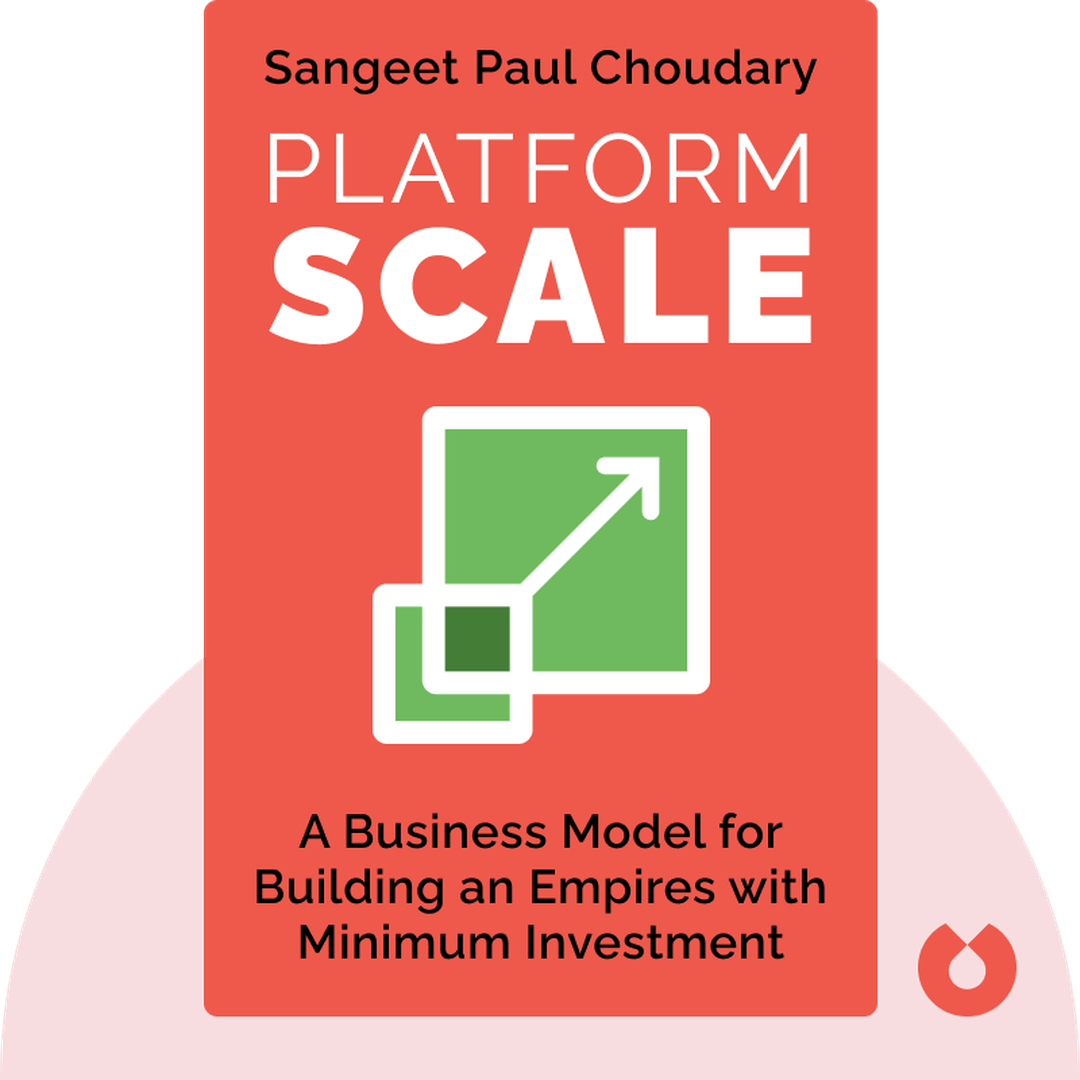
A new kind of business has emerged during the last decade. Facebook, Airbnb, YouTube, Twitter have exploded in popularity – but what do these companies have in common? They’re all platforms: they gather millions of users and achieve billion-dollar valuations, but instead of products, they offer something very different. Platform Scale (2015) offers an insightful analysis of the mechanisms that drive this new platform business model, and how it achieves skyrocketing growth.
Who Should Listen to Platform Scale?
- Business students eager to learn about the new economy
- Aspiring entrepreneurs, interested in the do’s and don’ts of a platform strategy
- Social media users curious about the secrets of their favorite platforms
Books Similar to Platform Scale
Readers who enjoyed this also liked these titles.