If You're Curious About These Questions...
You should listen to this audiobook
- Why do members of a high-poverty, high-obesity community in Israel outlive their wealthier secular neighbors, and what does this paradox reveal about the physical dangers of isolation?
- What is the surprising psychological link between decades of hyper-competitive neoliberal capitalism and the recent global surge in right-wing populism?
- From renting friends by the hour to forming emotional attachments with AI robots, how are modern citizens outsourcing human connection, and what are the hidden costs of our increasingly 'contactless' world?
Listen to The Lonely Century — Free Audiobook
Loading player...
Key Takeaways from The Lonely Century
- Neoliberal capitalism has fueled the global loneliness crisis by championing hyper-competitiveness and individual self-interest over communal values.
- Chronic loneliness acts as a severe physical stressor that triggers inflammation and significantly increases the risk of heart disease, stroke, and clinical dementia.
- Feelings of social isolation and economic marginalization make individuals highly susceptible to the exclusionary community-building tactics of extremist political movements.
- The transition to a 'contactless' economy and the defunding of public spaces eliminate vital microinteractions that naturally boost our daily happiness and social cohesion.
- While artificial intelligence and social robots offer novel remedies for individual isolation, true societal connection requires structural economic reforms and active democratic participation.
Learning Tools
Reinforce what you learned from The Lonely Century
Mind Map
The Lonely Century
Root Causes of Loneliness+
Consequences of Loneliness+
Modern Coping Mechanisms+
Solutions & Reconnection+
Quiz — Test Your Understanding
Question 1 of 8
Why does the author argue that neoliberal capitalism has fueled the 'Lonely Century'?
Question 2 of 8
What surprising insight does the Haredim community in Israel reveal about health and longevity?
Question 3 of 8
How does the book connect loneliness to the rise of right-wing populist movements?
Question 4 of 8
What is a potential drawback of transactional relationships, such as hiring a 'RentAFriend' or watching 'mukbang' streams?
Question 5 of 8
According to a University of British Columbia study at a Starbucks, what is the value of 'microinteractions'?
Question 6 of 8
What does the author suggest governments should do to protect children from the negative social effects of excessive screen time?
Question 7 of 8
What is identified as a primary risk of relying on highly advanced social robots for companionship?
Question 8 of 8
What real-world example does the author use to demonstrate how governments can give citizens a more active voice and foster a collective mindset?
The Lonely Century — Full Chapter Overview
- 1Recommendation
- 2Neoliberal capitalism has fueled the Lonely Century.
- 3Loneliness leads directly to illness and disease.
- 4Loneliness may be the key to understanding right-wing movements.
- 5The new surge in urbanization is worsening global loneliness.
- 6A contactless world is feeding deeper loneliness.
- 7Children are highly vulnerable to excessive screen time.
- 8Social robots might offer a remedy for loneliness.
- 9Coming together demands both structural and personal change.
The Lonely Century Summary & Overview
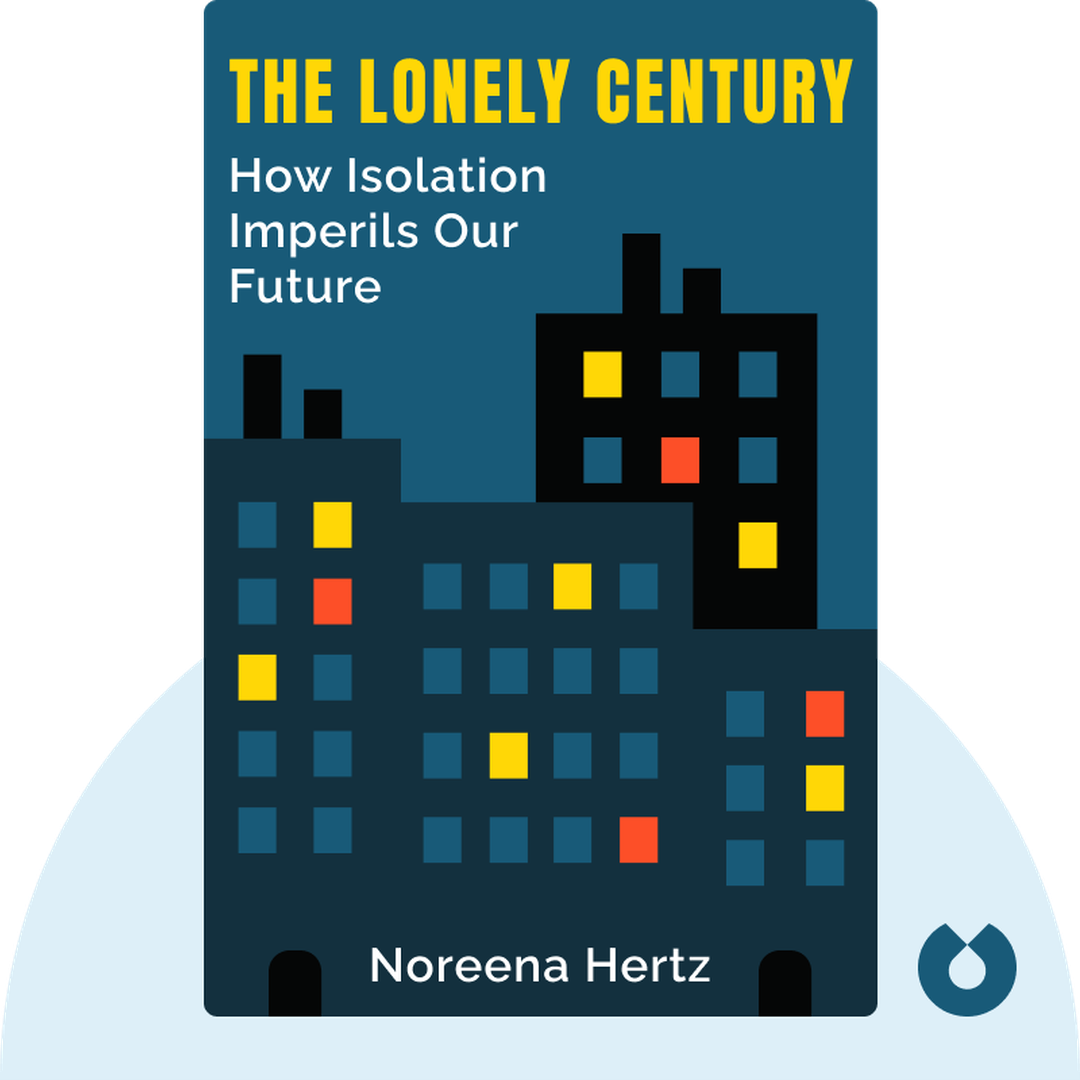
The Lonely Century (2021) explores the loneliness that characterizes the twenty-first century. Drawing on a decade of research, it reveals how neoliberal policies, new technologies, and mass migration to cities have contributed to us becoming so lonely – and what shifts need to occur for us to reconnect.
Who Should Listen to The Lonely Century?
- Isolated individuals interested in understanding our current crisis of loneliness
- Political thinkers who want to understand the roots of far-right movements
- Community leaders looking for ways to bring people together
Books Similar to The Lonely Century
Readers who enjoyed this also liked these titles.