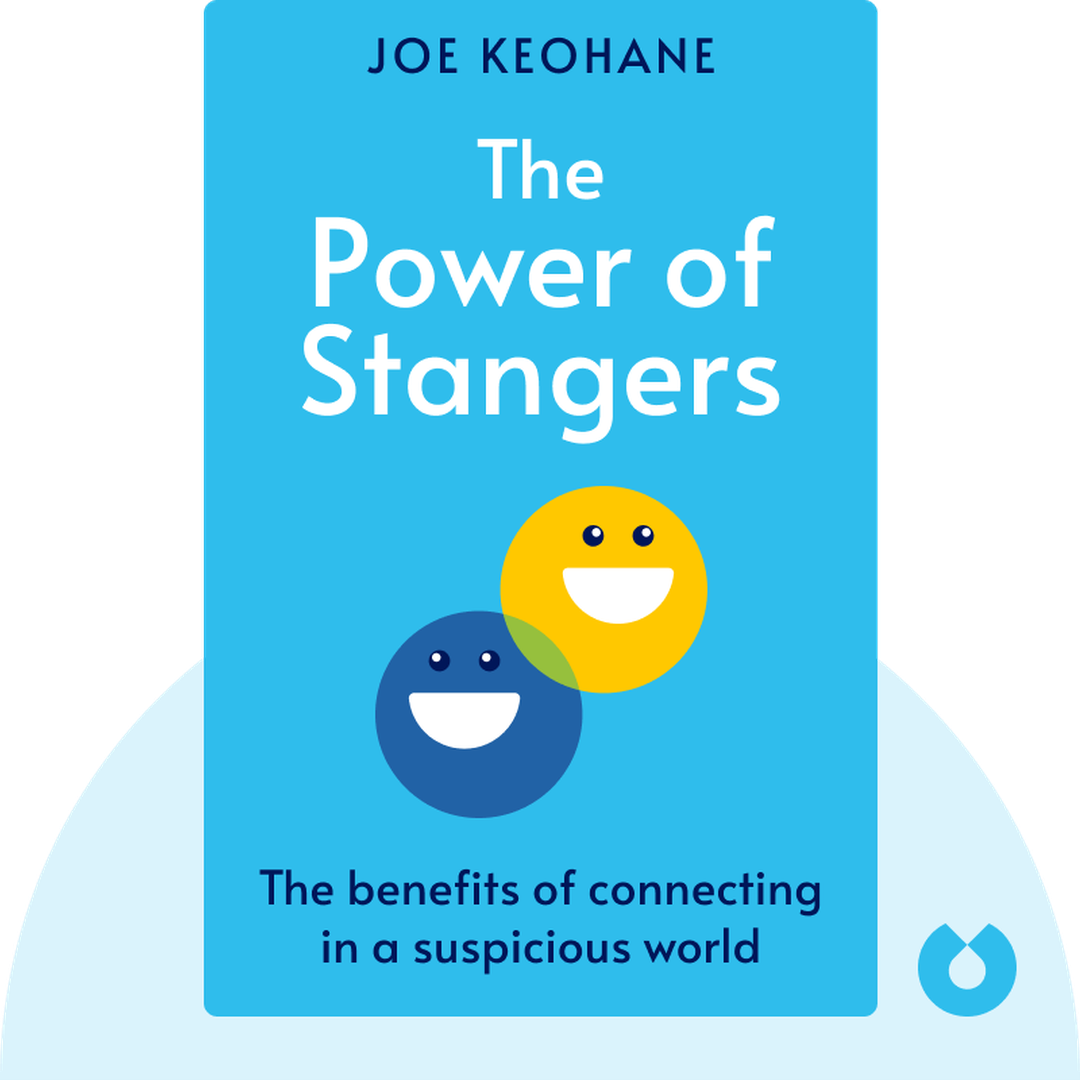
The Power of Strangers
Start ListeningDownload Try free on iPhoneScan to start in 5 seconds
Categories:
If You're Curious About These Questions...
You should listen to this audiobook
- Have you ever wondered why humans are biologically wired to connect with strangers, yet we’ve become more afraid of each other than ever before?
- Did you know that a simple, brief conversation with a complete stranger could be the secret to boosting your daily happiness and curing modern loneliness?
- What if you could master the hidden psychological techniques used to turn any random encounter into a meaningful and transformative connection?
Listen to The Power of Strangers — Free Audiobook
Loading player...
Key Takeaways from The Power of Strangers
- Discover how childhood conditioning and modern lifestyle factors fuel a deeply ingrained fear of strangers, leading to dangerous levels of isolation.
- Learn about the 'liking gap' and why we mistakenly underestimate how much strangers actually enjoy our company and conversation.
- Understand the 'lesser minds problem' to see why we often mistake people in crowds for mere obstacles rather than complex, fascinating humans.
- Discover why connecting with outsiders was an evolutionary necessity for early humans, proving that we are naturally wired to collaborate rather than fight.
- Find out how simply striking up a conversation during your daily commute can boost your mood, bridge divides, and help combat today's highly polarized society.
Learning Tools
Reinforce what you learned from The Power of Strangers
Mind Map
The Power of Strangers
The Problem of Isolation+
Psychological Barriers+
Evolutionary Roots+
Benefits of Connection+
How to Connect+
The Solution: Cosmopolitanism+
Quiz — Test Your Understanding
Question 1 of 7
According to the text, what are the primary factors contributing to our modern isolation and fear of strangers?
Question 2 of 7
What psychological phenomenon explains why we often hesitate to engage with strangers, mistakenly believing they won't enjoy the interaction as much as we do?
Question 3 of 7
How did early human interactions with strangers contribute to the evolutionary success of Homo sapiens?
Question 4 of 7
What did researchers Sandstrom and Dunn discover about 'weak ties' (such as a local barista or hot dog vendor)?
Question 5 of 7
According to the book, what is the purpose of 'breaking the script' during a conversation with a stranger?
Question 6 of 7
How does historian Margaret Jacob define the concept of 'cosmopolitanism' that is needed to survive our increasingly isolated future?
Question 7 of 7
Why does the author advise readers not to worry too much about making conversational blunders when talking to a stranger?
The Power of Strangers — Full Chapter Overview
- 1Recommendation
- 2Our fear of strangers drives us further apart from one another.
- 3We expect that strangers won’t like us; we also underrate them.
- 4Cooperating with strangers was an evolutionary necessity.
- 5Conversations with strangers make us feel happier and more connected.
- 6To connect with strangers, first begin with small talk, and then break the script.
- 7To endure the future, we must embrace a new kind of cosmopolitanism.
The Power of Strangers Summary & Overview
The Power of Strangers (2021) explores why we don’t talk to strangers – and why we definitely should. It looks at how humans evolved to communicate and collaborate with strangers and reveals why our modern alienation from one another is such a problem.
Who Should Listen to The Power of Strangers?
- Anyone feeling lonely in the modern world
- Those suffering from pandemic isolation
- People interested in the psychology of communication
Books Similar to The Power of Strangers
Readers who enjoyed this also liked these titles.