If You're Curious About These Questions...
You should listen to this audiobook
- Have you ever wondered how to maintain a 'defiant flame' of hope and joy even when faced with injustice and personal struggle?
- What if you could turn your most challenging experiences into a source of deep connection and purpose using simple, ancient wisdom?
- Are you curious about the secret to living a fulfilling life that isn't dependent on your external circumstances?
Listen to The Light We Give — Free Audiobook
Loading player...
Key Takeaways from The Light We Give
- Discover how applying time-tested Sikh wisdom can help you find authentic happiness and transform your life through periods of turmoil.
- Learn to shift your perspective during difficult times by embracing your core principles rather than simply reacting to uncontrollable circumstances.
- Understand why getting curious about the inherited beliefs and experiences of others can help you replace anger with profound human connection.
- Find out how confronting your own unconscious biases creates a positive cycle of compassion, allowing you to suspend judgment and open up to the world.
- Recognize the power of looking past the urge to simply label others as evil, enabling you to process your rage and discover a more transformative path forward.
Learning Tools
Reinforce what you learned from The Light We Give
Mind Map
The Light We Give
Shifting Perspective+
Confronting Bias & Connection+
Seeing Humanity in Darkness+
Selfless Service+
Outsider's Perspective for Healing+
Interconnectedness+
Quiz — Test Your Understanding
Question 1 of 6
How did Simran Jeet Singh's approach to dealing with racism change after the events of September 11, 2001?
Question 2 of 6
What surprising realization helped Singh deal with the anger of people telling him to 'go back to where he came from'?
Question 3 of 6
Following the tragic shooting at the Oak Creek gurdwara, why did Singh resist the urge to simply label the white supremacist gunman as 'evil'?
Question 4 of 6
During the COVID-19 lockdowns in New York City, how did Singh's understanding of 'activism' and 'service' evolve?
Question 5 of 6
What is the primary purpose of the 'alien observer' thought experiment described in the book?
Question 6 of 6
According to the book's overarching message, what is the ultimate result of choosing to see the humanity in others, even those who cause harm?
The Light We Give — Full Chapter Overview
- 1Recommendation
- 2You can’t alter events, but you can change the way you see them.
- 3Face your biases to genuinely connect.
- 4Seeing the light in others brightens your world.
- 5Sharing the light illuminates the entire world.
- 6Stay an outsider to self-heal.
The Light We Give Summary & Overview
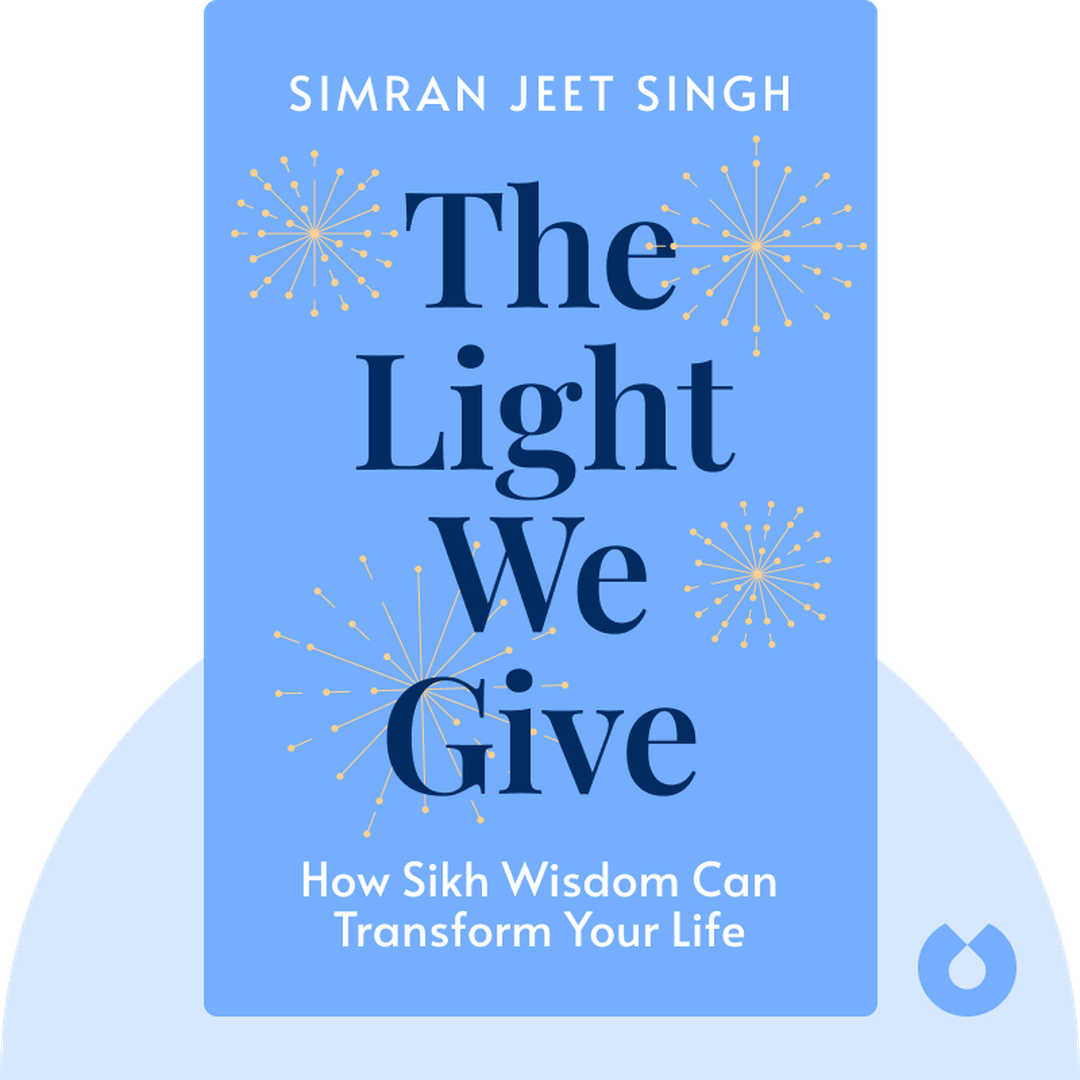
The Light We Give (2022) lights a defiant flame of hope for troubled times. Drawing on a lifetime of navigating racism growing up as a Sikh in Texas, it offers simple, guiding principles and daily practices that can help anyone live a more fulfilling, joyful life – regardless of their circumstances.
Who Should Listen to The Light We Give?
- Anxious news junkies feeling overwhelmed by the world
- Optimists seeking meaning in an unjust world
- Anyone looking to live with deeper connection, joy, and fulfillment
Books Similar to The Light We Give
Readers who enjoyed this also liked these titles.