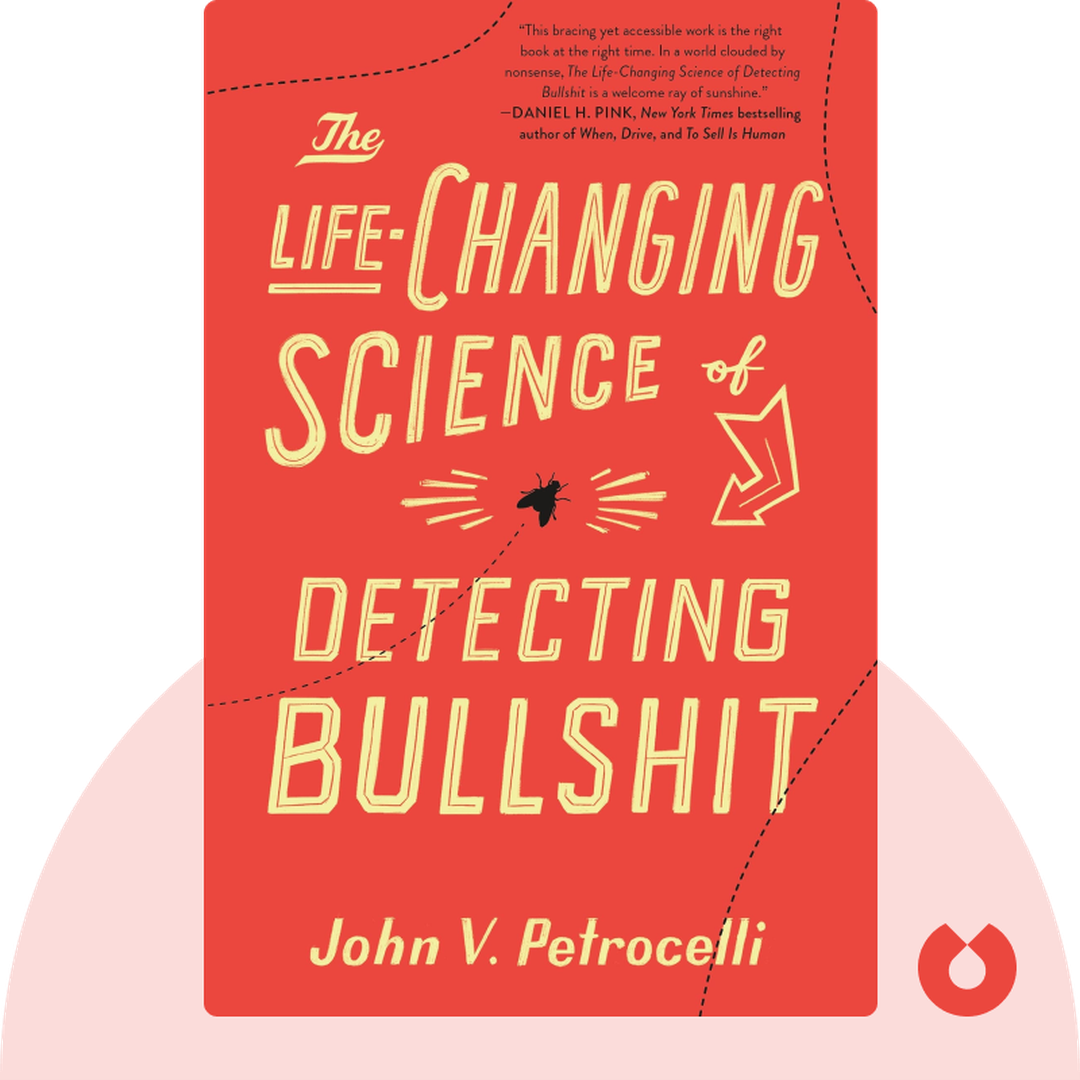
The Life-Changing Science of Detecting Bullshit
Start ListeningDownload Try free on iPhoneScan to start in 5 seconds
Categories:
If You're Curious About These Questions...
You should listen to this audiobook
- Did you know that the more confident you are in your ability to spot a lie, the more vulnerable you might actually be to falling for bullshit?
- What’s the secret difference between a common lie and pure bullshit—and why is one of them far more dangerous to your decision-making?
- What if you could master a simple, evidence-based habit that acts as a permanent shield against the misinformation and empty promises we encounter every day?
Listen to The Life-Changing Science of Detecting Bullshit — Cinematic Audio Edition
Loading player...
Key Takeaways from The Life-Changing Science of Detecting Bullshit
- Understand the crucial difference between lying and bullshitting, recognizing that while liars actively hide the truth, bullshitters simply do not care if their statements are true or false.
- Discover the three psychological reasons we fall for bullshit, including our desire for information that aligns with our worldview, our tendency to accept what we hear first, and an over-reliance on intuition.
- Learn how unchecked bullshit deeply impacts your memory, attitudes, and daily decision-making, sometimes leading to catastrophic real-world consequences.
- Recognize your own 'bullibility'—a dangerous blend of bullshit blindness and gullibility—because accepting your inherent susceptibility is the first step to defending yourself against manipulation.
- Find out why highly agreeable individuals who prefer conformity over conflict are the most vulnerable to bullshit, and how simple contextual cues can easily bypass your critical thinking.
Learning Tools
Reinforce what you learned from The Life-Changing Science of Detecting Bullshit
Mind Map
The Life-Changing Science of Detecting Bullshit
Defining Bullshit+
The Impact of Bullshit+
Bullibility (Bullshit + Gullibility)+
Why We Produce Bullshit+
Bullshitter Tactics+
Detection & Critical Thinking+
Taking Action & Responsibility+
Quiz — Test Your Understanding
Question 1 of 8
What is the fundamental difference between lying and bullshitting, according to the book?
Question 2 of 8
Why do people often struggle to let go of bullshit even after it has been proven false?
Question 3 of 8
Which psychological trait makes an individual particularly susceptible to 'bullibility'?
Question 4 of 8
Under what circumstance are people MOST likely to produce bullshit?
Question 5 of 8
What common tactic do bullshitters frequently use to convince people of claims that lack scientific evidence?
Question 6 of 8
When trying to detect bullshit and question a claim, which type of question should you generally avoid?
Question 7 of 8
According to the car sales example, how do buyers often become complicit in accepting bullshit?
Question 8 of 8
What is the recommended approach for calling out someone's bullshit?
The Life-Changing Science of Detecting Bullshit — Full Chapter Overview
- 1Recommendation
- 2Bullshitting and lying are not the same thing.
- 3Bullshit shapes your memory, attitudes, beliefs, and choices.
- 4Everyone is bullible to some degree or another.
- 5We generate more bullshit when we feel pressured or expected to speak up.
- 6Spotting bullshitters’ favorite tricks will sharpen your bullshit radar.
- 7Critical thinking is vital for spotting bullshit.
- 8Failing to ask good questions means helping bullshit spread.
- 9We each share a duty to help clear bullshit from the world.
The Life-Changing Science of Detecting Bullshit Summary & Overview
The Life-Changing Science of Detecting Bullshit (2021) uses real-world examples to help you build critical thinking habits – which will enable you to recognize and resist all the false information that pervades society.
Who Should Listen to The Life-Changing Science of Detecting Bullshit?
- Bullshit detectors who want to hone their skills
- People who think they’re immune to bullshitting
- Anyone who yearns for a bullshit-free world
Books Similar to The Life-Changing Science of Detecting Bullshit
Readers who enjoyed this also liked these titles.