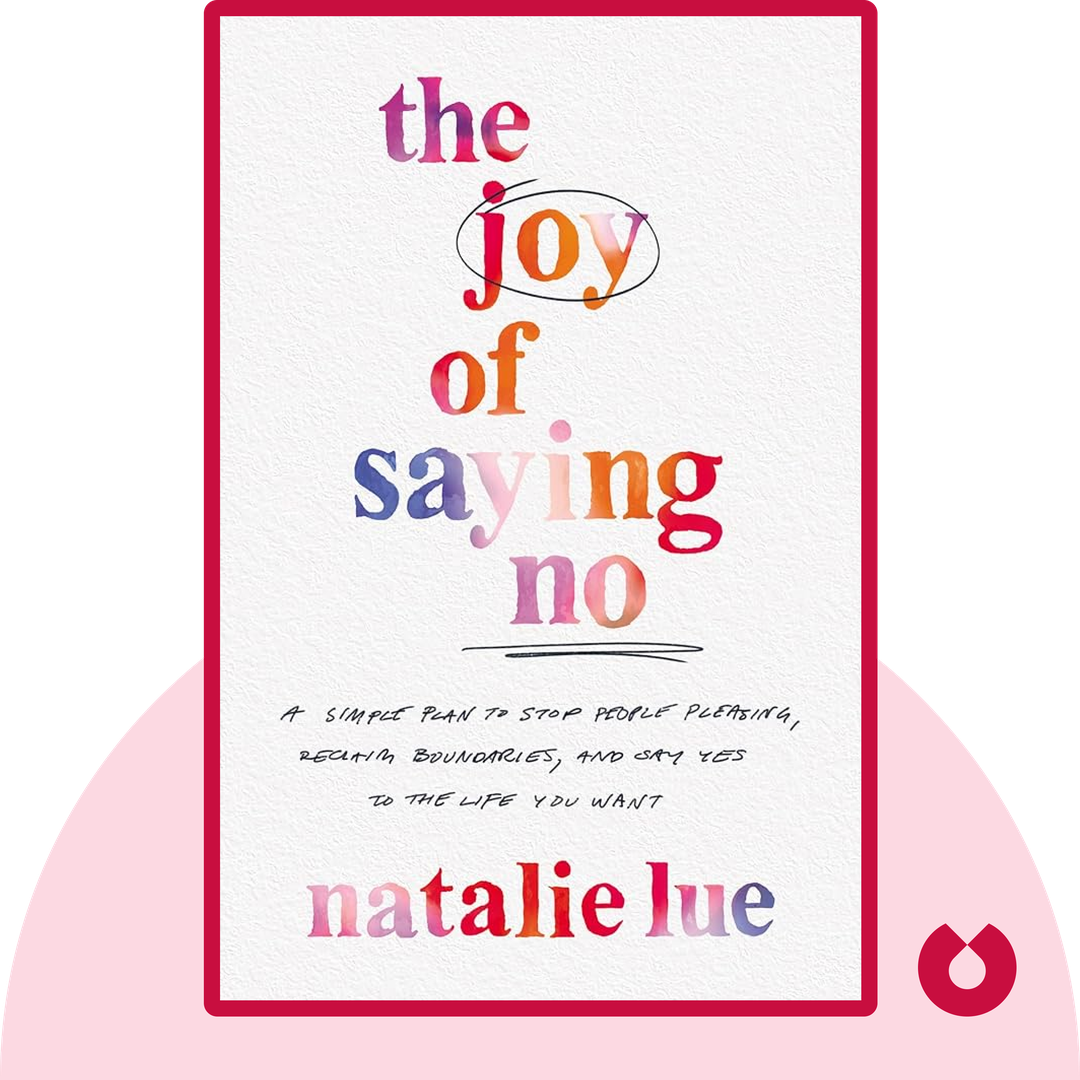
If You're Curious About These Questions...
You should listen to this audiobook
- Did you know that your habit of saying 'yes' might actually be a survival mechanism rooted in what’s known as the 'Age of Obedience'?
- Have you ever wondered why being a 'people pleaser' often leads to deep resentment rather than the genuine connection you’re actually looking for?
- What if you could reclaim your time and energy by identifying which of the five specific 'people-pleasing styles' is currently holding you back?
Listen to The Joy of Saying No — Free Audiobook
Loading player...
Key Takeaways from The Joy of Saying No
- Understand how childhood conditioning from the 'Age of Obedience' traps you in unhelpful autopilot behaviors that sabotage your physical and mental well-being.
- Discover why chronic people-pleasing cannot coexist with joy, and how setting healthy boundaries ultimately sets your authentic self free.
- Identify your specific people-pleasing 'flavor'—Gooding, Efforting, Avoiding, Saving, or Suffering—to uncover your hidden fears and core values.
- Learn how to step off autopilot by questioning your urge to comply, treating any relapses as helpful data points rather than reasons for self-blame.
- Navigate the six stages of people-pleasing recovery with compassion to gradually replace lifelong habits of sacrifice with a future built on true authenticity.
Learning Tools
Reinforce what you learned from The Joy of Saying No
Mind Map
The Joy of Saying No
The Cost of People Pleasing+
The Roots of the Habit+
The 5 Pleaser Flavors+
The 6-Stage Recovery Roadmap+
The Authentic Life+
Quiz — Test Your Understanding
Question 1 of 7
According to the text, what is the ultimate reward waiting on the other side of setting healthy boundaries and stopping people-pleasing?
Question 2 of 7
Why do adults often struggle to break free from the childhood conditioning to 'be good' and comply with authority?
Question 3 of 7
Which 'flavor' of people-pleasing is characterized by a relentless pursuit of achievement, constant hustle, and a desire to hide any outward signs of weakness?
Question 4 of 7
Why might individuals with the 'Suffering' style of people-pleasing find it particularly difficult to embrace a joyful life?
Question 5 of 7
What is the primary goal of the first week in Stage One of the roadmap to recovery?
Question 6 of 7
According to Stage Four of the recovery roadmap, what is the root cause of the resentment you might begin to notice more frequently?
Question 7 of 7
How does the book suggest people-pleasers should change the way they ask things of others in Stage Five?
The Joy of Saying No — Full Chapter Overview
- 1Recommendation
- 2People pleasing basics
- 3Identifying your people pleasing style is essential
- 4Roadmap for recovery
The Joy of Saying No Summary & Overview
The Joy of Saying No (2022) is a practical guide for people pleasers. It explains what people pleasing is, why it impacts well-being, the different ways it manifests in behaviors, and how it can be overcome, so that people can live more authentically.
Who Should Listen to The Joy of Saying No?
- Life-long people pleasers
- Individuals who struggle to say no or set healthy boundaries
- People aged 20 to 80, who were raised in the Age of Obedience
Books Similar to The Joy of Saying No
Readers who enjoyed this also liked these titles.