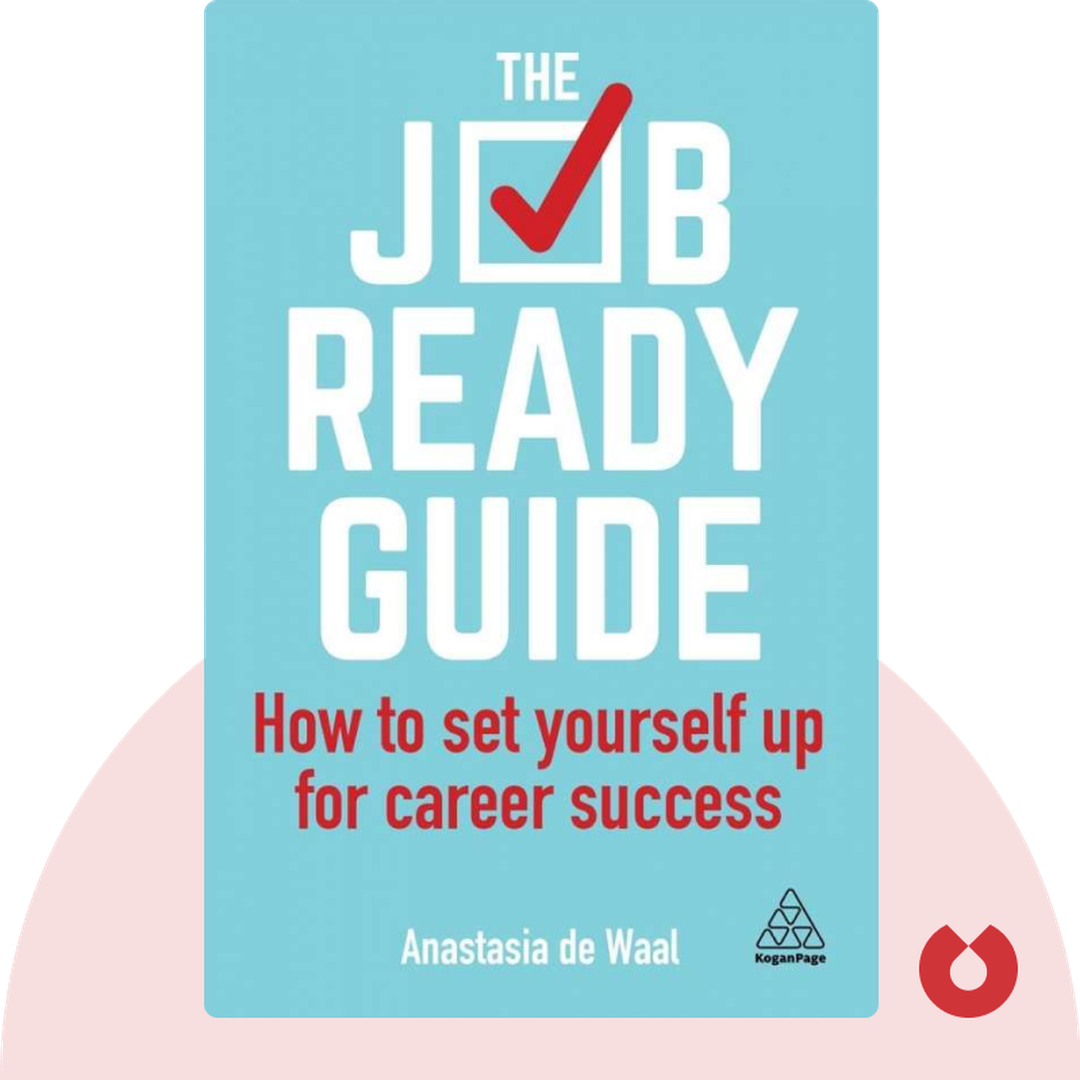
If You're Curious About These Questions...
You should listen to this audiobook
- Have you ever wondered what modern employers are *really* looking for beyond the qualifications on your resume?
- What's the secret to transforming a standard application into a compelling story that makes hiring managers take notice?
- Are you curious about how to navigate the first steps of your career with the confidence and insight of a seasoned professional?
Listen to The Job-Ready Guide — Free Audiobook
Loading player...
Key Takeaways from The Job-Ready Guide
- Learn how to establish personal 'filters' using your education history and grades to narrow down career options and focus on roles you are genuinely suited for.
- Discover how to uncover the reality of the current labor market by tapping into valuable resources like career advisors, recruitment consultants, and personal networks.
- Master the job-hunting process by treating it like a full-time role, complete with a realistic financial timetable, a structured daily schedule, and targeted social media monitoring.
- Find out how to successfully land unadvertised jobs by crafting concise speculative applications that focus entirely on an organization's needs rather than your own personal interests.
- Understand why employers heavily weigh soft skills and learn how to prepare concrete, real-life examples from your past to perfectly demonstrate your teamwork and leadership abilities.
Learning Tools
Reinforce what you learned from The Job-Ready Guide
Mind Map
The Job-Ready Guide
Career Exploration+
Strategic Job Hunting+
Application Materials+
Interview Preparation+
Workplace Success+
Quiz — Test Your Understanding
Question 1 of 10
How does the author suggest you narrow down your career options if you leave university without a clear pathway?
Question 2 of 10
According to the text, what is a common mistake applicants make when sending speculative job applications?
Question 3 of 10
When demonstrating leadership skills to potential employers, which of the following qualities is highlighted as being just as important as taking charge of a situation?
Question 4 of 10
What practical tip does the author recommend for organizing your industry and company research?
Question 5 of 10
What is the author's advice regarding the presentation and length of your resume?
Question 6 of 10
What is the very first step you should take before attempting to build a professional social media persona?
Question 7 of 10
To effectively demonstrate your problem-solving skills during an interview, the author suggests preparing a 'problem-solving portfolio' that ideally includes:
Question 8 of 10
How does the author suggest you handle a situation where a coworker unjustly takes all the credit for a team achievement?
Question 9 of 10
Why does the author caution against leaving a new job after less than a year?
Question 10 of 10
According to the final actionable advice in the text, how should you handle failures or mistakes in your career?
The Job-Ready Guide — Full Chapter Overview
- 1Recommendation
- 2Exploring your options in a focused manner is crucial for making the right career choice.
- 3Job hunting requires a robust and deliberate plan.
- 4Identify what employers desire and precisely match your skills to their specific requirements.
- 5Brush up on your knowledge of the company and the broader industry.
- 6Crafting a compelling résumé shows employers that you mean business.
- 7Build a professional brand across social media platforms.
- 8Demonstrate during interviews that you possess creativity, initiative, and the ability to solve problems.
- 9Making a strong first impression will set you on the road to success.
- 10Keep your professional growth in mind and know when to move on.
The Job-Ready Guide Summary & Overview
The Job-Ready Guide (2019) is a helpful roadmap for anyone seeking to get themselves on the first rung of the career ladder. In addition to offering advice on job-searching, writing a compelling resume, and performing well in interviews, it provides insight into what modern employers are really looking for.
Who Should Listen to The Job-Ready Guide?
- Students leaving college
- Teachers or mentors wishing to give young people up-to-date career advice
- Young professionals seeking a change in career
Books Similar to The Job-Ready Guide
Readers who enjoyed this also liked these titles.