If You're Curious About These Questions...
You should listen to this audiobook
- Did you know that the secret to building a more resilient and high-performing organization might be hidden in the complex social structures of a beehive?
- What if you could move beyond traditional change management and use nine specific laws to harness the collective intelligence of your entire team?
- Are you curious about how the 'Hive LENS' can help you spot the invisible patterns that are either fueling or stalling your company’s growth?
Listen to The Hive Mind at Work — Free Audiobook
Loading player...
Key Takeaways from The Hive Mind at Work
- Understand why successful organizational change requires shifting your focus from individual actions to the collective behavior of the entire ecosystem.
- Discover the nine laws of group dynamics, inspired by the natural world of bees, to help you recognize hidden patterns and drive lasting transformation.
- Master the four-step Hive LENS model to intuitively guide your organization through complex transitions by Looking beyond, Experimenting, Nudging, and Strengthening.
- Learn how to overcome destructive 'pattern blindness' by mapping out underlying roles and observing the collective movements of your group.
- Find out how to drive iterative change by testing new behaviors and using compelling storytelling to secure collective buy-in.
Learning Tools
Reinforce what you learned from The Hive Mind at Work
Mind Map
The Hive Mind at Work
Ecosystem Perspective+
9 Laws of Group Dynamics+
Hive LENS Framework+
Quiz — Test Your Understanding
Question 1 of 7
What is the fundamental shift in perspective required for successful organizational change, according to the bee-inspired approach?
Question 2 of 7
How does the book use the collapse of Lehman Brothers to illustrate the concept of 'pattern blindness'?
Question 3 of 7
When applying the 'Look beyond' step of the Hive LENS method, what should leaders observe instead of narrowly focusing on individual actions?
Question 4 of 7
Why does the book recommend cultivating 'distributed leadership' during the Experimentation phase of change?
Question 5 of 7
What lesson can be learned from the hospital CEO's initial attempt to impose budget cuts?
Question 6 of 7
How did Chipotle demonstrate the 'Strengthen' step of the Hive LENS framework during its food safety crisis?
Question 7 of 7
Which law of group dynamics explains how small, minor adjustments within an organization can eventually trigger a massive, large-scale shift?
The Hive Mind at Work — Full Chapter Overview
- 1Recommendation
- 2Grasping group intelligence and dynamics
- 3Learning to see beyond group behavior patterns
- 4Experimenting with new behaviors to spur change
- 5Gently nudging groups toward desired outcomes
- 6Reinforcing new behaviors to ensure lasting change
The Hive Mind at Work Summary & Overview
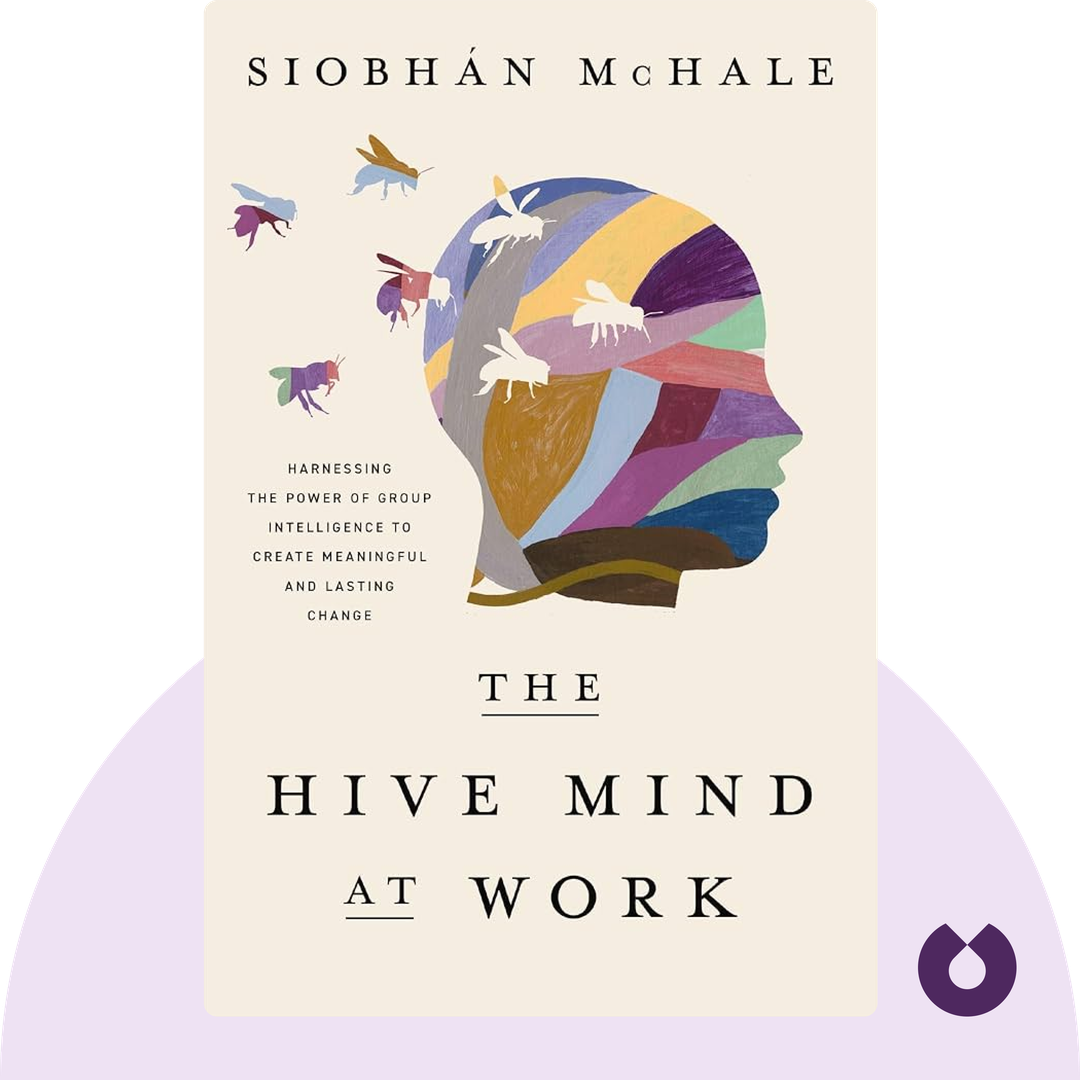
The Hive Mind at Work (2024) introduces a new model for organizational change, inspired by the collective intelligence and resilience of bees. It outlines nine laws for creating meaningful change, using the Hive LENS to help you harness group intelligence in your organization. This approach offers a fresh alternative to traditional change management methods.
Who Should Listen to The Hive Mind at Work?
- Organizational leaders seeking effective change management strategies
- Human resource professionals focused on group dynamics
- Change management students studying collective intelligence models
Books Similar to The Hive Mind at Work
Readers who enjoyed this also liked these titles.