If You're Curious About These Questions...
You should listen to this audiobook
- How does a subtle change in our environment, like a picture of staring eyes on a wall or a waitress repeating an order verbatim, secretly manipulate our everyday behavior?
- Why did nearly everyone on one floor of the World Trade Center's South Tower survive on 9/11, while almost everyone on the floor directly above them perished?
- What surprising psychological drive, rather than religious fanaticism, is the actual primary motivator behind the actions of suicide terrorists?
Listen to The Hidden Brain — Cinematic Audio Edition
Loading player...
Key Takeaways from The Hidden Brain
- Our unconscious mind, or 'hidden brain,' constantly manipulates our behavior, judgments, and perceptions through invisible environmental cues without our awareness.
- Children can develop strong unconscious racial biases simply by growing up in a culturally homogenous environment, even if their parents actively hold anti-racist views.
- Unconscious racial prejudice deeply infects the criminal justice system, to the point where defendants with more stereotypically Black facial features are twice as likely to receive the death penalty.
- In times of extreme crisis or disaster, our hidden brain's evolutionary drive to conform to group behavior can easily override our basic survival instincts.
- Suicide terrorists are rarely driven by pure religious fanaticism; instead, they are heavily motivated by a deep psychological need for social belonging and group conformity.
Learning Tools
Reinforce what you learned from The Hidden Brain
Mind Map
The Hidden Brain
Concept & Evidence+
Neurological Foundations+
Unconscious Racial Bias+
Gender Discrimination+
Group Conformity+
Quiz — Test Your Understanding
Question 1 of 8
In Melissa Bateson's beverage station experiment, what subtle change caused users to contribute three times more money to the honor box?
Question 2 of 8
What does the behavior of patients with frontotemporal dementia reveal about the hidden brain?
Question 3 of 8
According to Frances Aboud’s study on preschool children, why did young white children demonstrate strong unconscious racial biases?
Question 4 of 8
What did Martin Gilens’s research reveal about white Americans' views on welfare programs?
Question 5 of 8
In Jennifer Eberhardt's study regarding the criminal justice system, what factor significantly increased a Black defendant's likelihood of receiving the death penalty?
Question 6 of 8
According to Madeline Heilman's research, why do a majority of people unconsciously prefer a male boss over a female boss?
Question 7 of 8
What does the story of the 88th and 89th floors of the South Tower during the September 11 attacks illustrate about human behavior in disasters?
Question 8 of 8
Contrary to the popular belief that suicide terrorists are solely motivated by religious fanaticism, researchers have found that they are heavily driven by:
The Hidden Brain — Full Chapter Overview
- 1Recommendation
- 2Evidence of the hidden brain is everywhere around us.
- 3The hidden brain underpins our social behavior.
- 4The hidden brain causes children to form unconscious racial biases.
- 5Unconscious bias shapes political elections.
- 6The hidden brain drives racial inequality in the criminal justice system.
- 7Unconscious bias sabotages women in the professional sphere.
- 8Disaster survivors follow the herd.
- 9Suicide terrorists are driven by group norms.
The Hidden Brain Summary & Overview
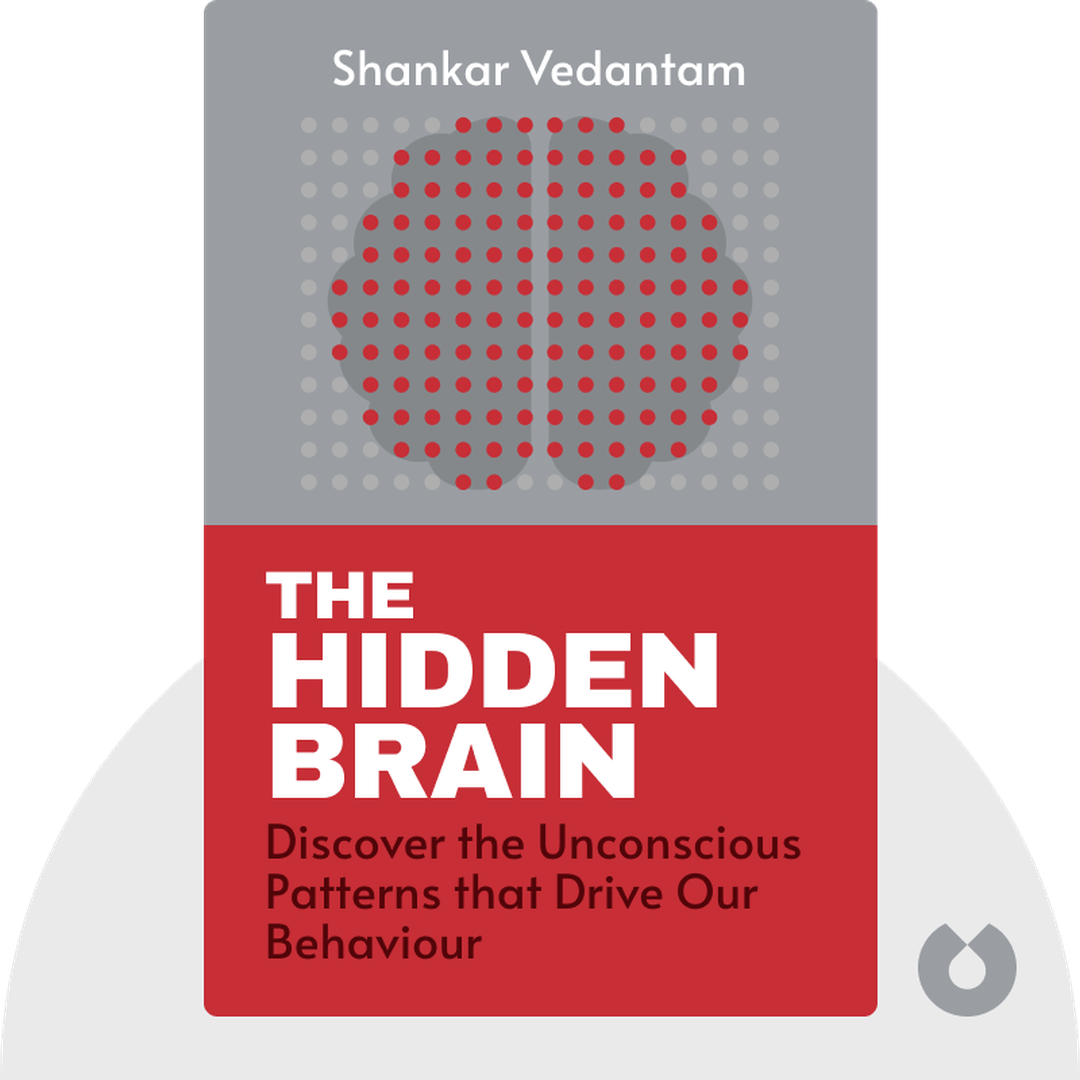
The Hidden Brain (2010) reveals the function and effects of our unconscious lives. In our increasingly interconnected world, unconscious biases and errors influence our memories, judgments, and perceptions and shape our social, economic, and political institutions.
Who Should Listen to The Hidden Brain?
- White people interested in understanding unconscious racial bias
- Parents and teachers
- Students of neuroscience or psychology
Books Similar to The Hidden Brain
Readers who enjoyed this also liked these titles.