If You're Curious About These Questions...
You should listen to this audiobook
- Have you ever wondered why your brain makes most of your life's decisions before you’re even consciously aware of them?
- If our brains are physically wired in specific ways, do we actually have free will—and how should that change the way we treat criminals?
- Did you know that what you perceive as reality is actually a carefully constructed illusion created by parts of your brain you can’t even access?
Listen to Incognito — Free Audiobook
Loading player...
Key Takeaways from Incognito
- Understand why you are not truly in control of your thoughts and actions, and how relying on your brain's autopilot is actually essential for executing fast, complex tasks.
- Discover how your perception of reality is not a factual recording, but rather a subconscious hallucination constructed from electro-chemical signals.
- Learn how your brain is divided into competing subsystems, such as logic and emotion, that constantly battle for control over your daily behavior.
- Explore how human cognitive limits, personal tastes, and social behaviors are deeply hardwired by our evolutionary ancestors' survival needs.
- Find out why the traditional concept of free will is scientifically flawed, and why the legal system should focus on rehabilitation instead of punishment.
Learning Tools
Reinforce what you learned from Incognito
Mind Map
Incognito
The Illusion of Conscious Control+
Reality as a Constructed Hallucination+
The Brain's Competing Subsystems+
Evolutionary Roots of Cognition+
Rethinking the Legal System+
The Limits of Neuroscience+
Quiz — Test Your Understanding
Question 1 of 7
Why are professional baseball batters able to successfully hit fastballs despite having less time to react than it takes to form a conscious awareness of the ball?
Question 2 of 7
According to the book, how does the human brain construct our perception of reality?
Question 3 of 7
What would likely happen if a person's emotional brain system were completely disabled?
Question 4 of 7
What does the phenomenon of a smoker wanting to quit but continuing to smoke illustrate about the brain?
Question 5 of 7
Why are humans generally adept at navigating social problems, like detecting cheaters, but poor at performing large mathematical computations?
Question 6 of 7
Based on neuroscientific findings regarding free will and biology, what profound shift does the author suggest for the legal system?
Question 7 of 7
Despite advances in neuroscience, why is it unlikely that we will ever be able to perfectly predict human behavior?
Incognito — Full Chapter Overview
- 1Recommendation
- 2Despite what we believe, we’re not truly in control of our thoughts, feelings, and actions.
- 3What we think of as reality is actually a subconsciously constructed hallucination.
- 4Different parts of the brain compete for control of our behavior.
- 5Our thought patterns and preferences are largely shaped by evolution.
- 6Our legal system should prioritize rehabilitation over punishment.
- 7Neuroscience has helped us understand the brain, but it can’t explain everything.
- 8Final summary
Incognito Summary & Overview
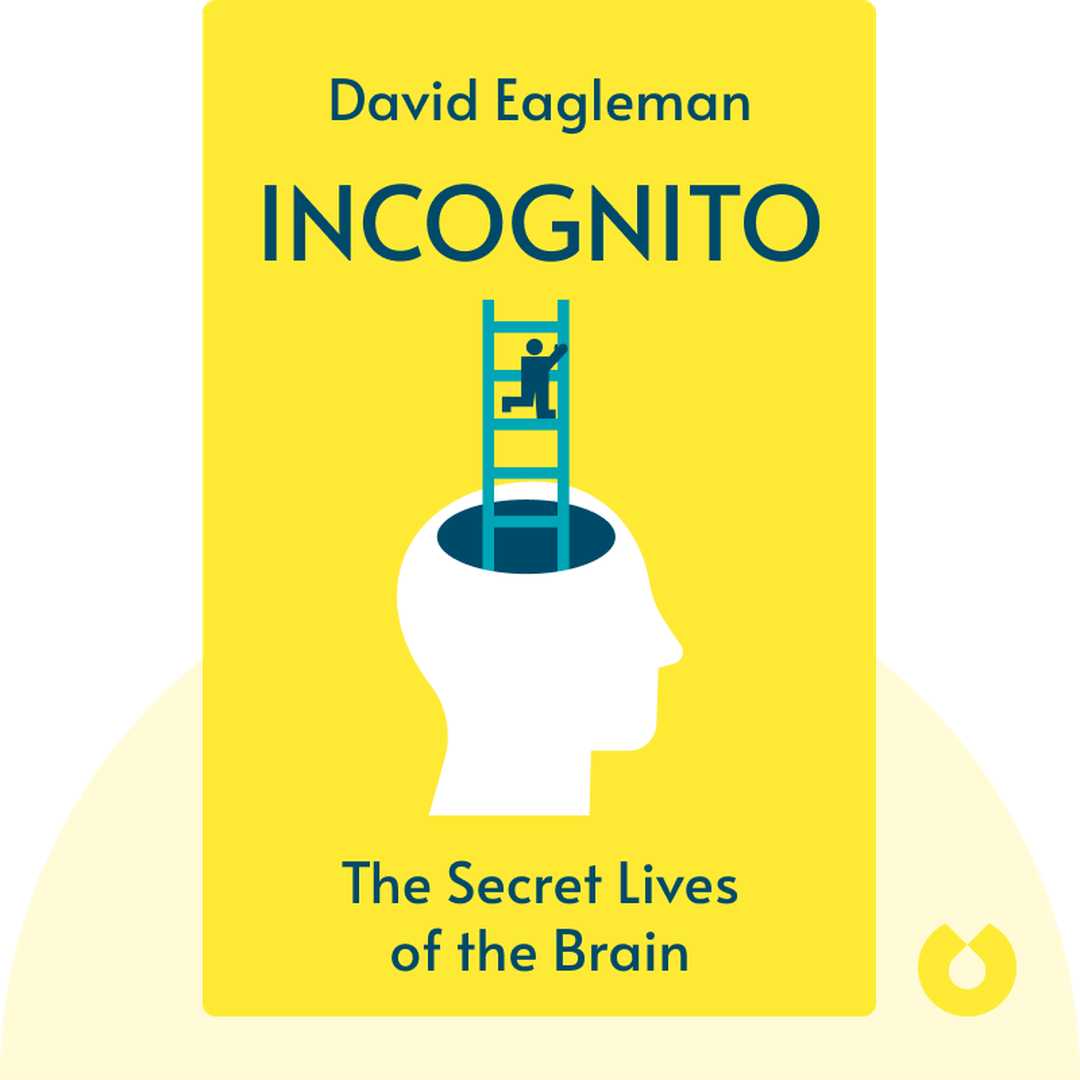
Unbeknownst to you, a subconscious part of your brain is constantly whirring away and wielding a tremendous influence on your thoughts, feelings and behavior. Incognito: The Secret Lives of the Brain (2011) is your guide to the other side of your brain, and how it shapes your life.
Who Should Listen to Incognito?
- Anyone interested in psychology, psychiatry or neuroscience
- Anyone interested in what makes us see the world the way we see it, and the inner workings of our minds
- Anyone who wonders whether there is such a thing as free will, and if criminals truly choose to commit their crimes
Books Similar to Incognito
Readers who enjoyed this also liked these titles.