If You're Curious About These Questions...
You should listen to this audiobook
- Have you ever wondered why humans continue to search for happiness in the exact same places that have led to unhappiness for centuries?
- Did you know that your pursuit of material riches might actually be the biggest obstacle standing between you and true contentment?
- What if you could follow a practical, step-by-step plan to stop chasing temporary pleasures and finally cultivate a genuinely happy mind?
Listen to The Happy Mind — Free Audiobook
Loading player...
Key Takeaways from The Happy Mind
- Understand why tying your happiness to external factors like wealth and luxury goods prevents true contentment, and how it can actually lead to increased anxiety.
- Discover why true happiness can only be found in the present moment, rather than by ruminating on the past or escaping into fantasies about the future.
- Realize that no perfect partner or child can magically deliver a fulfilled life, and learn how to cultivate lasting peace of mind entirely from within yourself.
- Learn how to distinguish between fleeting sensations of pleasure and true, sustainable happiness that remains steady even during uncomfortable circumstances.
- Adopt the proven habits of genuinely happy people, such as appreciating simple everyday moments, maintaining personal wellness, and being highly selective about relationships.
Learning Tools
Reinforce what you learned from The Happy Mind
Mind Map
The Happy Mind
The Nature of Happiness+
Internal vs. External Sources+
The Power of the Present+
Overcoming Mental Barriers+
Actionable Strategies+
Managing External Influences+
Quiz — Test Your Understanding
Question 1 of 10
According to the authors, why is it a mistake to link your happiness to external factors like material goods or future events?
Question 2 of 10
Where do the authors argue that true happiness can be found?
Question 3 of 10
How do the authors distinguish between pleasure and happiness?
Question 4 of 10
Why do modern humans often experience intense stress over relatively benign issues like a doubled phone bill or a coworker's cold shoulder?
Question 5 of 10
How can individuals with a history of childhood trauma overcome their heightened instinctual fear responses?
Question 6 of 10
What actionable advice do the authors give for taking responsibility for your own happiness?
Question 7 of 10
Which two practices are recommended to actively bring more happiness into your daily life?
Question 8 of 10
According to the book, why should you avoid setting overambitious goals, such as learning to play the cello better than Yo-Yo Ma in five years?
Question 9 of 10
Why do the authors advise limiting exposure to news media?
Question 10 of 10
What specific tool do the authors recommend using to track daily goals and foster a sense of accomplishment?
The Happy Mind — Full Chapter Overview
- 1Recommendation
- 2Many people think happiness hinges on external factors, yet it actually doesn't.
- 3Happiness isn't found in the future or the past, and no one will deliver it for you.
- 4Happiness differs from pleasure, and happy people share certain common traits.
- 5Survival-related fears can trigger unhappiness and harmful, self-defeating behaviors too.
- 6Childhood trauma can heighten the risk of chronic unhappiness, yet it is indeed treatable.
- 7Your happiness is up to you, and having a plan certainly helps a lot.
- 8To be happy, practice daily gratitude and keep life new and interesting.
- 9Happiness lies in shedding excess things and steering clear of unrealistic goals.
- 10Avoid overexposure to news media and stop blowing things out of proportion.
The Happy Mind Summary & Overview
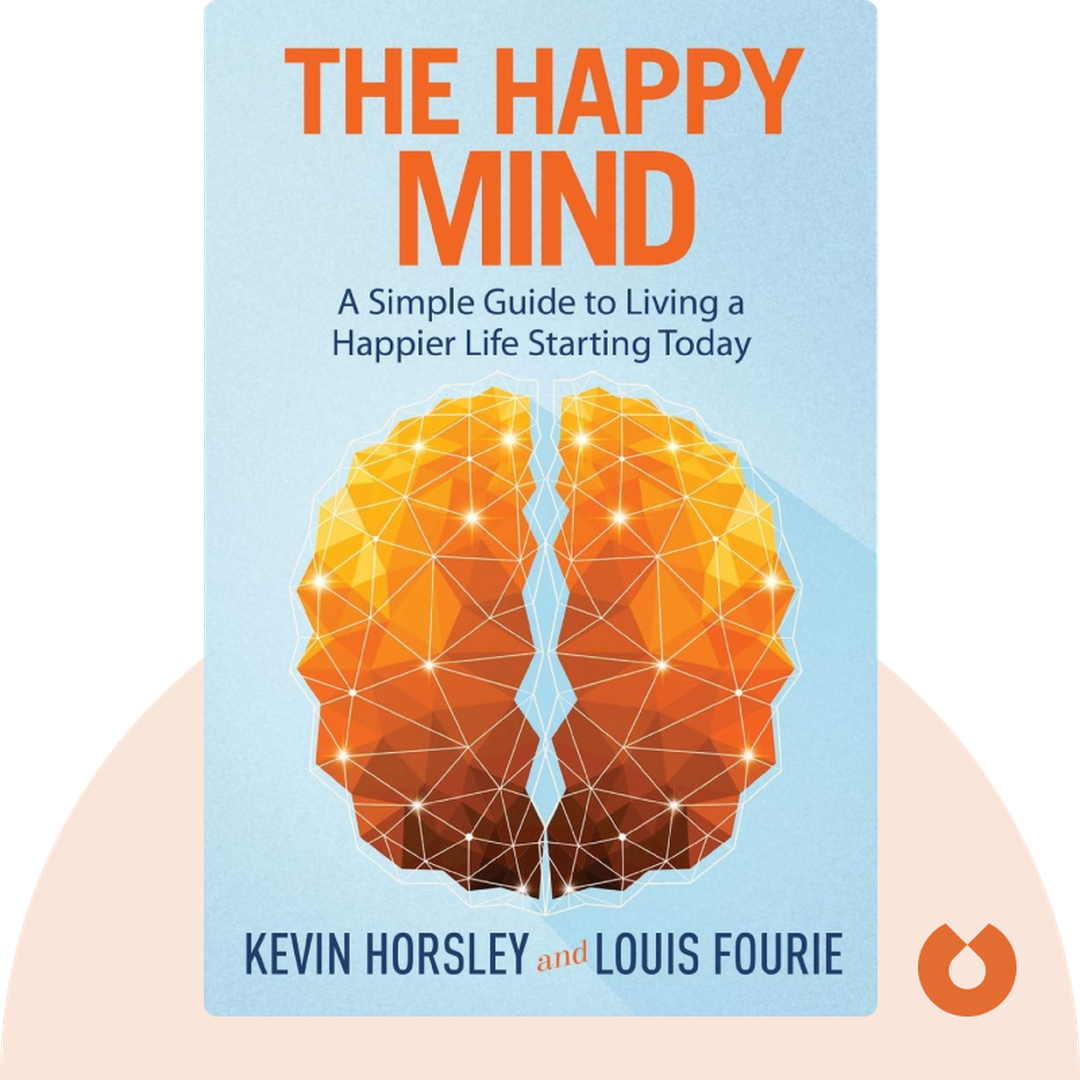
The Happy Mind (2017) explores the misconceptions and realities surrounding that elusive thing we all long for: happiness. Authors Kevin Horsley and Louis Fourie explain why, despite having centuries of practice, humans still look for happiness in the wrong places and find only unhappiness in the pursuit of material riches. They also provide a practical plan that can help anyone get on the right track for a happy and more fulfilling life.
Who Should Listen to The Happy Mind?
- People struggling with depression
- Students of human behavior
- Anyone seeking more happiness
Books Similar to The Happy Mind
Readers who enjoyed this also liked these titles.