If You're Curious About These Questions...
You should listen to this audiobook
- Did you know that many of the most common assumptions about how firearms are bought and sold in America are actually myths?
- Have you ever wondered which popular arguments from both sides of the gun control debate are backed by hard data—and which are just rhetoric?
- Are you curious about the surprising reality of how firearms are policed and the actual impact of current regulations on public safety?
Listen to The Gun Debate — Free Audiobook
Loading player...
Key Takeaways from The Gun Debate
- Discover the demographic profile of the typical American gun owner and learn why a declining rate of overall household ownership hasn't stopped total firearm sales from rising.
- Understand the critical distinctions between long guns, handguns, and assault weapons, and see how regulations shifted to individual states after the federal ban expired in 2004.
- Grasp the unprecedented scale of American gun violence by exploring the data behind the roughly 30,000 annual firearm-related fatalities.
- Learn how a landmark 2008 Supreme Court ruling affirmed the Second Amendment right to self-defense, which remains the primary motivation for nearly half of all firearm owners.
- Find out why neighborhoods with high gun ownership might actually attract more burglaries due to black market demand, challenging the popular belief that firearms act as an area-wide deterrent.
Learning Tools
Reinforce what you learned from The Gun Debate
Mind Map
The Gun Debate
Ownership & Usage Facts+
Pro-Gun Arguments+
Pro-Control Arguments+
Current Legislation+
Quiz — Test Your Understanding
Question 1 of 8
According to the text, why have firearm sales remained steady or increased even though the overall rate of firearm ownership has declined?
Question 2 of 8
What is the primary difference in how long guns and handguns are typically utilized, according to the book?
Question 3 of 8
What was the significance of the 2008 Supreme Court case District of Columbia vs. Heller?
Question 4 of 8
How do gun-control advocates use statistics regarding suicide to argue that firearms intensify violence?
Question 5 of 8
What happens when a law is subject to a 'sunset provision,' as seen with the 1994 federal ban on assault weapons?
Question 6 of 8
What do preliminary studies suggest about the pro-gun argument that high rates of neighborhood firearm ownership deter criminals?
Question 7 of 8
According to gun-control advocates, what is a broader economic consequence of widespread firearm possession and violence in a community?
Question 8 of 8
Which of the following best describes the snapshot of US public opinion on gun control as of 2012, based on the text?
The Gun Debate — Full Chapter Overview
- 1Recommendation
- 2The facts on firearms: how they’re used and who possesses them
- 3The advantages people see in firearms
- 4The cost and harm caused by firearms
- 5How firearm laws currently work
The Gun Debate Summary & Overview
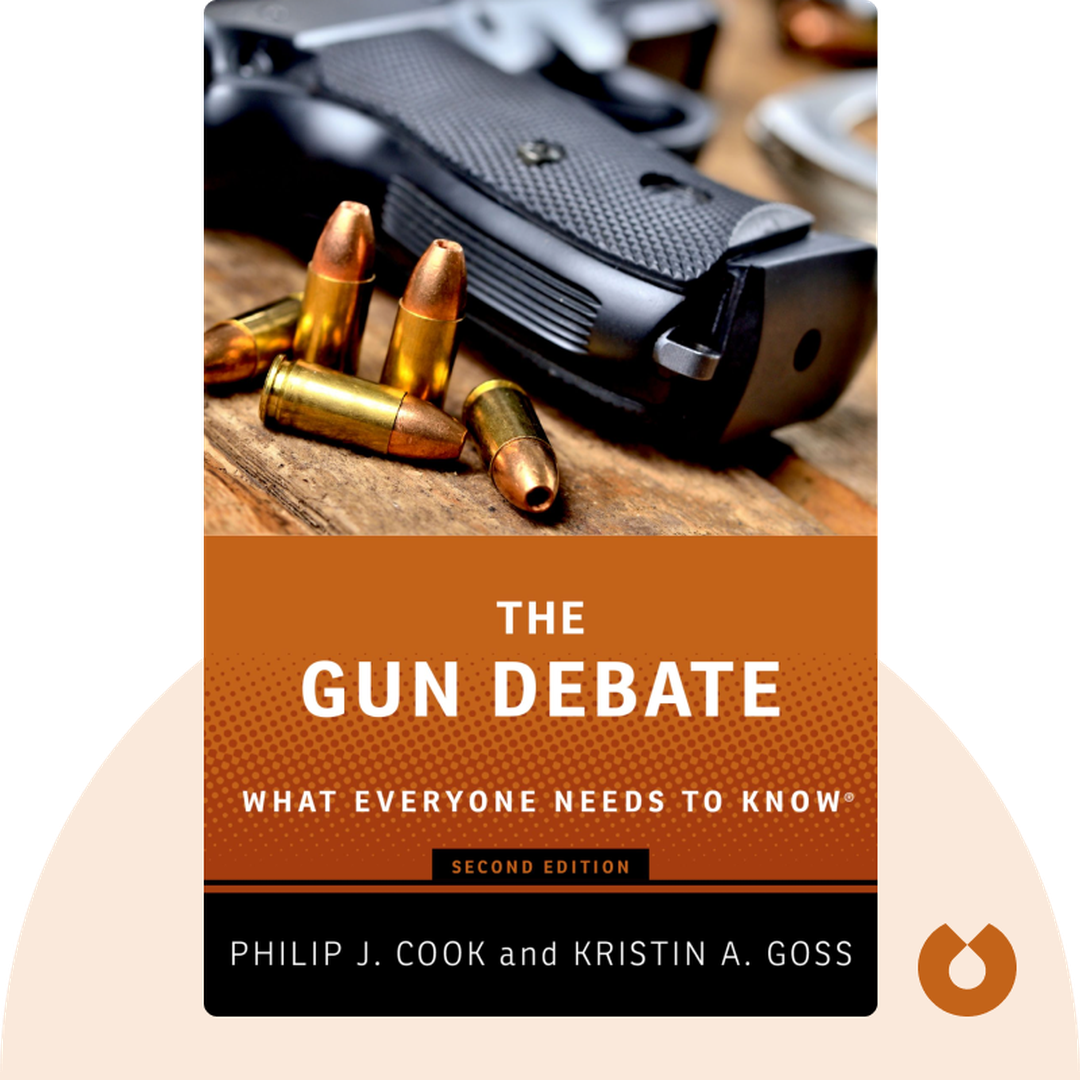
The Gun Debate (2014) conveys a clear picture of how firearms are bought, sold, used, and policed in the US. It lists and fact-checks a number of key arguments used by both pro and anti-gun campaigners in the ongoing debate about the parameters of gun control across the country.
Who Should Listen to The Gun Debate?
- People who want facts – not opinions – about firearms and their use in the US
- Americans seeking to better understand the current system of gun control
- Anyone curious about America’s unique relationship with firearms
Books Similar to The Gun Debate
Readers who enjoyed this also liked these titles.