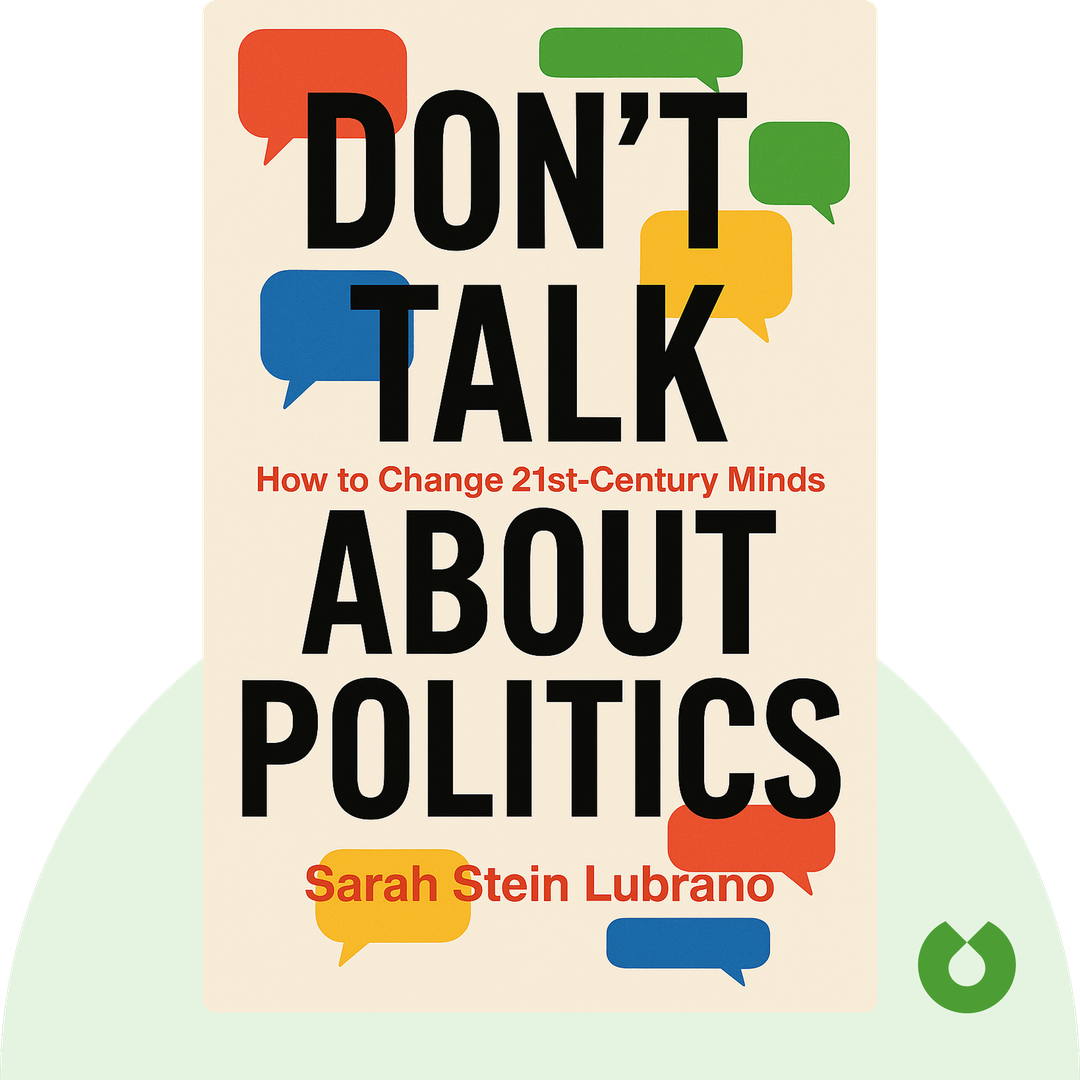
Don't Talk About Politics
Start ListeningDownload Try free on iPhoneScan to start in 5 seconds
Categories:
If You're Curious About These Questions...
You should listen to this audiobook
- Have you ever wondered why presenting a perfectly logical political argument often makes people dig their heels in even deeper?
- What is the secret to influencing someone's beliefs when facts and figures simply aren't working?
- What if you could foster genuine understanding and connection across political lines without the stress of a traditional debate?
Listen to Don't Talk About Politics — Free Audiobook
Loading player...
Key Takeaways from Don't Talk About Politics
- Discover why the 'free marketplace of ideas' is a political myth, and how human psychology and entrenched power actually dictate public discourse.
- Understand why formal debates and logical arguments rarely persuade opponents, often serving only to rally already loyal supporters.
- Learn how protests achieve their greatest impact by fundamentally transforming the long-term beliefs of the participants, rather than immediately changing government policy.
- Find out why taking tangible, high-effort action builds much stronger and more durable political commitment than low-friction social media activism.
- Recognize that genuine political persuasion relies on the trust built within personal friendships, rather than winning arguments with strangers.
Learning Tools
Reinforce what you learned from Don't Talk About Politics
Mind Map
Don't Talk About Politics
The Myth of Persuasion via Argument+
Action Shapes Beliefs+
Relationships Drive Change+
The Role of Infrastructure+
Quiz — Test Your Understanding
Question 1 of 7
According to the book, why does the 'free marketplace of ideas' model often fail to change people's political beliefs?
Question 2 of 7
What does research suggest is the primary outcome of televised political debates?
Question 3 of 7
Where do large political protests typically leave their most lasting and significant impact?
Question 4 of 7
Why are friendships and close relationships considered one of the most effective ways to change someone's political perspective?
Question 5 of 7
What broader lesson does the author draw from Elon Musk's takeover of Twitter?
Question 6 of 7
What is 'social atrophy' in the context of political and civic life?
Question 7 of 7
Which of the following best summarizes the book's main takeaway regarding how to achieve real political change?
Don't Talk About Politics — Full Chapter Overview
- 1Recommendation
- 2Why the marketplace of ideas doesn’t work in politics
- 3Political debates seldom do what we expect
- 4Protests transform protesters more than politics
- 5Minds change through friends
- 6Reclaiming the power of our shared infrastructure
- 7How social atrophy undermines minds and politics
- 8Final summary
Don't Talk About Politics Summary & Overview
Don’t Talk About Politics (2025) argues that direct debate rarely changes minds and can even deepen divisions. It draws on philosophy, neuroscience, and social science to show that political beliefs are shaped more by emotions, relationships, and shared experiences than by argument. It offers strategies for fostering understanding and connection beyond the confines of traditional debate culture.
Who Should Listen to Don't Talk About Politics?
- Politically engaged activists seeking more effective persuasion
- Open-minded community leaders navigating polarized environments
- Anyone interested in healthier political conversations
Books Similar to Don't Talk About Politics
Readers who enjoyed this also liked these titles.