If You're Curious About These Questions...
You should listen to this audiobook
- Have you ever wondered why the 2008 financial crisis was more than just a market crash, and what it really signaled about the end of capitalism?
- Did you know that the very technology we use every day might be quietly dismantling the foundations of our global economy?
- Are you curious about what a world beyond capitalism would actually look like, and how we are already beginning the transition today?
Listen to PostCapitalism — Free Audiobook
Loading player...
Key Takeaways from PostCapitalism
- Discover why neoliberal capitalism is failing due to four main culprits: the overuse of fiat money, rampant financialization, global trade imbalances, and the rise of information technology.
- Learn how the systemic reliance on fiat money and consumer credit creates a fragile economy built on imaginary wealth and unpayable government debt.
- Understand the historical 'Kondratieff cycles' of economic booms and busts, and see why the latest technological wave indicates capitalism's ability to adapt has finally reached its limit.
- Find out why the information technology revolution destroys traditional market mechanisms by creating digital goods that eliminate the fundamental capitalist concept of scarcity.
- Explore how collaborative, non-profit entities like Wikipedia conflict with neoliberalism, pointing the way toward a new, viable postcapitalist society.
Learning Tools
Reinforce what you learned from PostCapitalism
Mind Map
PostCapitalism
Failure of Neoliberal Capitalism+
Limits of Capitalist Cycles+
Information Technology Revolution+
Global Crises Accelerating Change+
Transition to PostCapitalism+
Quiz — Test Your Understanding
Question 1 of 8
Why do information goods like MP3s and ebooks create tension within a traditional capitalist economy?
Question 2 of 8
According to the text, what is 'financialization'?
Question 3 of 8
How did global imbalances contribute to the downfall of neoliberalism?
Question 4 of 8
What did economist Nikolai Kondratieff propose about the nature of capitalism?
Question 5 of 8
According to the text, where did Karl Marx's theories fall short regarding the end of capitalism?
Question 6 of 8
The predicted transition from capitalism to postcapitalism is compared to which historical shift?
Question 7 of 8
Which of the following is suggested as a deliberate step the state could take to move toward a postcapitalist economy?
Question 8 of 8
Which four main factors are identified as the primary reasons for neoliberalism's failure?
PostCapitalism — Full Chapter Overview
- 1Recommendation
- 2Neoliberal capitalism is failing, mainly due to fiat money and financialization.
- 3The two further main causes of neoliberalism’s decline are global imbalances and information technology.
- 4Capitalism has long evolved through cycles, yet its present shifts are truly unprecedented.
- 5Information technology is steering society toward a postcapitalist economy.
- 6Karl Marx’s labor theory fits information goods well, yet Marx held a mistaken overall view of the proletariat.
- 7The shift from capitalism to postcapitalism will be a long process molded by emerging technologies and escalating global challenges.
- 8The state could take intentional steps to advance toward a postcapitalist economy.
PostCapitalism Summary & Overview
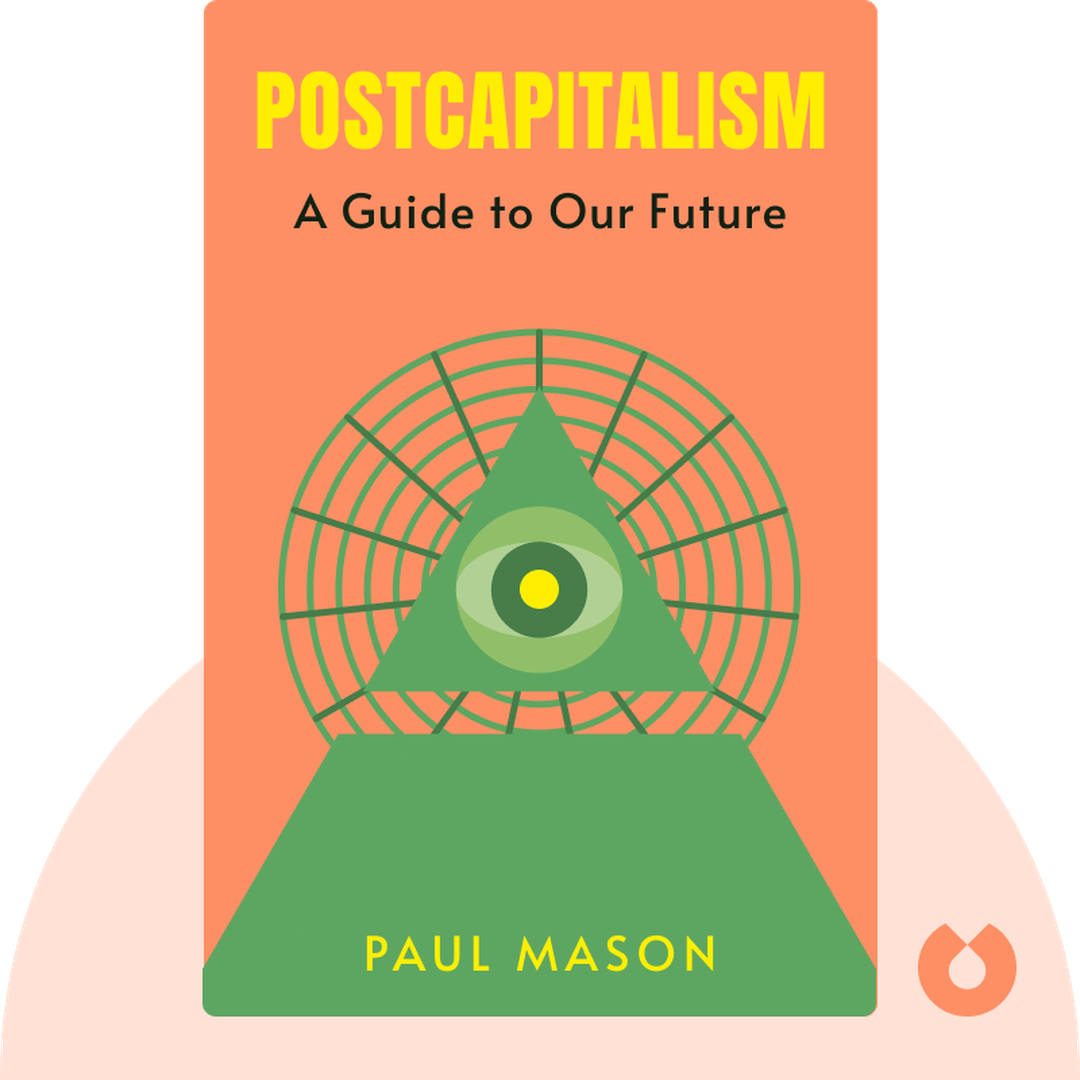
Postcapitalism (2015) offers a close examination of the failures of current economic systems. The 2008 financial crisis showed us that neoliberal capitalism is falling apart, and these blinks outline the reasons why we’re at the start of capitalism’s downfall, while giving an idea of what our transition into postcapitalism will be like.
Who Should Listen to PostCapitalism?
- Capitalists and anti-capitalists
- Students of sociology or politics
- Anyone interested in what the future holds for modern-day societies
Books Similar to PostCapitalism
Readers who enjoyed this also liked these titles.