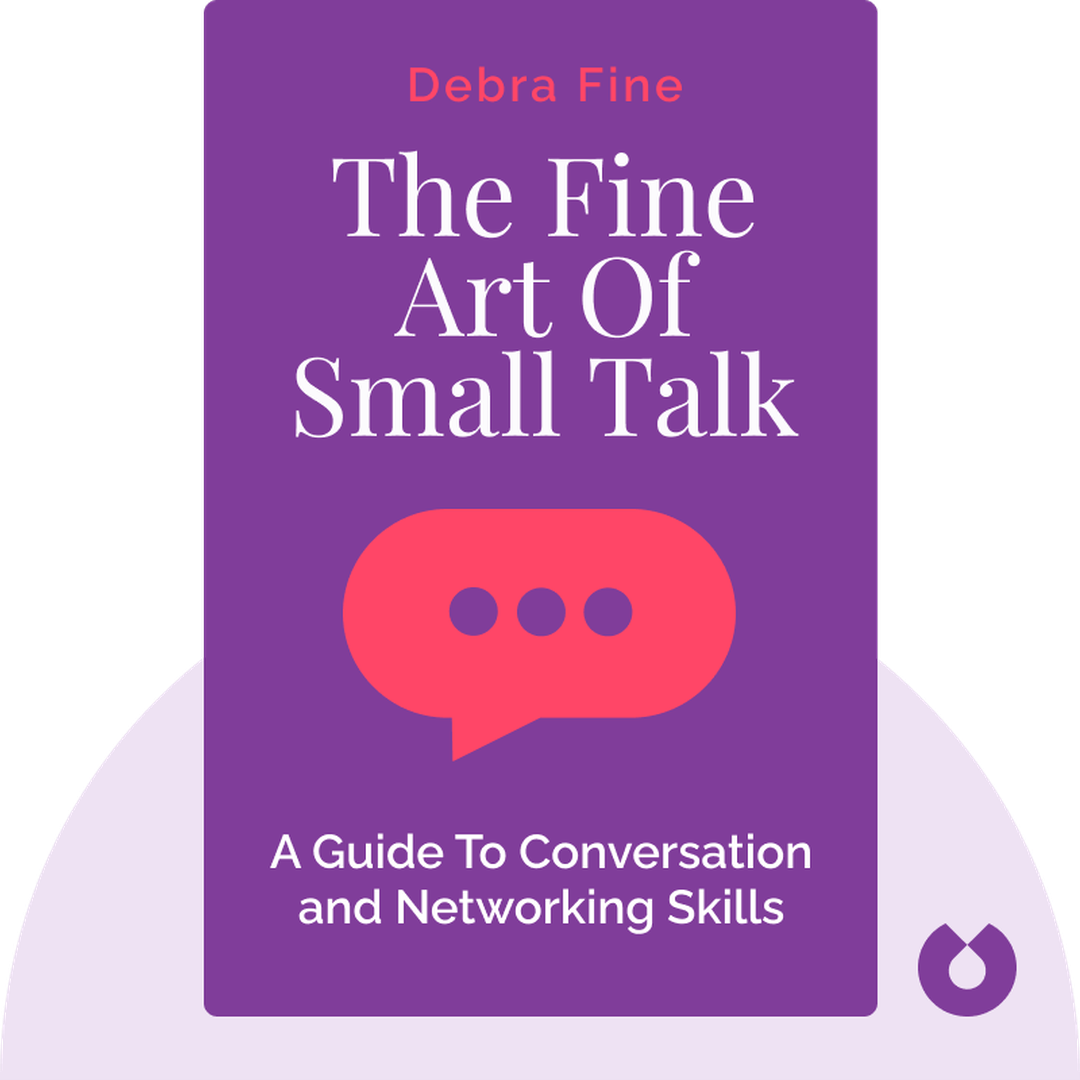
The Fine Art Of Small Talk
Start ListeningDownload Try free on iPhoneScan to start in 5 seconds
Categories:
If You're Curious About These Questions...
You should listen to this audiobook
- What’s the secret to keeping a conversation flowing effortlessly, even when you feel like you’ve completely run out of things to say?
- Have you ever wondered how to exit a conversation with grace and poise, leaving the other person feeling valued rather than rejected?
- What if you could transform every awkward silence into an opportunity to build a lasting professional or personal connection?
Listen to The Fine Art Of Small Talk — Cinematic Audio Edition
Loading player...
Key Takeaways from The Fine Art Of Small Talk
- Understand that small talk is not an innate biological trait, but a highly valuable skill that anyone can learn and master through practice.
- Discover why waiting for others to approach you is a missed opportunity, and how taking the initiative prevents you from appearing arrogant or aloof.
- Learn the simple process for confidently approaching strangers and joining group conversations by offering a friendly smile, eye contact, and a proactive introduction.
- Master the strategy of acting like a 'host' to take the burden of the conversation off others by memorizing names and introducing people to create a welcoming atmosphere.
- Find out how to keep conversations flowing by preparing thoughtful icebreakers and asking open-ended questions that go beyond cliché, one-word answers.
Learning Tools
Reinforce what you learned from The Fine Art Of Small Talk
Mind Map
The Fine Art Of Small Talk
Mindset and Importance+
Initiating Conversations+
Assuming the Burden+
Deepening the Dialogue+
Preventing Awkward Silences+
Active Listening Skills+
Exiting Gracefully+
Quiz — Test Your Understanding
Question 1 of 8
According to the author, what is a common misconception about small talk?
Question 2 of 8
What is a potential consequence of avoiding small talk with acquaintances or colleagues, as illustrated by the author's experience with the executive named Bob?
Question 3 of 8
What strategy does the author suggest for 'assuming the burden' of a conversation?
Question 4 of 8
How should you respond if a colleague asks you a standard, mundane question like 'How was your weekend?'
Question 5 of 8
What does the acronym FORM stand for when trying to think of conversation topics to fill an awkward silence?
Question 6 of 8
Why does the author advise against asking a casual acquaintance about specific details you remember from a previous conversation, such as a specific job or family member?
Question 7 of 8
What lesson about active listening is illustrated by the story of the eight-year-old boy, Nicholas, and his father?
Question 8 of 8
Which of the following is a recommended technique for gracefully exiting a conversation?
The Fine Art Of Small Talk — Full Chapter Overview
- 1Recommendation
- 2Small talk is a skill that anyone can learn.
- 3It’s on you to initiate conversations with others; in fact, not doing so is a big mistake.
- 4Take on the burden of conversation by learning people’s names and preparing icebreakers.
- 5Open-ended questions and deeper probing improve your conversations.
- 6Use diverse questions and situational clues to keep conversations alive.
- 7Paying close attention to body language and verbal cues truly makes you a better listener.
- 8Leaving a conversation gracefully and honestly can strengthen the connection you’ve made.
The Fine Art Of Small Talk Summary & Overview
The Fine Art of Small Talk (2005) offers practical advice for cultivating conversation skills. Drawing on anecdotes from the author’s own journey to becoming a confident small-talker, these blinks will teach you how to initiate, sustain and exit conversations with ease and grace.
Who Should Listen to The Fine Art Of Small Talk?
- Professionals looking to sharpen their networking skills
- Introverts seeking confidence in social situations
- Parents who want to strengthen their relationships with their children
Books Similar to The Fine Art Of Small Talk
Readers who enjoyed this also liked these titles.