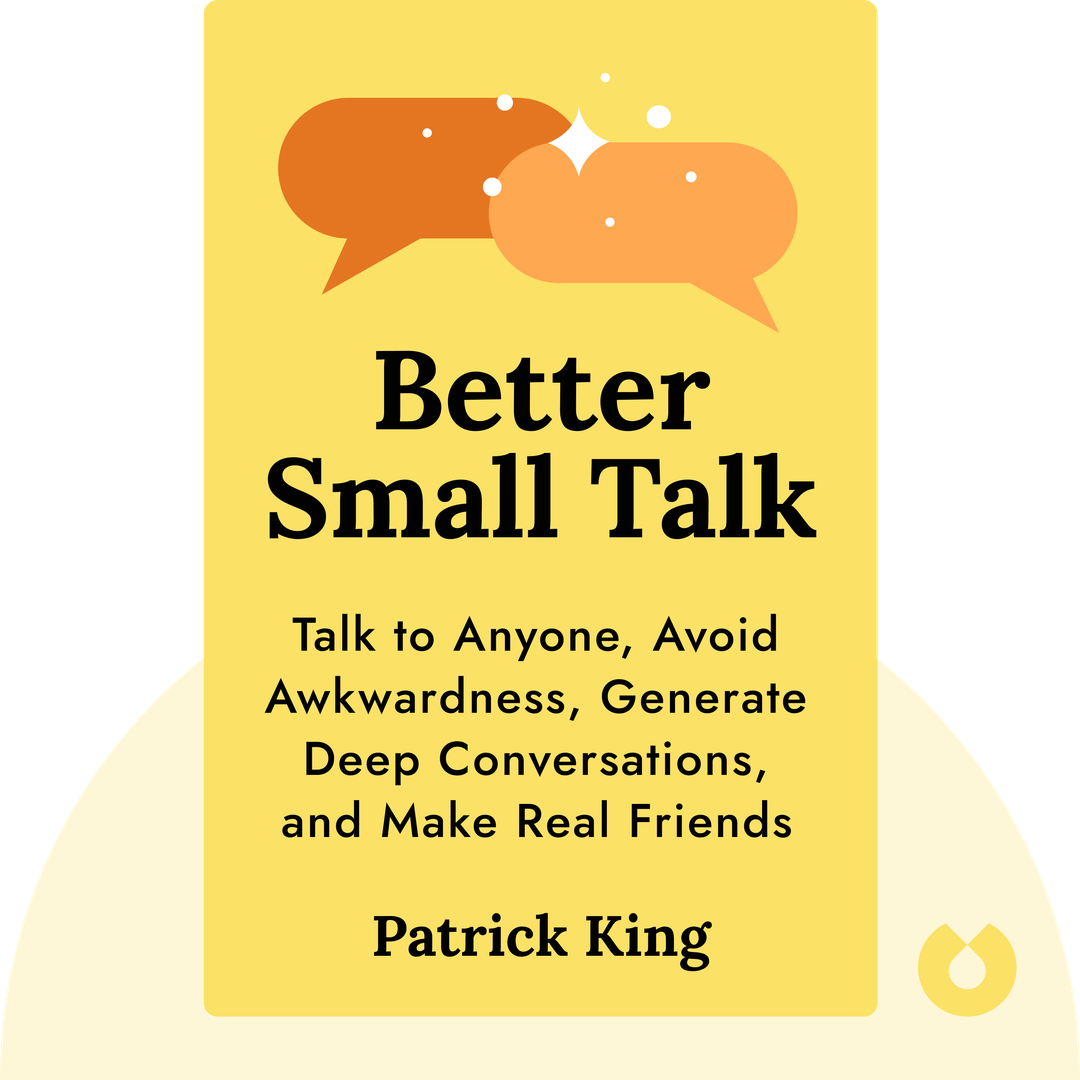
If You're Curious About These Questions...
You should listen to this audiobook
- What if you could skip the awkward silence and transform every superficial greeting into a meaningful, high-impact connection?
- What’s the secret to keeping a conversation alive indefinitely without ever feeling like you've run out of things to say?
- Have you ever wondered how to leave a powerful, lasting impression on strangers using simple shifts in the way you ask and answer questions?
Listen to Better Small Talk — Free Audiobook
Loading player...
Key Takeaways from Better Small Talk
- Discover how to treat your social skills like muscles by initiating daily 'ten-second relationships' with strangers to build confidence and warmth.
- Understand why mastering social interactions relies on mental preparation and consistent practice rather than trying to be spontaneously witty.
- Learn how to naturally navigate the four stages of conversation—small talk, fact disclosure, opinion sharing, and emotional openness—to build trust layer by layer.
- Master the use of 'mini-stories' to answer basic questions, replacing plain, one-word replies with memorable anecdotes that instantly captivate your audience.
- Find out how ditching canned lines and focusing on simple, authentic techniques can transform awkward silences into meaningful personal and professional relationships.
Learning Tools
Reinforce what you learned from Better Small Talk
Mind Map
Better Small Talk
Mindset & Preparation+
4 Stages of Conversation+
Captivating Storytelling+
Free Association+
Asking Good Questions+
Quiz — Test Your Understanding
Question 1 of 6
According to the text, what is the primary benefit of engaging in 'ten-second relationships' with strangers?
Question 2 of 6
What is the correct progression of the four stages of conversation as described in the book?
Question 3 of 6
During the initial 'small talk' stage of a conversation, what should be your primary goal?
Question 4 of 6
How does the author suggest responding to standard small talk questions like 'How was your weekend?'
Question 5 of 6
If your mind goes blank during a conversation, what technique does the author recommend to keep the chat flowing naturally?
Question 6 of 6
According to the book, how should you view pauses or silence during a conversation?
Better Small Talk — Full Chapter Overview
- 1Recommendation
- 2Social skills are like muscles – they need training
- 3Conversation unfolds in stages
- 4To captivate your audience, tell stories
- 5Conversation is about connecting unrelated things
- 6Don’t underestimate the power of good questions
- 7Final summary
Better Small Talk Summary & Overview
Better Small Talk (2020) is a practical guide to mastering the art of meaningful conversations. It offers actionable strategies for every stage of dialogue, from breaking the ice to fostering deeper connections. Whether speaking with strangers or familiar faces, it provides tools to engage confidently, leave lasting impressions, and transform small talk into impactful exchanges.
Who Should Listen to Better Small Talk?
- Individuals seeking to improve their social and conversational skills
- Introverts wanting to build confidence in social interactions
- Professionals aiming to network and leave lasting impressions
Books Similar to Better Small Talk
Readers who enjoyed this also liked these titles.