Theme Song
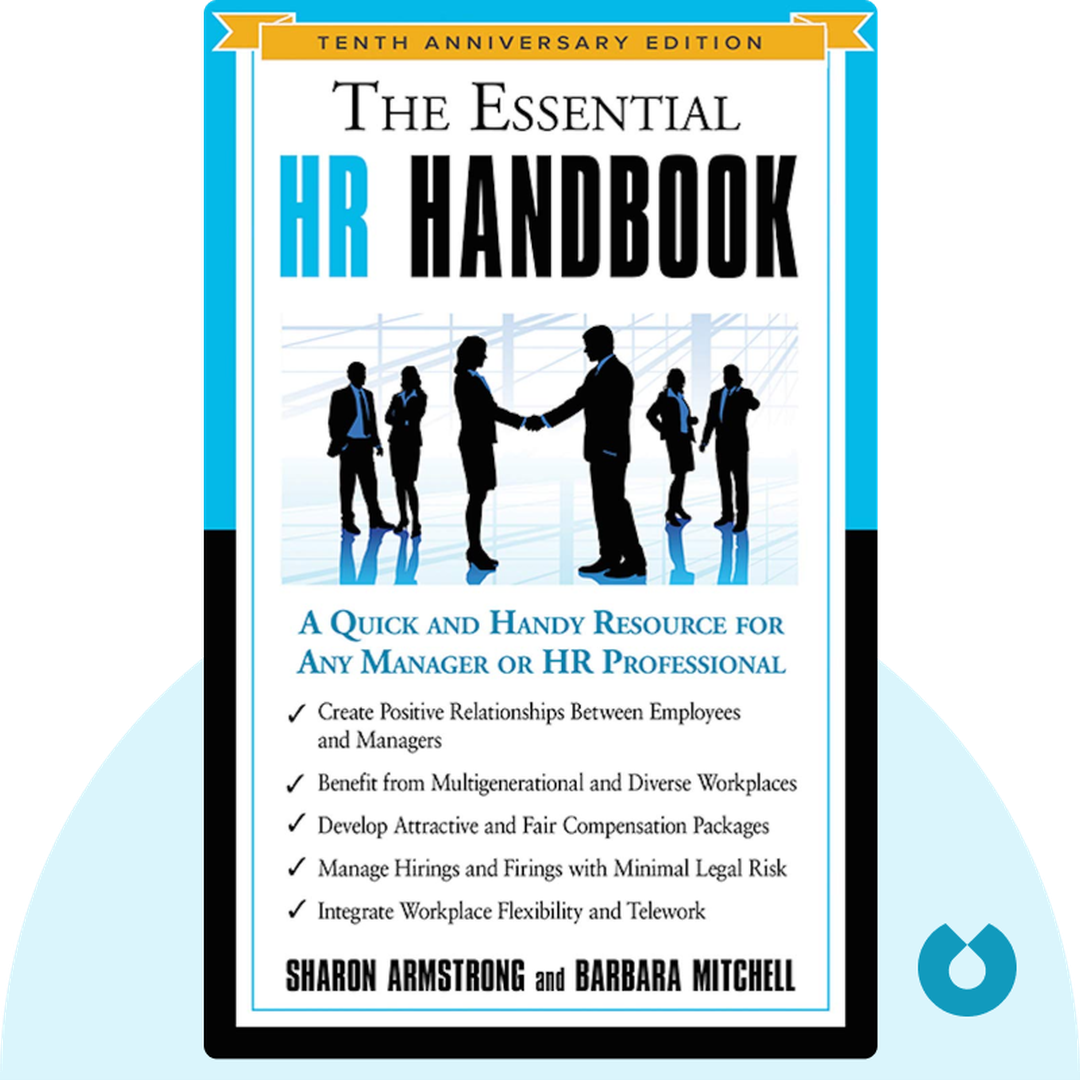
The Essential HR Handbook
Start ListeningDownload Try free on iPhoneScan to start in 5 seconds
Categories:
If You're Curious About These Questions...
You should listen to this audiobook
- What’s the secret to looking past a polished resume to find the candidate who will truly transform your team?
- Have you ever wondered why even your most talented employees might be looking for the exit, and how you can stop them before they go?
- What if you could turn the dreaded performance review into a powerful tool that actually inspires your team to excel?
Listen to The Essential HR Handbook — Free Audiobook
Loading player...
Key Takeaways from The Essential HR Handbook
- Understand why aligning your human resources planning with your broader organizational strategy is crucial for attracting top talent and achieving corporate goals.
- Discover how to outpace competitors by clearly highlighting your company's benefits and using behavioral interviews to predict an applicant's future success based on past performance.
- Learn how to increase employee retention by providing a comprehensive orientation that immerses new hires in your organization's history, culture, and operational vision.
- Recognize the importance of making a stellar first impression from the very first interview to ensure top-tier candidates feel welcome and choose to stay with your company.
- Find out why continuous training is essential for both new and veteran staff, and discover how to evaluate its effectiveness using Donald Kirkpatrick’s four-level model.
Learning Tools
Reinforce what you learned from The Essential HR Handbook
Mind Map
The Essential HR Handbook
Strategic Alignment+
Recruiting & Staffing+
Orientation & Onboarding+
Training & Development+
Performance & Feedback+
Managing Change+
Terminations+
Quiz — Test Your Understanding
Question 1 of 8
Why is it crucial for an organization to align its human resources planning with its overall strategy?
Question 2 of 8
What is the core assumption behind conducting a behavioral interview?
Question 3 of 8
According to the text, when does an organization have its first major opportunity to make a lasting impression on a prospective employee?
Question 4 of 8
In Donald Kirkpatrick’s four-level model for evaluating training, what does 'Level 3: Transfer' measure?
Question 5 of 8
When giving positive feedback, the authors recommend using the FAST acronym. What does FAST stand for?
Question 6 of 8
What is the final step in delivering corrective feedback using the BEER acronym?
Question 7 of 8
What is the authors' primary advice regarding the use of technological innovations in workplace communication?
Question 8 of 8
Why is it important to clearly explain the reason for termination when firing an employee for poor performance?
The Essential HR Handbook — Full Chapter Overview
- 1Recommendation
- 2Successful firms align human resources planning with their overarching strategy.
- 3Optimal staffing means beating competitors and emphasizing an applicant’s previous relevant work experience.
- 4To ensure a smooth transition, give new hires proper orientation and onboarding.
- 5Training is vital for new employees.
- 6Feedback, positive and corrective alike, is essential.
- 7Be ready for change: increasing workforce diversity and technological advances are reshaping management today.
The Essential HR Handbook Summary & Overview
The Essential HR Handbook (2008) is a guide to human resources management. These blinks are full of useful tools and important insights on how to manage your organization’s most important resource: human capital.
Who Should Listen to The Essential HR Handbook?
- Anyone working in human resources
- Managers who want a better understanding of their organization’s inner workings
- Anybody who is in the process of hiring new employees
Books Similar to The Essential HR Handbook
Readers who enjoyed this also liked these titles.