If You're Curious About These Questions...
You should listen to this audiobook
- Did you know that most companies are actually looking for the wrong skills when they hire, setting their new employees up for failure from day one?
- What’s the secret to keeping your best employees motivated long after the 'honeymoon phase' of a new job is over?
- Have you ever wondered why even the most talented candidates often struggle to thrive in a corporate culture that seems perfect on paper?
Listen to Misplaced Talent — Free Audiobook
Loading player...
Key Takeaways from Misplaced Talent
- Discover why you must stop searching for generically 'talented' candidates and instead define precise technical and cultural criteria to ensure long-term hiring success.
- Learn how to attract high-quality applicants by defining your employer value proposition based on the benefits and culture your current employees love the most.
- Master the art of the structured interview by developing probing questions and testing them out on your current team before meeting candidates.
- Understand the importance of moving beyond standard interviews by utilizing diverse job simulations that test a candidate's real-world skills and ability to perform under pressure.
- Find out why money alone won't keep your employees motivated, and how genuine praise and recognition are the true keys to unlocking a worker's full potential.
Learning Tools
Reinforce what you learned from Misplaced Talent
Mind Map
Misplaced Talent
Defining Job Criteria+
Employer Branding+
Selection Process+
Motivation & Retention+
Trust & Development+
Quiz — Test Your Understanding
Question 1 of 6
Why do many companies suffer from a state of 'misplaced talent'?
Question 2 of 6
According to the text, how has modern technology impacted the hiring process for employers?
Question 3 of 6
Why does the author recommend using simulations in addition to structured interviews?
Question 4 of 6
What does the text suggest is a potential drawback of using a pay raise as a sole motivational tactic?
Question 5 of 6
What is the 'psychological contract' mentioned in the book?
Question 6 of 6
When implementing professional development programs, why should managers avoid attaching extrinsic rewards like bonuses to an employee's improvement?
Misplaced Talent — Full Chapter Overview
- 1Recommendation
- 2To attract the best applicants, define the job criteria carefully.
- 3Strong company branding can help attract excellent candidates.
- 4Structured interviews and varied assessments can help you narrow the field.
- 5Keep employees motivated through praise and questionnaires.
- 6Keep employees and managers engaged with trust and professional development.
- 7Final summary
Misplaced Talent Summary & Overview
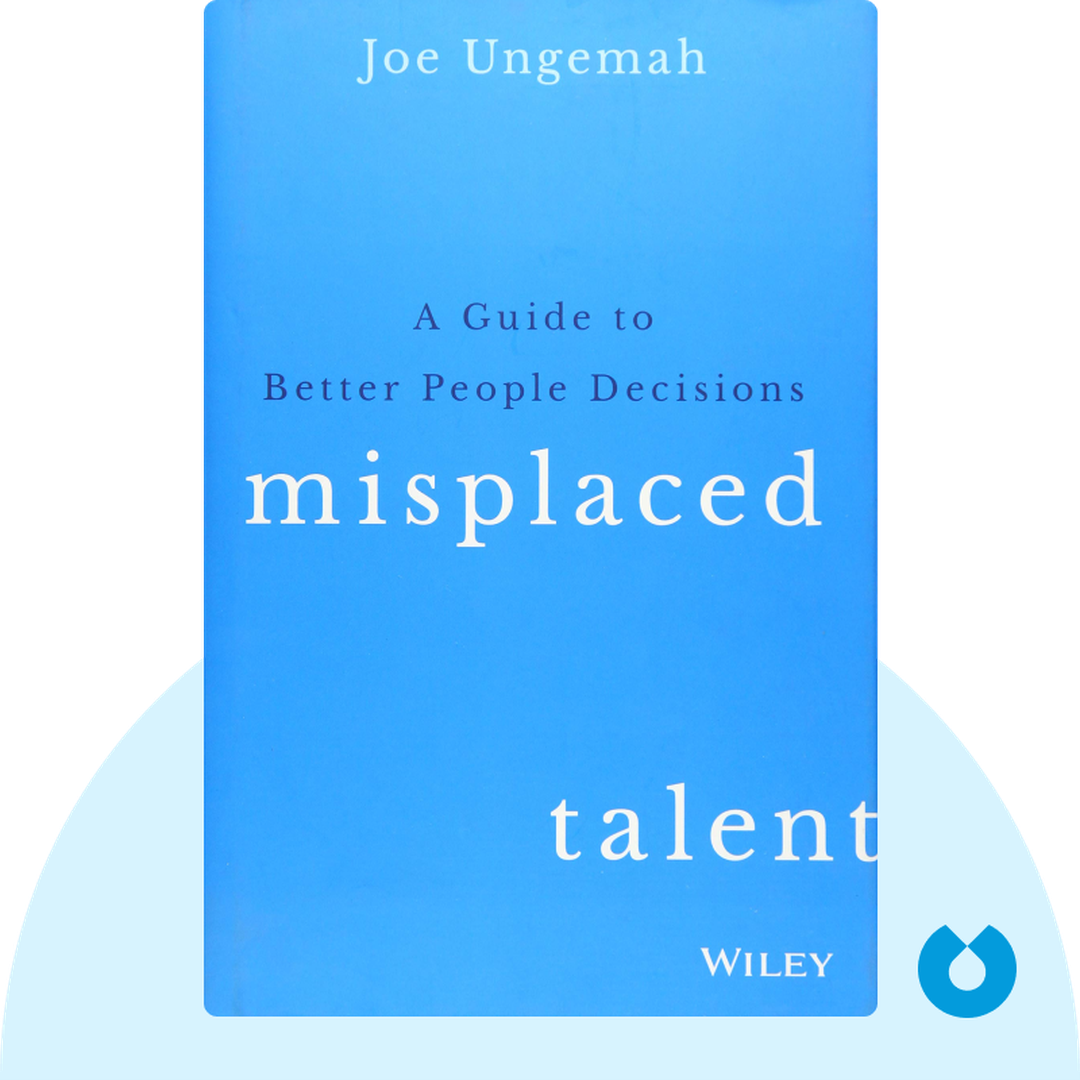
Misplaced Talent (2015) is a practical guide to hiring the employee best suited for the job and how to keep that employee happy and satisfied. Many businesses don’t even know what skills they should look for in an employee – or, if they do, they’ll forget about keeping that employee motivated once he or she is on board. It’s important to know how to do both of these things, so find out how to avoid all the messy pitfalls and keep your workforce happy.
Who Should Listen to Misplaced Talent?
- Human-resource employees
- Readers unhappy with their current job
- CEOs and managers who want to hire the best people
Books Similar to Misplaced Talent
Readers who enjoyed this also liked these titles.