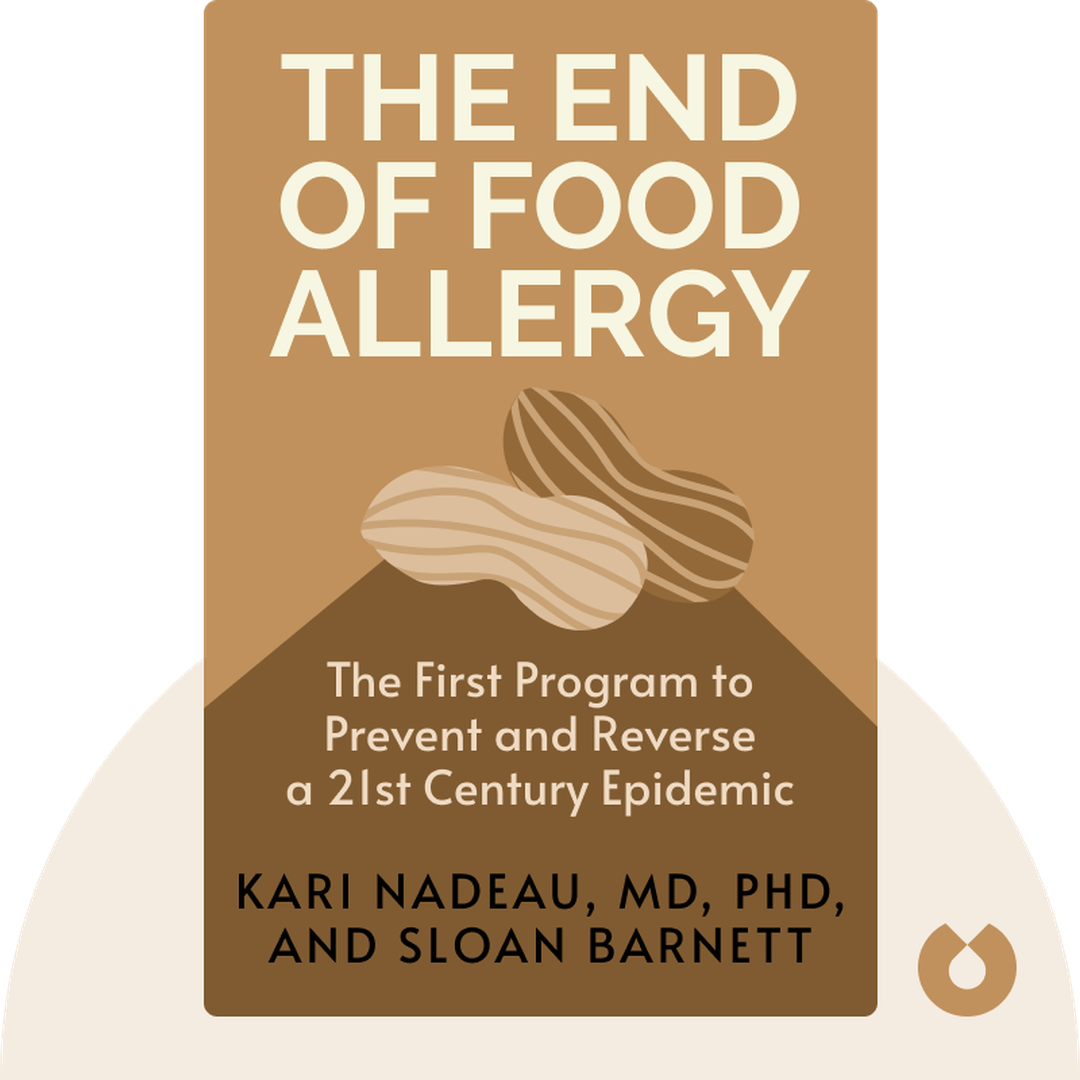
The End of Food Allergy
Start ListeningDownload Try free on iPhoneScan to start in 5 seconds
Categories:
If You're Curious About These Questions...
You should listen to this audiobook
- Did you know that the long-standing medical advice to strictly avoid certain foods might actually be contributing to the global rise in life-threatening allergies?
- What if you could retrain your immune system to safely tolerate the very foods that used to be dangerous to you or your children?
- Are you curious about the groundbreaking scientific breakthrough that is turning food allergies from a lifelong sentence into a preventable and treatable condition?
Listen to The End of Food Allergy — Free Audiobook
Loading player...
Key Takeaways from The End of Food Allergy
- Discover how recent scientific and medical breakthroughs are making it possible to prevent, reverse, and potentially eliminate food allergies entirely.
- Learn why the conventional wisdom of avoiding allergens is being turned on its head, and how early exposure to foods like peanuts might actually protect children.
- Understand the alarming global rise in food allergies across all age groups, including the surprising fact that nearly half of allergic adults developed their condition in adulthood.
- Find out why there is no single cause for the sudden rise in allergies to the eight most common trigger foods, and why multiple factors are at play.
- Explore the biological mechanics behind allergic reactions to see how the body's immune system mistakenly attacks harmless food proteins as dangerous foreign invaders.
Learning Tools
Reinforce what you learned from The End of Food Allergy
Mind Map
The End of Food Allergy
The Global Crisis+
Causes and Mechanisms+
The Paradigm Shift+
The LEAP Study+
Oral Immunotherapy (OIT)+
Quiz — Test Your Understanding
Question 1 of 7
According to the text, which of the following best describes the current trend of food allergies?
Question 2 of 7
What key observation led allergist Gideon Lack to question the conventional medical advice regarding peanut allergies?
Question 3 of 7
How does the immune system behave when a person experiences a food allergic reaction?
Question 4 of 7
According to the dual-allergen exposure theory, why does a skin condition like severe eczema increase a baby's risk of developing a food allergy?
Question 5 of 7
What was the primary finding of the LEAP (Learning Early About Peanut Allergy) study?
Question 6 of 7
How does Oral Immunotherapy (OIT) aim to reverse already-existing food allergies?
Question 7 of 7
While Oral Immunotherapy (OIT) is highly effective, it has historically been demanding and potentially dangerous. What is currently helping to make the process quicker and safer?
The End of Food Allergy — Full Chapter Overview
- 1Recommendation
- 2Allergist Gideon Lack proposed a groundbreaking theory on food allergies.
- 3Food allergies are a worldwide problem, affecting both children and adults at rapidly rising rates.
- 4No single theory fully explains why people suffer from food allergies, and interlinked factors are at play.
- 5The prevalence of peanut allergies cannot be explained by genetics or other medical conditions.
- 6The dual-allergen exposure theory proposes that skin may be one of the primary routes for developing human food allergies.
- 7Gideon Lack theorized that eating foods with allergens could help babies avoid food allergies—and indeed vice versa.
- 8The LEAP study validated Lack’s hypothesis that early exposure reduces children’s risk significantly of developing peanut allergies.
- 9Introducing babies to allergenic foods appears to be generally beneficial, but there are several important caveats to consider.
- 10Oral immunotherapy can reverse pre-existing food allergies.
- 11OIT is growing less demanding, hazardous, and time-consuming.
The End of Food Allergy Summary & Overview
The End of Food Allergy (2020) shows how recent developments in science and medicine are beginning to solve a problem that has plagued humanity for thousands of years. Combining data-driven research with inspirational storytelling, it provides a window into one of the biggest scientific and medical revolutions of our time.
Who Should Listen to The End of Food Allergy?
- Food allergy sufferers
- Parents, teachers, and doctors of children with food allergies
- Anyone interested in food research and scientific stories
Books Similar to The End of Food Allergy
Readers who enjoyed this also liked these titles.