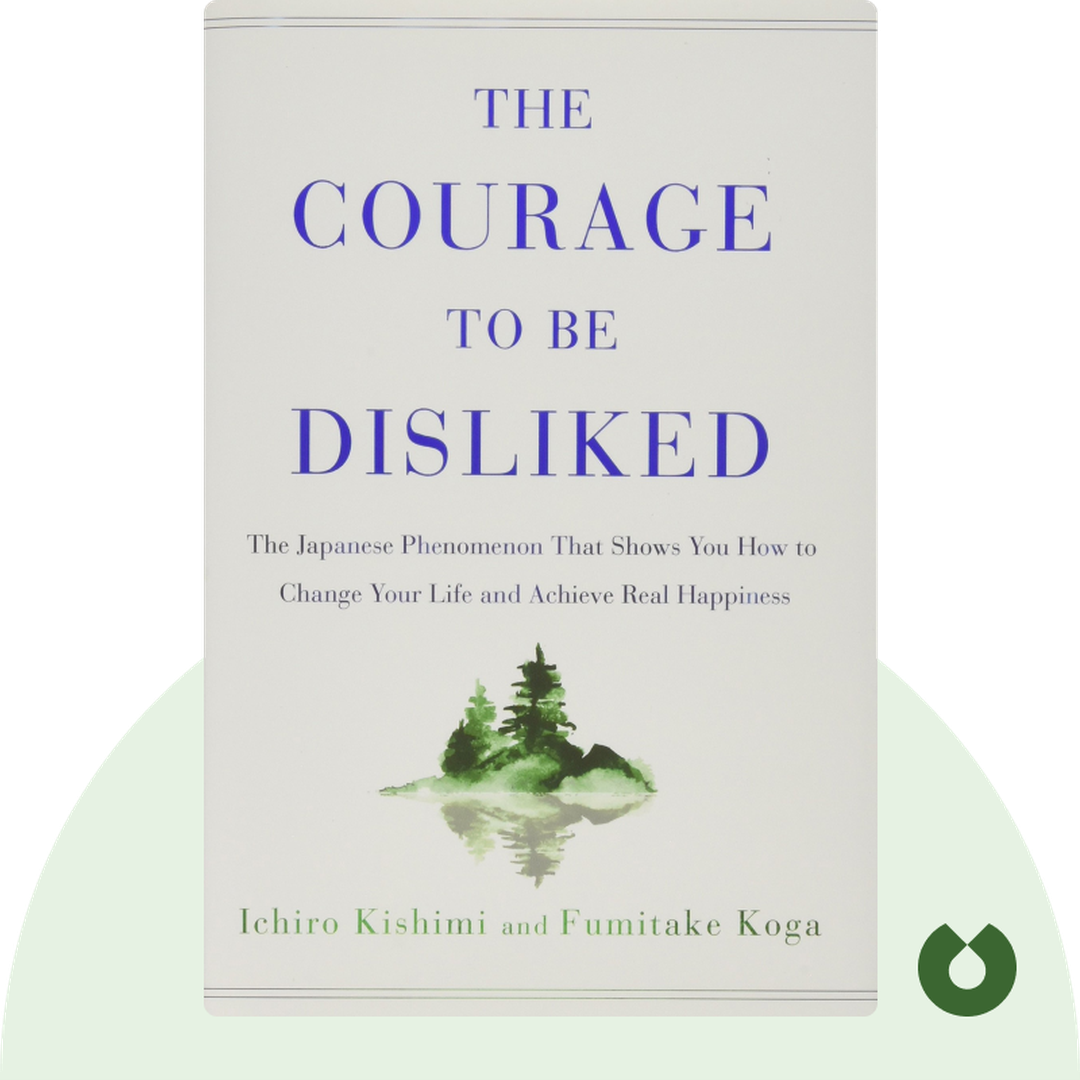
The Courage to Be Disliked
Start ListeningDownload Try free on iPhoneScan to start in 5 seconds
Categories:
If You're Curious About These Questions...
You should listen to this audiobook
- Have you ever wondered why your past doesn't have to define your future, and how a radical shift in perspective could be the key to your immediate happiness?
- What if you could simplify all your complicated relationships by discovering why every single problem we face is actually an "interpersonal relationship" problem?
- Are you curious about how "the courage to be disliked" could actually be the most direct path to living a truly free and authentic life?
Listen to The Courage to Be Disliked — Cinematic Audio Edition
Loading player...
Key Takeaways from The Courage to Be Disliked
- Understand how to break free from the belief that your past dictates your future, and discover why the power to change your destiny lies entirely in your hands.
- Learn to stop fabricating emotions or using past trauma as an excuse to avoid growth, and take back control of your feelings to step confidently outside your comfort zone.
- Discover why comparing yourself to others or an unrealistic 'ideal self' only leads to heartache, and find true happiness by competing solely with who you were yesterday.
- Master the courage to be disliked by letting go of the heavy burden of others' expectations, allowing you to build genuine relationships without sacrificing your identity.
- Find out how to cultivate deeply fulfilling interpersonal relationships by practicing self-acceptance, placing complete trust in others, and actively contributing to the lives of those around you.
Learning Tools
Reinforce what you learned from The Courage to Be Disliked
Mind Map
The Courage to Be Disliked
The Power to Change+
Overcoming Interpersonal Traps+
Freedom & Separation of Tasks+
Community Feeling & Contribution+
Quiz — Test Your Understanding
Question 1 of 8
According to Adlerian psychology, how should individuals view the impact of past traumatic experiences on their future?
Question 2 of 8
Why do many people who desire change ultimately remain in unhappy situations, according to the book?
Question 3 of 8
What is the true underlying purpose when individuals heavily focus on their own minor imperfections and shortcomings?
Question 4 of 8
What is a major negative consequence of living with a highly competitive mindset?
Question 5 of 8
How does the book view the traditional education system's reliance on reward and punishment?
Question 6 of 8
What is the Adlerian approach to parenting a child who is performing poorly in school?
Question 7 of 8
What shift in perspective does Adler suggest to combat feelings of isolation and an inflated ego?
Question 8 of 8
According to the text, what is the root cause of behaviors like developing a victim mentality or becoming a workaholic?
The Courage to Be Disliked — Full Chapter Overview
- 1Recommendation
- 2You Can Always Change
- 3Change Takes Courage
- 4Perfectionism Separates You from Others
- 5Competitive Societies Can Be Destructive
- 6Live Life on Your Own Terms
- 7Empathize with Others Without Trying to Control Them
- 8Don’t Overinflate Your Ego
- 9Self-Obsession Leads to a Loss of Perspective
- 10Final summary
The Courage to Be Disliked Summary & Overview
The Courage to Be Disliked (2018) takes a look at the psychology of Alfred Adler, the famous twentieth-century Austrian psychologist. Adler argued that we should care less about what other people think and the authors show how this philosophy can benefit us today.
Who Should Listen to The Courage to Be Disliked?
- Mental health professionals
- Quiet souls with low self-esteem who want to find their place in the world
- Educators seeking insights into human behavior
Books Similar to The Courage to Be Disliked
Readers who enjoyed this also liked these titles.