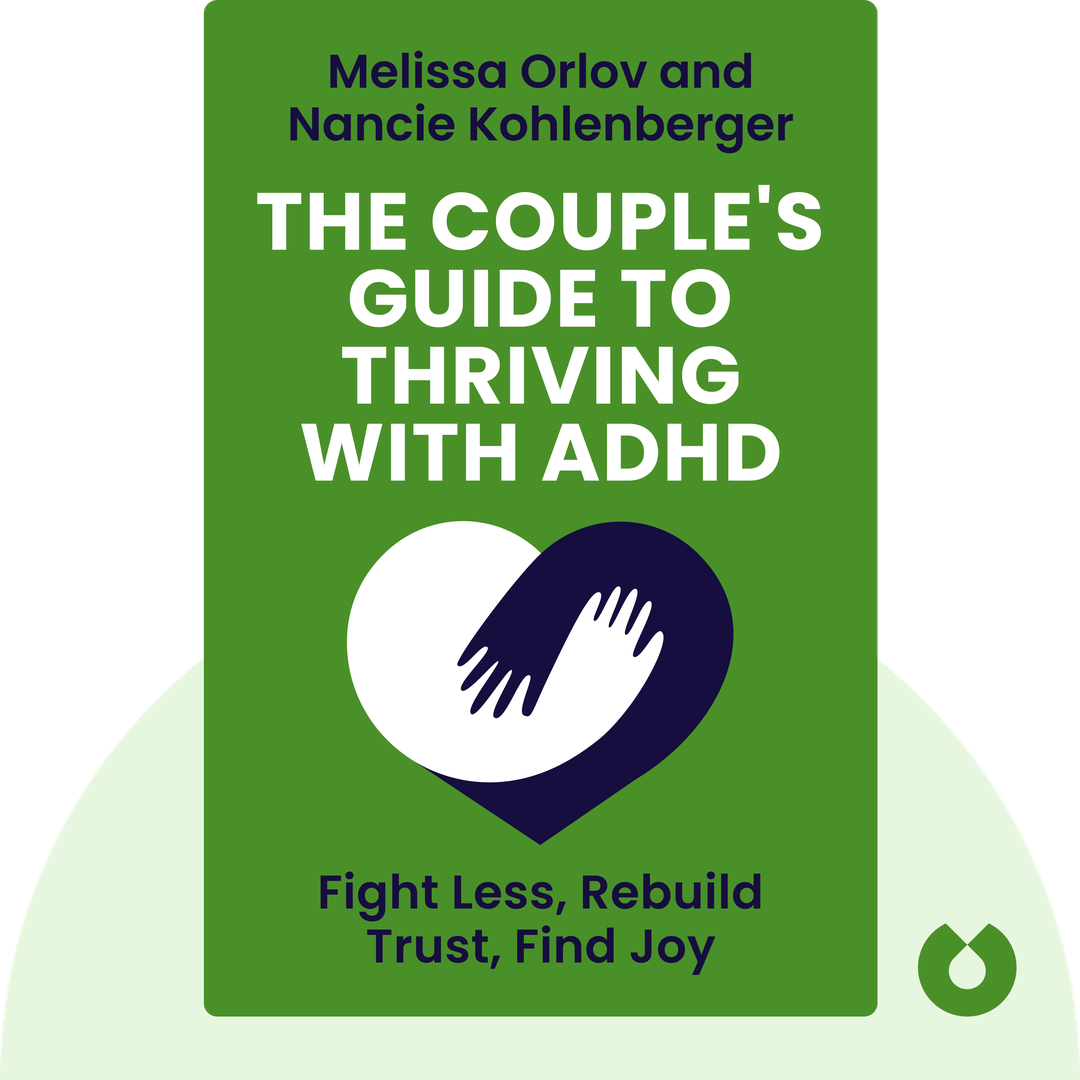
The Couple's Guide to Thriving with ADHD
Start ListeningDownload Try free on iPhoneScan to start in 5 seconds
Categories:
If You're Curious About These Questions...
You should listen to this audiobook
- Did you know that many common relationship struggles, like chronic forgetfulness or emotional outbursts, might actually be hidden symptoms of undiagnosed adult ADHD?
- Have you ever wondered why your relationship can feel more like a parent-child dynamic than a partnership, and what it takes to break that cycle?
- What if you could stop the constant cycle of resentment and rediscover the deep intimacy and trust that ADHD often pushes out of reach?
Listen to The Couple's Guide to Thriving with ADHD — Free Audiobook
Loading player...
Key Takeaways from The Couple's Guide to Thriving with ADHD
- Discover how to move beyond the daily challenges of ADHD and harness its unique strengths, such as boundless creativity and spontaneity, to enrich your partnership.
- Understand the fundamental differences in how ADHD and non-ADHD brains filter information so you can navigate contrasting perceptions of time, events, and memories.
- Learn why approaching recollections with humility and accepting that neither partner's perspective is superior can instantly defuse relationship conflicts.
- Master the art of empathetic communication by realizing the true goal is mutual understanding, rather than forcing an agreement or winning an argument.
- Identify and dismantle the destructive 'anger filter' and self-fulfilling negative narratives that cloud your perception and make relationship progress harder.
Learning Tools
Reinforce what you learned from The Couple's Guide to Thriving with ADHD
Mind Map
The Couple's Guide to Thriving with ADHD
ADHD Relationship Dynamics+
Navigating Communication+
Overcoming the Anger Filter+
Setting Boundaries+
Reconnecting as a Couple+
Quiz — Test Your Understanding
Question 1 of 7
According to the text, what are some of the positive traits or strengths that ADHD can introduce into a relationship?
Question 2 of 7
How does the text describe the difference between how an ADHD brain and a non-ADHD brain process information?
Question 3 of 7
What warning does the text give regarding the role of clear communication in an ADHD relationship?
Question 4 of 7
What is described as one of the most damaging beliefs or narratives that can take root in a relationship affected by ADHD?
Question 5 of 7
Why is it crucial for the non-ADHD partner to set personal boundaries and resist the urge to micromanage?
Question 6 of 7
According to Arthur Aron's theory of 'self-expansion' mentioned in the text, how can couples reignite the spark in their relationship?
Question 7 of 7
What underlying fear often prevents couples dealing with ADHD from prioritizing time together to reconnect?
The Couple's Guide to Thriving with ADHD — Full Chapter Overview
- 1Recommendation
- 2ADHD complicates relationships, yet it remains something you can manage well
- 3Clear communication is crucial for thriving relationships, even if it doesn’t solve everything fully alone
- 4Anger fogs our perception and hinders meaningful progress
- 5Boundaries ease non-ADHD partners and build self-responsibility in partners with ADHD
- 6Seeking novel challenges helps couples to reconnect
The Couple's Guide to Thriving with ADHD Summary & Overview
The Couple’s Guide to Thriving with ADHD (2014) delves into the challenges many couples face when one or both partners have undiagnosed adult ADHD. An essential guide for couples seeking to strengthen their bond and navigate the complexities of ADHD in their relationships, it emphasizes the importance of understanding ADHD symptoms and offers strategies to enhance communication, trust, and intimacy.
Who Should Listen to The Couple's Guide to Thriving with ADHD?
- Couples seeking insight into how ADHD affects their relationship dynamics
- Individuals diagnosed with adult ADHD aiming to improve their romantic partnerships
- Counselors who want to expand their understanding of ADHD in intimate relationships
Books Similar to The Couple's Guide to Thriving with ADHD
Readers who enjoyed this also liked these titles.