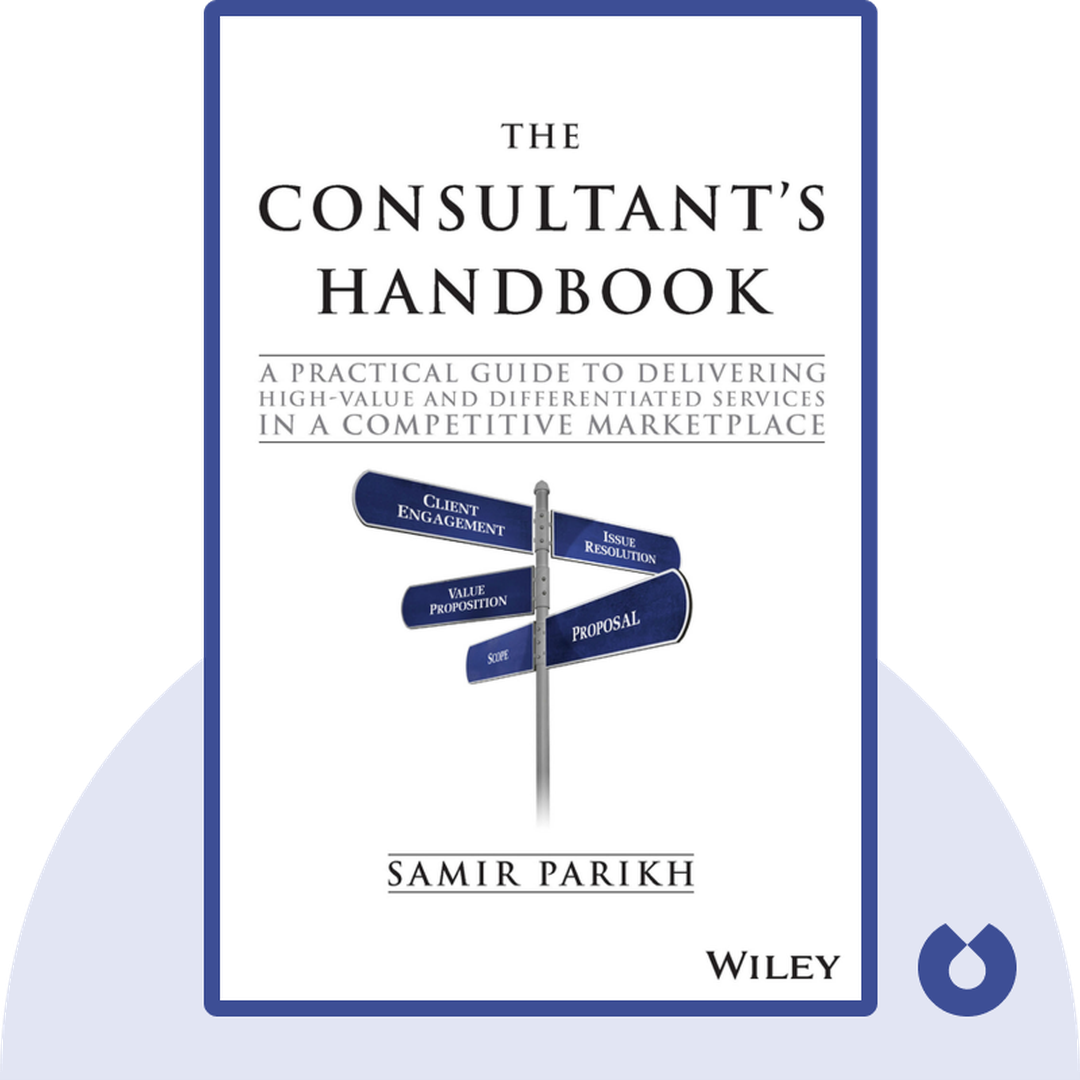
The Consultant’s Handbook
Start ListeningDownload Try free on iPhoneScan to start in 5 seconds
Categories:
If You're Curious About These Questions...
You should listen to this audiobook
- What’s the secret to transforming from a standard service provider into an indispensable consultant that clients truly value?
- Did you know that mastering a few key consultancy 'tricks' can drastically boost your performance, even if you don't work in the consulting industry?
- Have you ever wondered what specific field-tested strategies separate the most successful consultants from those who struggle to make an impact?
Listen to The Consultant’s Handbook — Free Audiobook
Loading player...
Key Takeaways from The Consultant’s Handbook
- Understand how to leverage the two core pillars of consulting—your personal expertise and past experience—along with your firm's collective network to effectively realize client goals.
- Discover why prioritizing your client's long-term best interests over short-term profits and upsells is essential for preserving your credibility and securing future collaborations.
- Learn how to conduct basic, detailed, and engagement-specific preparation to anticipate questions and make a powerful first impression during initial client meetings.
- Master the art of establishing immediate trust by crafting an objective, evidence-based personal introduction that highlights concrete metrics like projects completed and years in the field.
- Find out how to maximize the efficiency of your client interactions by implementing clear meeting structures that guarantee key issues are addressed without sacrificing flexibility.
Learning Tools
Reinforce what you learned from The Consultant’s Handbook
Mind Map
The Consultant’s Handbook
Core Principles & Ethics+
Preparation Strategies+
Establishing Credibility+
Running Effective Meetings+
Crafting Winning Proposals+
Navigating Disagreements+
The 50-50 Rule for Satisfaction+
Managing Resistance+
Problem Solving Tools+
Quiz — Test Your Understanding
Question 1 of 10
According to the book, why should consultants prioritize acting in the client's best interests over selling additional services for short-term gains?
Question 2 of 10
If a consultant is short on time before a preliminary meeting, what does 'basic preparation' entail?
Question 3 of 10
What is the recommended approach for a consultant to establish credibility during a personal introduction?
Question 4 of 10
What is the first step a consulting team should take to boost the efficiency of a meeting with a client?
Question 5 of 10
Why is it crucial to pay careful attention to the executive summary of a project proposal?
Question 6 of 10
What lesson is illustrated by the example of the Dutch consulting firm that proposed a 60-person team when the client only expected 20?
Question 7 of 10
How does a deductive argument differ from an inductive argument in consulting?
Question 8 of 10
What does the '50:50 rule' of client satisfaction suggest consultants should do?
Question 9 of 10
When facing resistance from a client's employees (such as an in-house IT department), what is the most effective approach according to the text?
Question 10 of 10
What is the purpose of using a 'logic tree' when confronted with a thorny problem?
The Consultant’s Handbook — Full Chapter Overview
- 1Recommendation
- 2Consultants leverage their experience, expertise, and networks to deliver top results for clients.
- 3Consulting engagements demand thorough preparation.
- 4Consultants can build credibility by carefully positioning themselves effectively.
- 5Find the right balance of structure and flexibility to maximize the efficiency of meetings.
- 6Ensure you provide your client with a clear, structured, and precise proposal.
- 7Consulting is about recognizing when to stand firm and when to give way wisely.
- 8Apply the 50-50 rule to guarantee client satisfaction.
- 9Plan ahead for potential resistance to ensure you finish your assignment as efficiently as possible overall.
The Consultant’s Handbook Summary & Overview
The Consultant’s Handbook (2015) is an indispensable field guide to the world of consultancy. Packed with top tips, illuminating examples and hands-on advice, it’s the perfect explainer for consultants past, present and future, as well as anyone keen to pick up some consultancy tricks to boost their performance in adjacent industries.
We’re thrilled to announce that the author has worked together with Blinkist to create this book-in-blinks for you.
Who Should Listen to The Consultant’s Handbook?
- Business graduates interested in consulting
- Consultants looking to boost their careers and pick up new ideas
- Anyone involved in client and stakeholder interactions
Books Similar to The Consultant’s Handbook
Readers who enjoyed this also liked these titles.