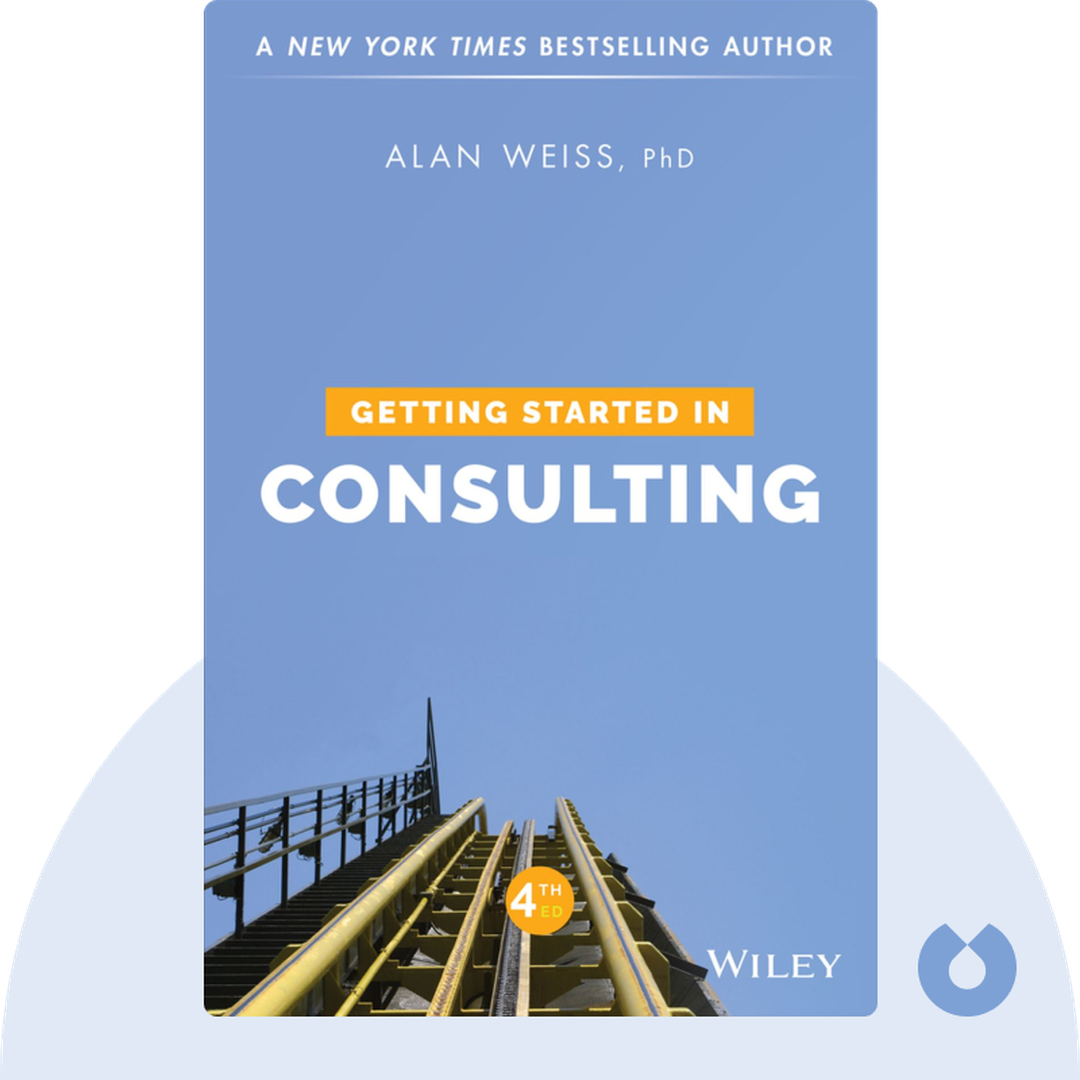
Getting Started in Consulting
Start ListeningDownload Try free on iPhoneScan to start in 5 seconds
Categories:
If You're Curious About These Questions...
You should listen to this audiobook
- Did you know that traditional hourly billing might be the single biggest obstacle to growing a truly profitable consulting practice?
- Have you ever wondered why some consultants command premium fees while others struggle to find their next client?
- What if you could master the dual art of marketing and delivery so your business thrives even when you're busy with projects?
Listen to Getting Started in Consulting — Free Audiobook
Loading player...
Key Takeaways from Getting Started in Consulting
- Discover how to successfully launch your consulting business by saving a dedicated fund to sustain yourself through the critical first six to twelve months.
- Master time management and lighten your initial workload by strictly prioritizing daily tasks and delegating projects that require skills you lack.
- Evaluate the pros and cons of different workspace options, from home setups to shared offices, and learn what essential equipment you must budget for.
- Learn how to legally minimize your initial tax burden by structuring your new business as an S corporation to avoid double taxation.
- Understand how to attract inbound clients instead of cold-calling by crafting a professional press kit and networking with key industry influencers.
Learning Tools
Reinforce what you learned from Getting Started in Consulting
Mind Map
Getting Started in Consulting
Preparation & Planning+
Workspace & Equipment+
Legal & Administration+
Marketing & Networking+
Branding & Media+
Proposals & Closing+
Setting Fees+
Long-Term Growth+
Quiz — Test Your Understanding
Question 1 of 8
According to the text, how much financial runway should a new consultant secure before fully launching their business?
Question 2 of 8
Why does the author recommend initially registering a consulting business as an S corporation?
Question 3 of 8
What is the author's primary rule regarding doing pro bono (free) work for marketing purposes?
Question 4 of 8
How should a consultant design their 'credibility website' to attract clients?
Question 5 of 8
During a proposal meeting, what should a consultant do if a client asks for a reduction in fees?
Question 6 of 8
Which of the following describes the author's recommended approach to setting consulting fees?
Question 7 of 8
What is one of the key indicators that a consulting business has become successful after its first three years?
Question 8 of 8
What is the recommended follow-up strategy if a buyer does not initially respond to your submitted proposal?
Getting Started in Consulting — Full Chapter Overview
- 1Recommendation
- 2Start your consulting journey well with saving and planning.
- 3To set up your firm, you’ll need an effective work environment.
- 4Resolving legal and organizational issues is essential to establishing your business.
- 5To attract clients, you need to network, market yourself, and even work for free.
- 6Strong branding means bringing your voice online and into the media.
- 7Close client deals by being perceptive, patient, and flexible.
- 8Set your fees based on your expertise, not your hours or results.
- 9Once your consultancy is established, you can begin growing your business and yourself.
- 10Final summary
Getting Started in Consulting Summary & Overview
Getting Started in Consulting (2009) is the go-to guidebook for budding consultants. From finding your footing and learning about legal matters to mastering the dual art of marketing and branding, these blinks outline every step on your journey to building a strong consultancy firm – and maintaining it, too.
Who Should Listen to Getting Started in Consulting?
- Experts interested in a lucrative career change
- New consultants seeking time-tested advice
- Established consultants looking to polish their skills
Books Similar to Getting Started in Consulting
Readers who enjoyed this also liked these titles.